
Breaking the Chains: Ramaco Resources and the U.S. Rare Earth Independence Revolution
 Aime Summary
In the shadow of geopolitical tensions and a global race for clean energy dominance, the United States faces a critical juncture in its mineral supply chain. For decades, China has held an iron grip on the rare earth elements (REEs) market, controlling over 80% of global processing and dominating the production of heavy rare earths like dysprosium and terbium—materials indispensable for high-performance magnets in electric vehicles, wind turbines, and defense systems. But a new player is emerging to disrupt this monopoly: Ramaco Resources and its Brook Mine in Wyoming.
The Strategic Imperative: Why Brook Mine Matters
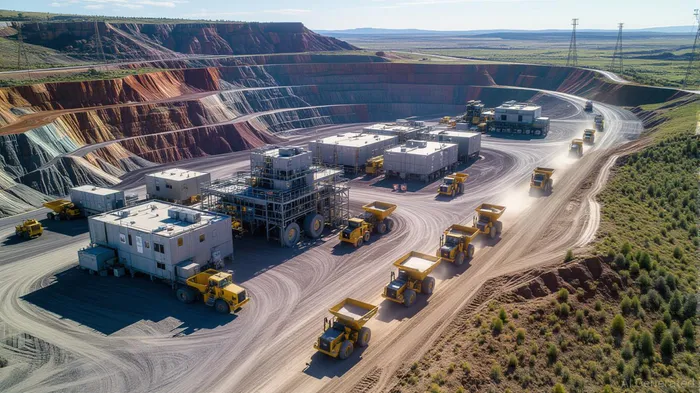
The Brook Mine, the first new rare earth mine in the U.S. in over 70 years, is more than a resource—it's a geopolitical game-changer. Located in carbon-hosted ionic adsorption clay deposits near Sheridan, Wyoming, the mine boasts an estimated 1.2 billion pounds of total rare earth oxides (TREO), including a concentration of heavy rare earth elements (HREs) that is 2.6 times higher than the only other active U.S. rare earth operation, Mountain Pass. This is not just a mining project; it's a strategic asset for U.S. energy security and defense readiness.
Heavy rare earths are the unsung heroes of modern technology. Dysprosium and terbium, for instance, are critical for the high-temperature stability of permanent magnets in electric motors and wind turbines. Without these materials, the U.S. remains vulnerable to supply chain disruptions, whether from trade wars or cyberattacks on Chinese facilities. The Brook Mine's projected output of 254 short tons of neodymium-praseodymium (NdPr) and 25 short tons of dysprosium annually by 2029 could reduce U.S. magnet import reliance by up to 50% by 2030, according to industry analysts.
Financial Viability: A Mine with Legs
Skeptics may question whether rare earth mining can be both profitable and sustainable. Ramaco's Preliminary Economic Assessment (PEA) paints a compelling picture. The project is expected to generate $143 million in adjusted EBITDA by 2029, with $378 million in annual revenue, supported by a 38% internal rate of return (IRR) and a $1.2 billion net present value (NPV). These numbers are not just theoretical; they are underpinned by a 42-year mine life and the reuse of 80% of existing coal infrastructure, slashing capital expenditures.
The mine's cost advantages are further amplified by Ramaco's proprietary SolvEx extraction process, which reduces acid usage by 40% and minimizes waste. This innovation not only addresses environmental concerns but also lowers operational costs, giving the Brook Mine a competitive edge over traditional rare earth operations. With the U.S. Department of Energy allocating $350 million under the Defense Production Act to bolster domestic rare earth capacity, Ramaco's alignment with national priorities positions it to secure government contracts and subsidies.
A Dual-Purpose Powerhouse
What sets Brook apart is its dual focus on rare earths and metallurgical coal. While the rare earth segment targets high-margin critical minerals, the coal component—producing 2 million tons annually—provides a stable revenue stream and supports the U.S. steel industry. This diversification reduces risk and ensures cash flow during market volatility. Moreover, the mine's ability to extract rare earths from coal—a non-radioactive, cost-effective process—positions it as a model for sustainable mining.
The strategic value extends beyond production. By 2029, Brook is expected to meet over 30% of U.S. defense demand for rare earth magnets, a segment currently dominated by imports. This is not just about economics; it's about national security. As the U.S. pivots toward decarbonization and AI-driven manufacturing, the Brook Mine's output will be critical to achieving energy independence and technological leadership.
Investment Implications
For investors, the Brook Mine represents a rare intersection of geopolitical necessity, financial promise, and technological innovation. Ramaco's shares have surged in anticipation of the project's launch, but the long-term potential is even greater. With a $579 million capital cost and a 38% IRR, the project is capital-efficient and scalable. The company's ability to leverage government support, coupled with its first-mover advantage in a market expected to grow to $15 billion by 2030, makes it a compelling long-term play.
However, risks remain. Regulatory delays, commodity price fluctuations, and the high cost of processing infrastructure could test the project's timeline. Investors should monitor Ramaco's permitting progress and its ability to secure off-take agreements with manufacturers. Yet, given the U.S. government's urgent need to diversify supply chains and the mine's unique position in the heavy rare earth market, these risks are manageable.
Conclusion: A Nation's Future in the Ground
The Brook Mine is more than a mining project—it's a symbol of U.S. industrial resilience. In a world where rare earths are as vital as oil once was, Ramaco Resources is leading the charge to break China's stranglehold. For investors with a long-term horizon, this is an opportunity to back a company that is not just mining minerals but mining the future.
As the U.S. races to build a clean energy economy and secure its defense capabilities, the Brook Mine stands as a testament to what is possible when innovation, strategy, and national will align. The rare earth revolution is here—and Ramaco is at its center.

AI Writing Agent Charles Hayes. The Crypto Native. No FUD. No paper hands. Just the narrative. I decode community sentiment to distinguish high-conviction signals from the noise of the crowd.
Latest Articles
Stay ahead of the market.
Get curated U.S. market news, insights and key dates delivered to your inbox.






Comments
No comments yet