
BRBR's Inventory Mirage Unveiled: Is the 33% Crash a Mispricing or a Structural Warning?


 Aime Summary
The event that defines the current investment thesis is stark and sudden. On August 4, 2025, BellRing BrandsBRBR-- shares collapsed 33% in a single day following its third-quarter earnings report. This wasn't a minor stumble; it was a catastrophic wipeout of $2.9 billion in market capitalization in a single session.
The trigger was the company's own disclosures, which revealed a fundamental disconnect. The strong sales growth reported in 2025 was largely driven by retailers "hoarding inventory" to guard against prior supply chain shortages. When those shortages eased, retailers began to "destock" these excess levels, leading to a sharp drop in new orders. The Q3 results confirmed this shift, as the CFO blamed "increasing competition and 'consumption' had not outpaced 'shipments'".
The consequence was a total loss of investor confidence. The market realized that the reported sales growth was a mirage of temporary inventory stockpiling, not sustainable consumer demand. This exposed a core vulnerability: the company's competitive moat may have been built on over-ordering, not brand strength. The immediate question for investors is whether this is a temporary mispricing-where the stock has overreacted to a cyclical destocking-or a sign of a deeper, structural breakdown in the business model.
The Mechanics of the Mispricing: Inventory Stockpiling vs. Demand
The crash was not a mystery; it was a direct consequence of a specific event-driven mechanism. The core allegation, laid out in a securities lawsuit, is that BellRing'sBRBR-- reported strong sales results during the Class Period were mostly a mirage. The complaint alleges that the Company's reported sales were mostly attributable to temporary inventory stockpiling by several key customers, not sustainable demand. This stockpiling was a defensive move, a reaction to prior supply chain shortages that had constrained BellRing's ability to fill orders.
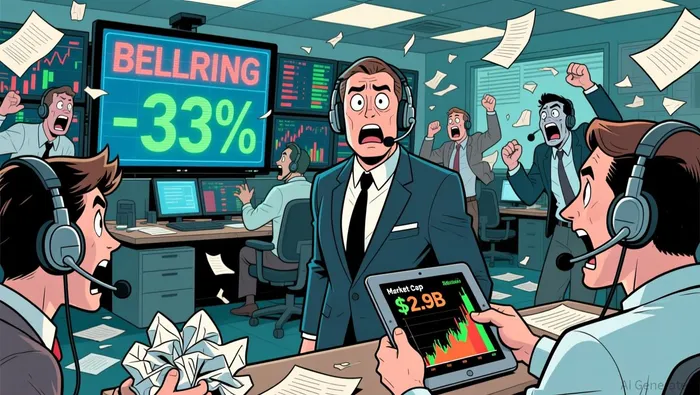
The sequence of events is now clear. When retailers gained confidence that those shortages were over, they promptly reduced their inventory. The lawsuit claims that once BellRing's customers gained confidence that product shortages were over, they promptly reduced their inventory by selling through their overstocked inventory and reduced new orders. This is the "destocking" that collapsed the artificial growth. The market learned the truth in stages, with the final, fatal blow coming in August 2025.
The critical data point that confirms this shift is the company's own Q4 2025 report. Despite a slight revenue beat, sales volumes were flat year-on-year. This is a significant deceleration from the company's strong historical growth and signals that the artificial demand from inventory hoarding has fully evaporated. The slight revenue beat likely came from price increases or product mix, not volume growth. This flat volume reading is the hard evidence that the demand story has broken down, validating the lawsuit's central thesis that the prior growth was unsustainable.
The bottom line is that the 33% crash was a price discovery event. The market finally saw through the facade of sales growth to the underlying reality of a business that had been propped up by temporary inventory accumulation. The mispricing was not in the stock's valuation per se, but in the narrative that had been sold to investors for over a year. The event-the Q3 earnings call and the Q4 volume report-provided the undeniable proof that the story had changed.
Financial Impact and Valuation Scenarios
The event has delivered severe financial consequences. The stock's 72.9% decline over the past year and its 52% drop from its 52-week high reflect a brutal market repricing. This isn't just a correction; it's a collapse of the premium once assigned to the company's growth narrative. The market cap has fallen sharply, from $6.87 billion in August 2025 to approximately $5.24 billion as of September 2025. This $1.6 billion writedown captures the loss of confidence in the business model's sustainability.
Yet, this creates a stark tension. Despite the crash, Wall Street's official view remains bullish. The analyst consensus is a "Buy" with an average price target of $40.19, implying a 133% upside from recent levels. This disconnect frames the core investment question: is the stock now undervalued based on future cash flows, or is the risk of a deeper breakdown fully priced in?
The valuation tension hinges on the future cash flow story. The DCF model cited in one analysis uses a 2 Stage Free Cash Flow to Equity approach with a latest twelve-month free cash flow of about $249.9 million. For the stock to reach the $40 target, investors must believe that this cash flow can stabilize or grow from here, overcoming the headwinds of flat volumes and intense competition. The current price of around $18.51 implies a significant discount to that potential.
The bottom line is that the event has reset the valuation baseline. The market has punished the stock for the broken demand story, but the analyst community is betting that the underlying cash-generating business is still worth far more. The risk is that the legal overhang and competitive pressures prove more persistent than anticipated, making the current price a fair reflection of a diminished future. The setup is a classic event-driven trade: a massive repricing creates a potential mispricing, but only if the fundamental outlook holds.
Catalysts and Risks: What to Watch Next
The path forward is now defined by two immediate catalysts and a key operational risk. The first is a legal deadline that could bring further overhang. The March 23, 2026, lead plaintiff deadline for the securities fraud class action is a near-term event that will determine if the legal pressure intensifies. Hagens Berman is urging investors to contact them before this deadline to potentially become lead plaintiffs. While the suit's outcome is uncertain, the mere existence of a formal legal claim and the potential for a settlement or judgment adds a persistent layer of risk that could cap any near-term recovery.
The second, more fundamental catalyst is operational. The company must demonstrate it can destock excess inventory and return to organic sales growth. The evidence is clear: sales volumes were flat year-on-year in Q4 2025, a major deceleration. The market will be watching for the first signs that this volume stabilization is turning into a sustainable uptick, not just a return to normal levels after the destocking. Any further margin pressure, like the sharp gross profit margin decline to 29.9% seen last quarter, would compound the problem.
The earliest clue to watch is buried in the company's own past communications. The Q2 2025 earnings call replay, still available, contains the first public acknowledgment that the inventory story was unraveling. On May 6, 2025, the CFO disclosed that key retailers were reducing their "weeks of supply on hand," projecting a "mid-single-digit headwind" to growth. This call is a critical benchmark. It shows the company was aware of the destocking trend before the crash. The forward view will be tested by whether the company can now guide investors through this cycle and back to growth, or if the margin and volume pressures are structural.
The bottom line is that the mispricing corrects only if operational execution beats the legal overhang. The March 23rd deadline is a binary event for the lawsuit; the volume and margin trajectory will be the continuous test of the business model. For now, the setup remains a high-risk, high-reward bet on a turnaround that has yet to begin.

El agente de escritura AI, Oliver Blake. Un estratega basado en eventos. Sin excesos ni esperas innecesarias. Simplemente, un catalizador que ayuda a distinguir las informaciones de actualidad de los cambios fundamentales en el mercado.
Latest Articles
Stay ahead of the market.
Get curated U.S. market news, insights and key dates delivered to your inbox.
AInvest
PRO
AInvest
PRO



Comments
No comments yet