
Brazil’s Trade Surplus Misses, Raising Fiscal Rate Fears
 Aime Summary
- Brazil's July trade balance recorded a surplus of $7.07 billion, significantly below the $8.4 billion consensus forecast and a sharp decline from the revised June surplus of $9.76 billion.
- The contraction in trade performance underscores persistent external sector pressures and coincides with broader fiscal concerns that continue to weigh on sovereign risk premiums.
- Finance Minister Dario Durigan has identified fiscal discipline as the critical prerequisite for lowering Brazil's elevated real interest rates, which remain high despite recent monetary easing by the central bank.
- Market participants are watching for signs of improved fiscal credibility and stable currency dynamics, as these factors are essential for sustaining export competitiveness and reducing debt financing costs.
The latest trade data from Brazil reveals a notable deceleration in the country's external surplus, raising questions about the resilience of export demand and the impact of domestic economic conditions on trade flows. The July surplus of $7.07 billion fell well short of the $8.4 billion expected by analysts, marking a substantial drop from the $9.76 billion recorded in June after revisions. This decline suggests that while Brazil continues to generate positive trade balances, the pace of surplus accumulation has slowed, potentially reflecting weaker global commodity demand, logistical constraints, or shifts in import patterns driven by domestic consumption.
What Does The July Trade Balance Data Signal About Brazil's External Sector?
The trade balance is a key indicator of a nation's economic health, reflecting the difference between the value of its exports and imports. A shrinking surplus, as seen in Brazil's July data, can signal a variety of underlying dynamics, including reduced export volumes, lower commodity prices, or an increase in imports relative to exports. In this case, the drop from $9.76 billion to $7.07 billion represents a significant contraction that warrants close attention from macro investors and policymakers alike.
The miss against the $8.4 billion forecast indicates that market expectations were overly optimistic about the strength of Brazil's trade performance. This discrepancy may point to emerging weaknesses in key export sectors, such as agriculture or mining861329--, or could reflect a surge in imports due to domestic demand recovery or supply chain adjustments. Historically, trade surpluses in Brazil have been supported by strong commodity exports, particularly soybeans, iron ore, and oil. Any deviation from these trends can have ripple effects on the current account balance, foreign exchange reserves, and the broader macroeconomic stability of the country.
Why Are Investors Watching Fiscal Policy And Interest Rates Now?
The trade data release comes at a time when fiscal policy is at the forefront of investor concerns in Brazil. Finance Minister Dario Durigan has explicitly stated that reducing interest rates is the country's "big challenge," emphasizing that fiscal balance is essential to lowering borrowing costs. Despite the central bank's fourth consecutive rate cut, which lowered the benchmark Selic rate to 14.00%, real interest rates remain among the highest globally. This persistence is largely attributed to concerns over public spending growth and rising debt levels, which have increased Brazil's gross debt-to-GDP ratio by over 10 percentage points since President Lula took office.
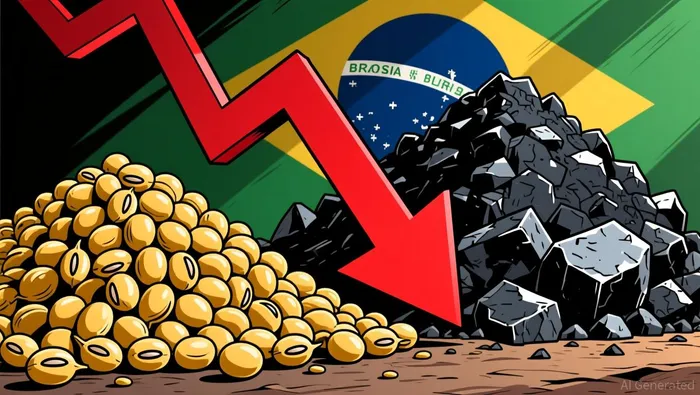
Investors are closely monitoring the government's fiscal trajectory because high real interest rates can deter foreign investment, strengthen the currency, and ultimately hurt export competitiveness. A weaker trade balance, as seen in July, can exacerbate these pressures by reducing the inflow of foreign currency and potentially leading to currency depreciation. Durigan has affirmed the government's commitment to fiscal responsibility, ruling out changes to the minimum wage indexation formula or decoupling social benefits from current adjustment rules, measures that many economists consider critical for controlling mandatory spending . However, the lack of decisive fiscal action may keep risk premiums elevated, limiting the effectiveness of monetary easing.
The interplay between trade performance and fiscal policy is critical for Brazil's economic outlook. A sustained trade surplus can help finance fiscal deficits and support the currency, but a narrowing surplus may require additional fiscal consolidation to maintain investor confidence. As the government navigates these challenges, market participants will be looking for clear signals of fiscal discipline and structural reforms that can enhance long-term growth potential and reduce borrowing costs.
What Should Investors Watch Next In Brazil's Macro Data?
Looking ahead, investors should monitor subsequent trade balance releases, fiscal data, and central bank communications for clues about the direction of Brazil's economic policy. The next trade data release will be crucial in determining whether the July shortfall was an anomaly or part of a broader trend. Additionally, any updates on government spending, debt management, or fiscal targets will provide insight into the administration's commitment to reducing the risk premium that keeps interest rates high.
Currency movements will also remain a key focus, as the Brazilian real's performance can significantly impact trade competitiveness and inflation dynamics. A weaker real can boost export revenues but may increase the cost of imports and imported inflation, complicating the central bank's inflation-targeting mandate. Furthermore, global commodity prices, particularly for soybeans and iron ore, will continue to influence Brazil's trade balance, making international market developments a relevant factor for domestic economic assessment.
Ultimately, the combination of trade data, fiscal policy developments, and monetary policy decisions will shape the investment landscape in Brazil. While the recent trade surplus contraction presents a challenge, the government's stated focus on fiscal discipline offers a potential pathway to lower interest rates and improve macroeconomic stability. Investors who track these indicators closely will be better positioned to assess the risks and opportunities in Brazil's evolving economic environment.

Stay ahead of the market.
Get curated U.S. market news, insights and key dates delivered to your inbox.


AInvest
PRO
AInvest
PRO




Comments
No comments yet