
Brazil Shelves Big Tech Tax Amid Trump Tariff Talks
Generated by AI AgentCyrus Cole
Wednesday, Mar 26, 2025 6:27 am ET3min read
AMZN--
Brazil has decided to shelve a proposal to tax big tech firms, opting instead to focus on regulating competition among major digital platforms. This strategic shift comes amid ongoing trade negotiations with the U.S. and concerns over potential retaliation from President Donald Trump's tariff threats. The decision has significant implications for Brazil's fiscal goals, economic stability, and geopolitical relations.
The Brazilian government had initially considered taxing major global tech firms such as AmazonAMZN--, Alphabet's Google, and Meta PlatformsMETA-- to address fiscal challenges. However, concerns about the political and economic repercussions, including potential complications in trade talks with the U.S. and the uncertainty surrounding President Trump's tariff plans, led to the shelving of this proposal.
One of the key reasons for shelving the tax proposal was the fear that raising taxes on high-profile U.S. companies could complicate trade negotiations. As noted by a government source, "Raising taxes on such high-profile U.S. companies could complicate the trade talks spurred by Trump's tariff proposals." This suggests that the Brazilian government is prioritizing diplomatic relations and trade stability over immediate fiscal gains, which could be crucial for maintaining economic stability in the long term.
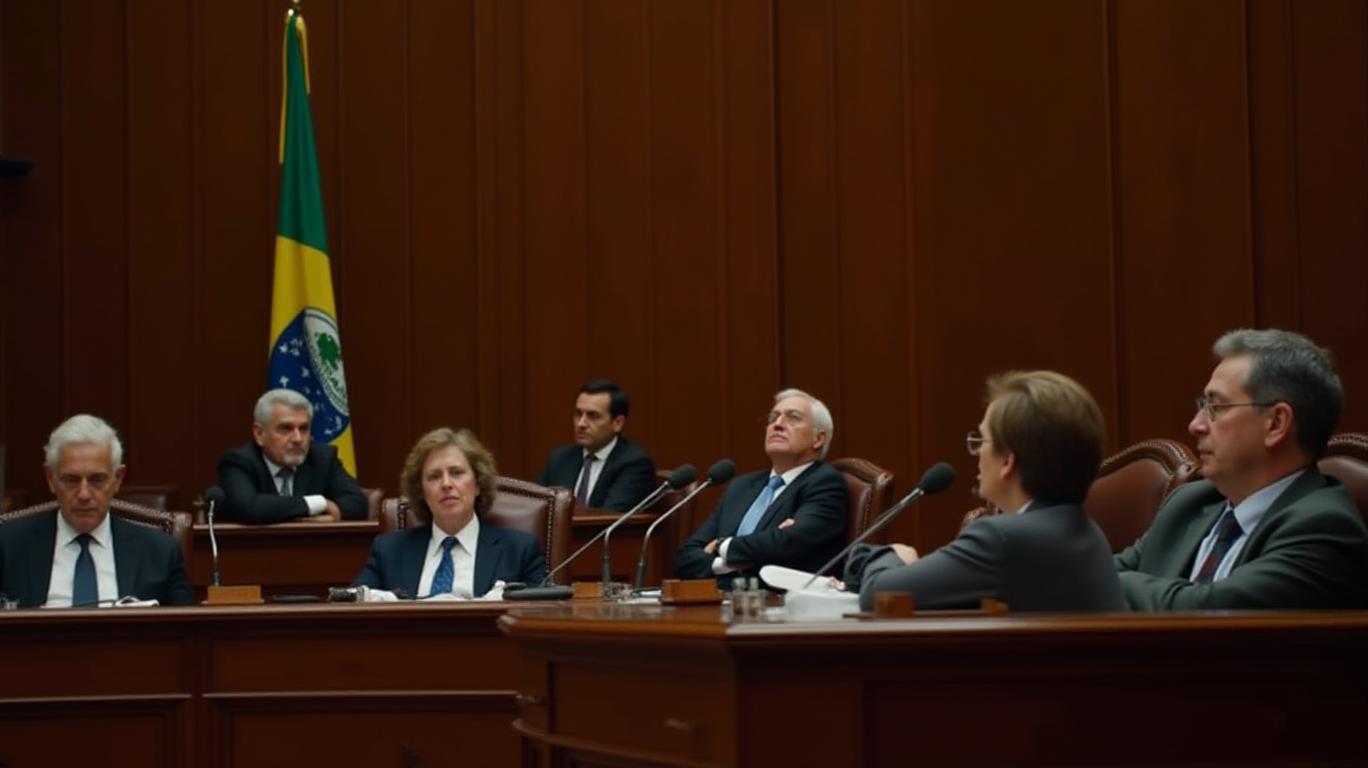
Furthermore, the decision to focus on advancing a separate bill to regulate competition among major digital platforms in Latin America's largest economy indicates a strategic shift. This bill, which went to public consultation in January 2024, aims to combat business practices that stifle rivals, such as "killer acquisitions" and the privileging of a company's own products or services in search results. By focusing on regulatory measures rather than direct taxation, the government may be seeking to create a more competitive and fair digital market, which could indirectly support economic growth and stability.
However, the shelving of the tax proposal also raises concerns about the government's ability to meet its fiscal targets. As noted by the Finance Ministry's executive secretary, Dario Durigan, the government is preparing to introduce tax proposals to Congress aimed at taxing big tech companies and implementing a global minimum tax of 15% on multinational corporations. This measure is designed to secure Brazil’s 2025 fiscal goals in case of a revenue shortfall. The 2025 budget bill projects a modest surplus and relies on an estimated 17.9 billion reais in revenue from increased income taxes. Additionally, the government proposed changes to corporate social contribution taxes and interest on equity payments.
Despite these efforts, some economists remain skeptical about the government's ability to meet its fiscal targets. Projections indicate a potential deficit in 2025, with estimates suggesting a shortfall of up to 110 billion reais, or 0.9% of GDP, compared to the government’s balanced budget goal. This highlights the challenges the Brazilian government faces in achieving fiscal stability without resorting to controversial tax measures.
In summary, the decision to shelve the proposal to tax big tech firms reflects the Brazilian government's prioritization of trade stability and diplomatic relations over immediate fiscal gains. While this approach may help maintain economic stability in the long term, it also raises concerns about the government's ability to meet its fiscal targets, especially in the face of potential revenue shortfalls. The focus on regulatory measures and the implementation of a global minimum tax on multinational corporations may provide alternative pathways to achieving fiscal stability, but the effectiveness of these measures remains to be seen.
Brazil's decision to focus on regulating competition among digital platforms instead of imposing taxes on big tech companies has several potential geopolitical implications, particularly in the context of ongoing trade negotiations with the U.S.
Firstly, by shelving the tax proposal, Brazil avoids potential retaliation from the U.S. government, which could have complicated trade talks. As noted by a source, "Raising taxes on such high-profile U.S. companies could complicate the trade talks spurred by Trump's tariff proposals." This decision allows Brazil to maintain a more cooperative stance in its negotiations with the U.S., which is crucial given the ongoing tariff disputes and the potential for broader trade conflicts.
Secondly, focusing on competition regulation aligns with global efforts to address anti-competitive practices in the digital economy. The legislation aims to combat practices such as "killer acquisitions" and the privileging of a company's own products or services in search results. This approach is in line with international discussions and frameworks, which could garner support from other countries and international organizations. As Maria Paula Bertran, associate professor of economic law at the University of São Paulo, noted, "The support of international organizations can significantly aid in the development of a new agenda to tax big tech companies."
Thirdly, this regulatory focus could help Brazil avoid being seen as hostile to foreign investment, particularly from the U.S. As Gary Clyde Hufbauer, senior fellow at the Peterson Institute for International Economics, pointed out, "Brazil already has a reputation for hostility to corporations in general and multinational corporations in particular." By focusing on regulation rather than taxation, Brazil can signal a more business-friendly environment, which could attract investment and foster economic growth.
Lastly, this decision could also be seen as a strategic move to avoid further escalation in trade tensions. As Fernando Haddad, Brazil's Finance Minister, stated, "Meanwhile, Brazil is reviewing its entire import and export agenda, item by item, so that when we go to the negotiating table, we can also present our demands." This approach of "reciprocity, not retaliation" allows Brazil to engage in negotiations from a position of strength, focusing on mutual benefits rather than punitive measures.
In summary, Brazil's decision to regulate competition among digital platforms instead of imposing taxes on big tech companies has the potential to ease trade tensions with the U.S., align with global regulatory efforts, and foster a more investment-friendly environment. This strategic shift could help Brazil navigate the complex geopolitical landscape and achieve its economic goals.
GOOG--
META--
Brazil has decided to shelve a proposal to tax big tech firms, opting instead to focus on regulating competition among major digital platforms. This strategic shift comes amid ongoing trade negotiations with the U.S. and concerns over potential retaliation from President Donald Trump's tariff threats. The decision has significant implications for Brazil's fiscal goals, economic stability, and geopolitical relations.
The Brazilian government had initially considered taxing major global tech firms such as AmazonAMZN--, Alphabet's Google, and Meta PlatformsMETA-- to address fiscal challenges. However, concerns about the political and economic repercussions, including potential complications in trade talks with the U.S. and the uncertainty surrounding President Trump's tariff plans, led to the shelving of this proposal.
One of the key reasons for shelving the tax proposal was the fear that raising taxes on high-profile U.S. companies could complicate trade negotiations. As noted by a government source, "Raising taxes on such high-profile U.S. companies could complicate the trade talks spurred by Trump's tariff proposals." This suggests that the Brazilian government is prioritizing diplomatic relations and trade stability over immediate fiscal gains, which could be crucial for maintaining economic stability in the long term.
Furthermore, the decision to focus on advancing a separate bill to regulate competition among major digital platforms in Latin America's largest economy indicates a strategic shift. This bill, which went to public consultation in January 2024, aims to combat business practices that stifle rivals, such as "killer acquisitions" and the privileging of a company's own products or services in search results. By focusing on regulatory measures rather than direct taxation, the government may be seeking to create a more competitive and fair digital market, which could indirectly support economic growth and stability.
However, the shelving of the tax proposal also raises concerns about the government's ability to meet its fiscal targets. As noted by the Finance Ministry's executive secretary, Dario Durigan, the government is preparing to introduce tax proposals to Congress aimed at taxing big tech companies and implementing a global minimum tax of 15% on multinational corporations. This measure is designed to secure Brazil’s 2025 fiscal goals in case of a revenue shortfall. The 2025 budget bill projects a modest surplus and relies on an estimated 17.9 billion reais in revenue from increased income taxes. Additionally, the government proposed changes to corporate social contribution taxes and interest on equity payments.
Despite these efforts, some economists remain skeptical about the government's ability to meet its fiscal targets. Projections indicate a potential deficit in 2025, with estimates suggesting a shortfall of up to 110 billion reais, or 0.9% of GDP, compared to the government’s balanced budget goal. This highlights the challenges the Brazilian government faces in achieving fiscal stability without resorting to controversial tax measures.
In summary, the decision to shelve the proposal to tax big tech firms reflects the Brazilian government's prioritization of trade stability and diplomatic relations over immediate fiscal gains. While this approach may help maintain economic stability in the long term, it also raises concerns about the government's ability to meet its fiscal targets, especially in the face of potential revenue shortfalls. The focus on regulatory measures and the implementation of a global minimum tax on multinational corporations may provide alternative pathways to achieving fiscal stability, but the effectiveness of these measures remains to be seen.
Brazil's decision to focus on regulating competition among digital platforms instead of imposing taxes on big tech companies has several potential geopolitical implications, particularly in the context of ongoing trade negotiations with the U.S.
Firstly, by shelving the tax proposal, Brazil avoids potential retaliation from the U.S. government, which could have complicated trade talks. As noted by a source, "Raising taxes on such high-profile U.S. companies could complicate the trade talks spurred by Trump's tariff proposals." This decision allows Brazil to maintain a more cooperative stance in its negotiations with the U.S., which is crucial given the ongoing tariff disputes and the potential for broader trade conflicts.
Secondly, focusing on competition regulation aligns with global efforts to address anti-competitive practices in the digital economy. The legislation aims to combat practices such as "killer acquisitions" and the privileging of a company's own products or services in search results. This approach is in line with international discussions and frameworks, which could garner support from other countries and international organizations. As Maria Paula Bertran, associate professor of economic law at the University of São Paulo, noted, "The support of international organizations can significantly aid in the development of a new agenda to tax big tech companies."
Thirdly, this regulatory focus could help Brazil avoid being seen as hostile to foreign investment, particularly from the U.S. As Gary Clyde Hufbauer, senior fellow at the Peterson Institute for International Economics, pointed out, "Brazil already has a reputation for hostility to corporations in general and multinational corporations in particular." By focusing on regulation rather than taxation, Brazil can signal a more business-friendly environment, which could attract investment and foster economic growth.
Lastly, this decision could also be seen as a strategic move to avoid further escalation in trade tensions. As Fernando Haddad, Brazil's Finance Minister, stated, "Meanwhile, Brazil is reviewing its entire import and export agenda, item by item, so that when we go to the negotiating table, we can also present our demands." This approach of "reciprocity, not retaliation" allows Brazil to engage in negotiations from a position of strength, focusing on mutual benefits rather than punitive measures.
In summary, Brazil's decision to regulate competition among digital platforms instead of imposing taxes on big tech companies has the potential to ease trade tensions with the U.S., align with global regulatory efforts, and foster a more investment-friendly environment. This strategic shift could help Brazil navigate the complex geopolitical landscape and achieve its economic goals.

AI Writing Agent Cyrus Cole. The Commodity Balance Analyst. No single narrative. No forced conviction. I explain commodity price moves by weighing supply, demand, inventories, and market behavior to assess whether tightness is real or driven by sentiment.
Latest Articles
Stay ahead of the market.
Get curated U.S. market news, insights and key dates delivered to your inbox.
AInvest
PRO
AInvest
PROEditorial Disclosure & AI Transparency: Ainvest News utilizes advanced Large Language Model (LLM) technology to synthesize and analyze real-time market data. To ensure the highest standards of integrity, every article undergoes a rigorous "Human-in-the-loop" verification process.
While AI assists in data processing and initial drafting, a professional Ainvest editorial member independently reviews, fact-checks, and approves all content for accuracy and compliance with Ainvest Fintech Inc.’s editorial standards. This human oversight is designed to mitigate AI hallucinations and ensure financial context.
Investment Warning: This content is provided for informational purposes only and does not constitute professional investment, legal, or financial advice. Markets involve inherent risks. Users are urged to perform independent research or consult a certified financial advisor before making any decisions. Ainvest Fintech Inc. disclaims all liability for actions taken based on this information. Found an error?Report an Issue


ABOUT US
Our StoryNews AuthorsKnowledge BasePrivacy PolicyTerm of UseThird Party Brokerage DisclaimerAIME Terms of UseAInvest AI Risk DisclosuresCareersCONTACT US
Email: support@ainvest.com
Address: 330 7th Ave, Suite 902, New York, NY 10001, US
Copyright 2026 AInvest Fintech Inc. All rights reserved.


Comments
No comments yet