
Brazil’s PMI Dips Again as Supply Chain Woes Intensify
 Aime Summary
The latest S&P Global Manufacturing PMI for Brazil dropped to 49.0 in April 2026 from 47.3 in March, indicating continued contraction in the sector. This points to a broad-based slowdown in factory activity, driven by rising material costs and global uncertainty. The indicator fell below the 50-level threshold—used to distinguish expansion from contraction—highlighting worsening conditions in the country's industrial base. Analysts are watching closely whether this trend will persist as global energy and input prices remain volatile.
What the April 2026 Brazil Manufacturing PMI Reading Reveals
The 49.0 reading for Brazil's manufacturing PMI reflects ongoing weakness in output and new orders. The decline in manufacturing activity is attributed to a combination of domestic and global factors, including higher energy costs, supply chain bottlenecks, and reduced export demand. Input price pressures are particularly acute, with polyethylene (PE) resins and naphtha costs surging due to the Strait of Hormuz closure and Middle East tensions. These pressures have cascaded through the value chain, affecting industries such as packaging861005--, automotive861023--, and construction.
Historically, Brazil's manufacturing PMI has acted as a leading indicator for broader economic performance, especially in emerging markets. A contraction in the sector often precedes a slowdown in overall economic activity, as manufacturing is a major contributor to employment and GDP. The latest reading suggests that Brazilian manufacturers may be delaying or scaling back production in anticipation of continued uncertainty. This could have implications for regional trade and capital flows.
Why Brazil's Manufacturing Sector Is Critical to Global Supply Chains
Brazil plays a pivotal role in global supply chains, particularly in the automotive, agricultural, and industrial machinery861137-- sectors. The country's manufacturing industry is a hub for production and reindustrialization, with companies like Changan and CAOA investing heavily in local production lines. The recent slowdown in manufacturing activity could impact global supply chains and investor sentiment toward emerging markets.
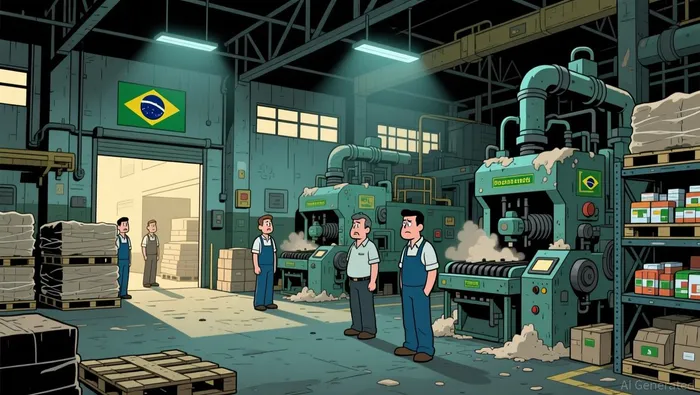
The manufacturing slowdown also underscores Brazil's vulnerability to global energy and material price shocks. The rising costs of PE resins, a key material in flexible packaging, are being passed down the value chain. With the Brazilian Association of the Flexible Plastic Packaging Industry warning of a potential supply squeeze, the ripple effects are expected to spread across multiple sectors. This dynamic is especially relevant for investors with exposure to Latin American markets, as the cost spiral could exacerbate inflationary pressures and reduce corporate margins.
Investor Implications for Emerging Market Exposures
The continued contraction in Brazil's manufacturing sector raises concerns for investors with exposure to emerging markets. Brazil's manufacturing PMI has historically been a bellwether for broader economic trends in the region. A sustained contraction could signal a slowdown in trade and capital inflows, particularly as global demand remains fragile amid geopolitical tensions. Investors should monitor upcoming indicators, such as industrial output and trade balance data, to gauge the extent of the slowdown.
Moreover, the manufacturing sector's weakness may influence monetary policy considerations, though the Central Bank of Brazil has been focusing on inflation control in recent months. The recent contraction could add downward pressure on growth expectations, potentially complicating the policy outlook. Investors should also consider how global energy and input price volatility might further erode manufacturing margins and investor confidence.

Stay ahead of the market.
Get curated U.S. market news, insights and key dates delivered to your inbox.


AInvest
PRO
AInvest
PRO



Comments
No comments yet