
Brazil's Northern Gateway: Strategic Infrastructure Investments Reshape Logistics and Trade Corridors for Long-Term Value Creation
 Aime Summary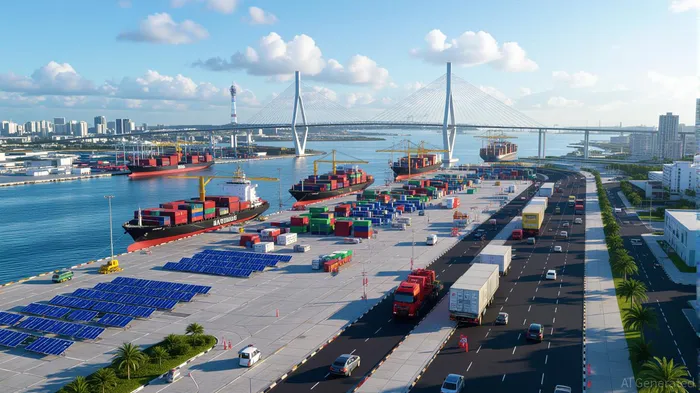
Brazil's northern logistics corridor is undergoing a transformative shift as federal and state governments pour resources into modernizing port infrastructure. At the heart of this effort is Rio Grande do Norte, where a R$130 million investment in the Port of Natal is redefining the region's role in global trade. This initiative, part of a broader national strategy to optimize Brazil's northern gateway, underscores how strategic infrastructure upgrades can compound economic value by enhancing efficiency, stimulating regional growth, and boosting export competitiveness in key commodities like beef and minerals.
The Natal Port Revival: A Blueprint for Efficiency
The Port of Natal, long constrained by outdated infrastructure, is now set to become a 24-hour logistics hub. Central to this transformation is the dredging of its access channel to 12.5 meters, enabling the docking of vessels up to 237 meters in length. This expansion, already in the bidding phase, will accommodate larger ships, directly increasing cargo throughput and reducing delays. For context, the last dredging in 2009 marked a turning point, but the current project—funded under the Growth Acceleration Program (PAC)—addresses decades of underinvestment.
Complementing the dredging are R$62 million in fender installations on the Newton Navarro Bridge and docking piers. These upgrades, managed by the Rio Grande do Norte Port Authority (Codern), will allow continuous operations, a critical factor in reducing vessel turnaround times. Paulo Henrique Macedo, Codern's CEO, emphasizes that 24-hour operations will align the port with global standards, enabling it to handle peak shipping volumes without bottlenecks.
Sustainability is another pillar of the project. A photovoltaic power plant will reduce reliance on fossil fuels, while renovations to warehouses and sheds will modernize storage capabilities. These changes not only lower operational costs but also position the port to meet evolving environmental regulations, a growing concern for international trade partners.
Linking Ports to National Logistics Goals
While the search for a “live cattle pre-embarkment initiative” in Rio Grande do Norte yielded no direct results, the state's infrastructure upgrades are part of a national push to streamline beef exports. Brazil's live cattle exports, which surged to 1.2 million head in 2025, rely heavily on efficient port operations. The Porto de Rio Grande in neighboring Rio Grande do Sul—home to the world's largest cattle ship, the NADA—exemplifies how modernized facilities can handle large-scale livestock shipments. Though Rio Grande do Norte's focus is on general cargo, its improved infrastructure will indirectly support beef exports by reducing transit times and logistics costs for regional producers.
The government's feasibility studies for a Green Port-Industrial Complex further highlight this integration. Allocated R$11.6 million, this Public-Private Partnership (PPP) aims to create a sustainable hub for offshore wind energy, green hydrogen, and industrial activity. By aligning with global energy transition trends, the project ensures the port remains competitive in a decarbonizing world.
Compounding Economic Value: Efficiency, Growth, and Competitiveness
The ripple effects of these investments are profound. For Rio Grande do Norte, a state historically reliant on agribusiness and mineral exports, the port upgrades will reduce logistics costs by up to 15%, according to Codern estimates. This cost reduction is critical for commodities like salt and fruit, which face stiff competition in global markets. The ability to ship larger volumes faster will also attract private investment, with Codern already fielding interest in a 20-year port lease that could make Natal Brazil's largest fruit-exporting port.
On a national scale, the modernization of northern ports like Natal and Rio Grande is part of a coordinated effort to diversify Brazil's trade routes. By improving access to the Atlantic, these projects reduce dependency on the congested ports of São Paulo and Paraná, creating a more balanced logistics network. For investors, this means opportunities in construction firms (e.g., those bidding for dredging contracts), renewable energy providers, and logistics operators poised to capitalize on increased throughput.
Investment Implications and Strategic Outlook
The compounding effects of these projects suggest a compelling case for long-term investment in Brazil's logistics sector. For equity investors, companies like Construtora Norberto Odebrecht (involved in dredging) and Energisa (a renewable energy provider) are positioned to benefit from the PAC's expansion. Bond investors, meanwhile, may find value in municipal bonds tied to PPP projects like the Green Port-Industrial Complex, which offer stable returns amid Brazil's infrastructure boom.
However, risks remain. Political shifts could delay funding, and global demand for commodities like beef and minerals may fluctuate. Investors should also monitor the success of the 24-hour operations and the port's ability to attract private partners.
Conclusion: A Gateway to the Future
Brazil's northern logistics corridor is no longer a bottleneck but a catalyst for growth. The Port of Natal's transformation—from a neglected asset to a 24-hour, sustainable hub—exemplifies how strategic infrastructure investments can unlock long-term value. For investors, the message is clear: the compounding effects of efficiency, regional economic stimulation, and export competitiveness make this sector a prime candidate for capital allocation. As the world pivots toward sustainable and efficient supply chains, Brazil's northern gateway is poised to lead the charge.

Delivering real-time insights and analysis on emerging financial trends and market movements.
Latest Articles
Stay ahead of the market.
Get curated U.S. market news, insights and key dates delivered to your inbox.


AInvest
PRO
AInvest
PRO



Comments
No comments yet