
Brazil's Lula Sees Approval Ratings Rise Amid Trade War with US
ByAinvest
Wednesday, Jul 16, 2025 7:55 am ET2min read
ADM--
The USTR's investigation targets Brazil's policies on ethanol tariffs, digital trade restrictions, IP enforcement, and deforestation, directly impacting US firms' competitiveness. A favorable ruling by early 2026 could remove Brazil's 20% tariff on US ethanol, slash tariffs on Brazilian agricultural imports, and open Brazil's $300 billion digital payments market to US platforms [1]. These changes would create a tailwind for specific sectors, while the ongoing 50% tariffs on Brazilian exports (effective August 2025) may already be pressuring local industries to seek US alternatives.
Sector Breakdown: Where to Look for Opportunities
1. Agriculture: Ethanol's Turnaround
Brazil's ethanol tariff reversal is a linchpin of the investigation. US ethanol producers like Valero Energy (VLO) and Green Plains (GPRE) face stiff competition from Brazil's cheaper sugarcane-based ethanol. If tariffs are lifted, their margins could expand significantly. However, US firms must contend with Brazil's subsidized sugarcane industry. A strategic play here involves companies with diversified exposure, such as Archer-Daniels-Midland (ADM), which operates in both ethanol production and agribusiness [1].
2. Manufacturing: Digital Trade as a Growth Lever
Brazil's Supreme Court pressure on US social media platforms and digital payment services has drawn accusations of censorship and protectionism. A favorable ruling could force Brazil to relax restrictions, creating openings for PayPal (PYPL) or Square (SQ) to penetrate a market where local players like Mercado Pago currently dominate [1]. Investors should also watch for spillover effects in sectors like carbon fiber manufacturing, where Brazilian producers face higher costs due to US tariffs, potentially favoring US firms like Hexcel (HXL) [1].
3. Technology & IP: A Quiet but Pivotal Frontier
The USTR's focus on IP enforcement and anti-corruption measures targets Brazil's lax handling of intellectual property theft, a major hurdle for US tech and pharmaceutical firms. Companies like Microsoft (MSFT) and Moderna (MRNA) could see licensing revenue boosts if enforcement improves [1].
Geopolitical Risk and the Bolsonaro Factor
The investigation's timing—amid Brazil's political volatility and US pressure over former President Bolsonaro's treatment—adds a layer of uncertainty. Investors should monitor diplomatic developments, as a thaw in US-Brazil relations could accelerate resolution. Conversely, further escalation might prolong tariffs and compliance costs [1].
Investment Strategy: Balance Short-Term Caution with Long-Term Vision
- Aggressive Plays: Consider overweighting in ADM, VLO, and PYPL if the USTR's ruling is positive. These companies are undervalued relative to their potential upside.
- Defensive Hedges: For risk-averse investors, Weyerhaeuser (WY) offers exposure to timber markets that could benefit from reduced Brazilian deforestation, with lower volatility than pure-play ethanol or tech stocks.
- Avoid: Steer clear of Brazil-heavy exporters like Tyson Foods (TSN) unless tariffs are rolled back. Short-term disruptions in inputs like carbon fiber may hurt niche manufacturers.
Conclusion
The U.S.-Brazil trade dispute is a microcosm of broader Latin American market dynamics. By focusing on sectors where Section 301 investigations could dismantle barriers—ethanol, digital payments, and IP-driven tech—investors can position for growth amid geopolitical turbulence. While near-term volatility is inevitable, the structural shift toward fairer trade could make 2026 a pivotal year for US firms seeking to expand in Latin America. For now, patience and sector specificity are key. Monitor the September 3 public hearing and USTR's early-2026 ruling for critical catalysts.
References:
[1] https://www.ainvest.com/news/brazil-trade-crossroads-strategic-opportunity-latin-american-markets-2507/
[2] https://www.lokmattimes.com/international/trump-threatens-50-tariff-on-brazil-over-bolsonaro-trial-targets-copper-imports/
GPRE--
HXL--
MRNA--
MSFT--
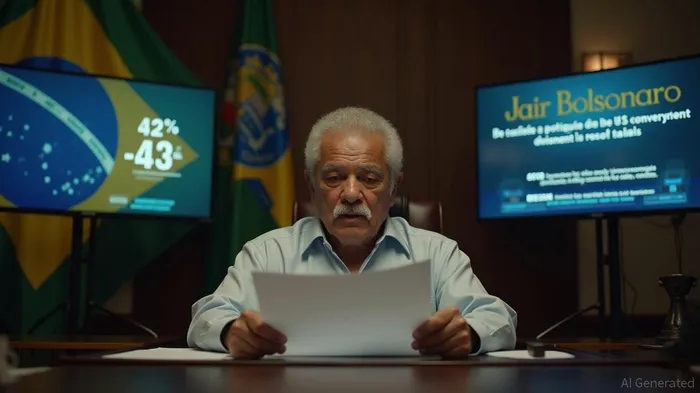
Brazil's President Lula has seen a 3% increase in approval ratings to 43%, according to a Genial/Quaest poll. The survey was conducted between July 10 and 14, with a sample size of 2,004 people and a margin of error of 2 percentage points. The US has also opened an investigation into Brazil's commercial conduct under Section 301 of US law, citing alleged attacks on US social media companies and other unfair practices. Jair Bolsonaro stated that he may have the power to resolve the US-imposed 50% tariff on Brazil if he had the freedom to speak with Donald Trump.
Brazil's President Lula has seen a 3% increase in approval ratings, reaching 43% according to a Genial/Quaest poll conducted between July 10 and 14. The US has concurrently opened an investigation into Brazil's commercial conduct under Section 301 of US law, citing alleged attacks on US social media companies and other unfair practices [1]. Jair Bolsonaro, currently on trial for allegedly plotting a coup, has suggested he could resolve the US-imposed 50% tariff on Brazil if he had the freedom to speak with Donald Trump.The USTR's investigation targets Brazil's policies on ethanol tariffs, digital trade restrictions, IP enforcement, and deforestation, directly impacting US firms' competitiveness. A favorable ruling by early 2026 could remove Brazil's 20% tariff on US ethanol, slash tariffs on Brazilian agricultural imports, and open Brazil's $300 billion digital payments market to US platforms [1]. These changes would create a tailwind for specific sectors, while the ongoing 50% tariffs on Brazilian exports (effective August 2025) may already be pressuring local industries to seek US alternatives.
Sector Breakdown: Where to Look for Opportunities
1. Agriculture: Ethanol's Turnaround
Brazil's ethanol tariff reversal is a linchpin of the investigation. US ethanol producers like Valero Energy (VLO) and Green Plains (GPRE) face stiff competition from Brazil's cheaper sugarcane-based ethanol. If tariffs are lifted, their margins could expand significantly. However, US firms must contend with Brazil's subsidized sugarcane industry. A strategic play here involves companies with diversified exposure, such as Archer-Daniels-Midland (ADM), which operates in both ethanol production and agribusiness [1].
2. Manufacturing: Digital Trade as a Growth Lever
Brazil's Supreme Court pressure on US social media platforms and digital payment services has drawn accusations of censorship and protectionism. A favorable ruling could force Brazil to relax restrictions, creating openings for PayPal (PYPL) or Square (SQ) to penetrate a market where local players like Mercado Pago currently dominate [1]. Investors should also watch for spillover effects in sectors like carbon fiber manufacturing, where Brazilian producers face higher costs due to US tariffs, potentially favoring US firms like Hexcel (HXL) [1].
3. Technology & IP: A Quiet but Pivotal Frontier
The USTR's focus on IP enforcement and anti-corruption measures targets Brazil's lax handling of intellectual property theft, a major hurdle for US tech and pharmaceutical firms. Companies like Microsoft (MSFT) and Moderna (MRNA) could see licensing revenue boosts if enforcement improves [1].
Geopolitical Risk and the Bolsonaro Factor
The investigation's timing—amid Brazil's political volatility and US pressure over former President Bolsonaro's treatment—adds a layer of uncertainty. Investors should monitor diplomatic developments, as a thaw in US-Brazil relations could accelerate resolution. Conversely, further escalation might prolong tariffs and compliance costs [1].
Investment Strategy: Balance Short-Term Caution with Long-Term Vision
- Aggressive Plays: Consider overweighting in ADM, VLO, and PYPL if the USTR's ruling is positive. These companies are undervalued relative to their potential upside.
- Defensive Hedges: For risk-averse investors, Weyerhaeuser (WY) offers exposure to timber markets that could benefit from reduced Brazilian deforestation, with lower volatility than pure-play ethanol or tech stocks.
- Avoid: Steer clear of Brazil-heavy exporters like Tyson Foods (TSN) unless tariffs are rolled back. Short-term disruptions in inputs like carbon fiber may hurt niche manufacturers.
Conclusion
The U.S.-Brazil trade dispute is a microcosm of broader Latin American market dynamics. By focusing on sectors where Section 301 investigations could dismantle barriers—ethanol, digital payments, and IP-driven tech—investors can position for growth amid geopolitical turbulence. While near-term volatility is inevitable, the structural shift toward fairer trade could make 2026 a pivotal year for US firms seeking to expand in Latin America. For now, patience and sector specificity are key. Monitor the September 3 public hearing and USTR's early-2026 ruling for critical catalysts.
References:
[1] https://www.ainvest.com/news/brazil-trade-crossroads-strategic-opportunity-latin-american-markets-2507/
[2] https://www.lokmattimes.com/international/trump-threatens-50-tariff-on-brazil-over-bolsonaro-trial-targets-copper-imports/
Stay ahead of the market.
Get curated U.S. market news, insights and key dates delivered to your inbox.
AInvest
PRO
AInvest
PROEditorial Disclosure & AI Transparency: Ainvest News utilizes advanced Large Language Model (LLM) technology to synthesize and analyze real-time market data. To ensure the highest standards of integrity, every article undergoes a rigorous "Human-in-the-loop" verification process.
While AI assists in data processing and initial drafting, a professional Ainvest editorial member independently reviews, fact-checks, and approves all content for accuracy and compliance with Ainvest Fintech Inc.’s editorial standards. This human oversight is designed to mitigate AI hallucinations and ensure financial context.
Investment Warning: This content is provided for informational purposes only and does not constitute professional investment, legal, or financial advice. Markets involve inherent risks. Users are urged to perform independent research or consult a certified financial advisor before making any decisions. Ainvest Fintech Inc. disclaims all liability for actions taken based on this information. Found an error?Report an Issue


ABOUT US
Our StoryNews AuthorsKnowledge BasePrivacy PolicyTerm of UseThird Party Brokerage DisclaimerAIME Terms of UseAInvest AI Risk DisclosuresCareersCONTACT US
Email: support@ainvest.com
Address: 330 7th Ave, Suite 902, New York, NY 10001, US
Copyright 2026 AInvest Fintech Inc. All rights reserved.


Comments
No comments yet