
Brazil Industry Falls 1.8% as Central Bank Cuts Rates
 Aime Summary
- Brazil's industrial production fell 1.8% in July, accelerating the contraction seen in June and highlighting weakening momentum in the manufacturing sector.
- The sharp decline signals deteriorating domestic demand and potential trade headwinds, complicating the Brazilian Central Bank's inflation-growth trade-off.
- The data coincides with a highly anticipated 25-basis-point rate cut to 14.00%, as policymakers attempt to support growth while keeping inflation anchored.
- Investors should watch the divergence between manufacturing weakness and service sector resilience as a key indicator of the broader economic trajectory.
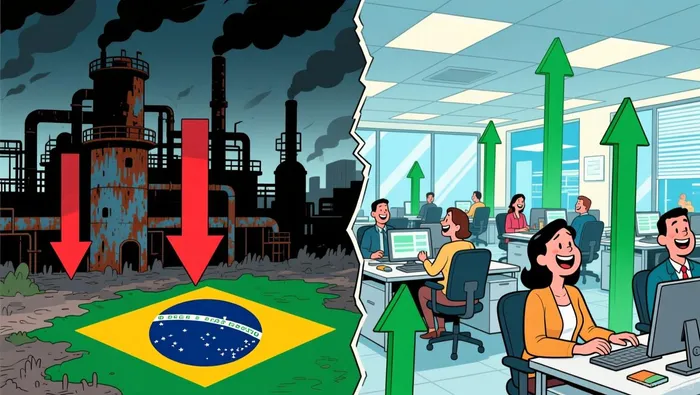
Brazil’s industrial sector861072-- continued to face significant headwinds in July, with official data revealing a 1.8% month-over-month contraction in industrial production. This second consecutive monthly decline represents a notable acceleration in the downturn compared to the 0.9% drop recorded in June, signaling that the manufacturing sector is struggling to find its footing amid persistent economic uncertainties. The data underscores the challenging environment facing Brazilian industry, where both domestic consumption and external demand appear to be weakening simultaneously.
What Does The Industrial Contraction Signal About Brazil's Economy?
The 1.8% decline in industrial production is a significant data point for investors assessing the health of the Brazilian economy. Industrial activity is often viewed as a bellwether for broader economic trends, as it encompasses sectors sensitive to both consumer demand and business investment. The acceleration of the decline from 0.9% to 1.8% suggests that the factors weighing on the sector are intensifying rather than abating.
This contraction is likely driven by a combination of high borrowing costs and sluggish external demand. While the Brazilian Real has faced volatility, the primary driver appears to be a lack of robust demand for industrial goods861072--. The manufacturing sector has been particularly vulnerable to the high interest rate environment, which has discouraged capital expenditure and inventory buildup. Furthermore, global trade dynamics, including potential shifts in commodity prices and demand from key trading partners like China, continue to exert pressure on Brazilian exports.
The data also highlights the structural challenges within the Brazilian industrial base. Unlike the services sector, which has shown resilience and continues to drive GDP growth, manufacturing has struggled to adapt to the current economic landscape. The decline in industrial production may reflect a broader shift in the economy towards services, but it also points to a lack of diversification and competitiveness in the industrial sector. Investors should view this contraction as a warning sign that the economic recovery is uneven and heavily reliant on consumption rather than productive investment.
Why Are Investors Watching This Data Ahead Of The Rate Cut?
The release of the industrial production data comes at a critical juncture for Brazilian monetary policy. The Brazilian Central Bank is widely expected to cut the benchmark Selic rate by 25 basis points to 14.00% on August 5, marking the fourth consecutive rate cut. This anticipated easing is a direct response to the cooling inflation outlook and the need to support economic growth, which is showing signs of slowing down.
The 1.8% decline in industrial production reinforces the case for monetary easing. A weakening manufacturing sector suggests that the economy has room for lower interest rates without immediately reigniting inflationary pressures. However, the Central Bank must navigate a delicate balance. While the industrial data supports a rate cut, persistent inflation risks and fiscal uncertainties remain key concerns for policymakers.
Analysts suggest that the Central Bank will proceed cautiously with the rate cut, avoiding clear guidance on future moves to prevent market confusion. The decision to lower rates to 14.00% is seen as a measured step to support growth, but the pace of future cuts may depend on the outcome of the October presidential election and the government's fiscal policy. Investors are closely watching for any signals from the Central Bank that suggest a more aggressive or dovish stance in response to the industrial slowdown.
The divergence between the industrial sector's performance and the broader economy's resilience is a key theme for investors. While manufacturing struggles, the services sector continues to expand, driven by consumer spending and a relatively stable labor market. This divergence complicates the policy outlook, as the Central Bank must consider the varied performance of different economic segments when making rate decisions.
What Should Investors Watch Next In The Brazilian Macro Landscape?
Looking ahead, investors will be closely monitoring subsequent economic data releases to gauge the trajectory of the Brazilian economy. Key indicators to watch include retail sales, which will provide insight into consumer demand, and inflation data, which will inform the Central Bank's future policy decisions. The upcoming presidential election in October is also a major factor, as the outcome could significantly impact fiscal policy and market sentiment.
Additionally, investors should monitor global commodity prices and trade flows, as these factors continue to influence Brazil's external sector. A sustained decline in industrial production could lead to further rate cuts, but it also raises concerns about the long-term growth prospects of the Brazilian economy. The resilience of the services sector and the stability of the labor market will be crucial in determining whether the economy can achieve a soft landing.
The launch of new financial technologies and wealth management platforms in Brazil, such as Decade Wealth Management, may also provide insights into consumer confidence and investment trends. These developments highlight the evolving nature of the Brazilian financial landscape and the potential for innovation to drive growth in key sectors.
In summary, the 1.8% contraction in Brazil's industrial production is a significant indicator of economic headwinds that are likely to influence monetary policy and market dynamics in the coming months. Investors should remain vigilant and responsive to new data releases as they assess the risks and opportunities in the Brazilian market.

Stay ahead of the market.
Get curated U.S. market news, insights and key dates delivered to your inbox.


AInvest
PRO
AInvest
PRO




Comments
No comments yet