
Brazil's Economic Resilience in a Global Downturn: Strategic Emerging Market Exposure and Inflation-Linked Asset Allocation


 Aime Summary
Brazil's economy has demonstrated remarkable resilience amid a global downturn in 2025, positioning it as a compelling destination for strategic emerging market exposure. Despite a slowdown in GDP growth and persistent inflationary pressures, the country's diversified commodity exports, , and structural trade advantages have cushioned it against broader global headwinds. This analysis explores Brazil's macroeconomic landscape, its , and its comparative strength within the emerging market universe.
GDP and Inflation: A Mixed but Manageable Outlook
, . However, this slowdown is not indicative of systemic fragility. The Finance Ministry noted that private consumption and agricultural exports remain robust, with the latter
benefiting from strong global demand for soybeans and iron ore.
Inflation, while still above the central bank's target range, has shown a clear downward trajectory. By October 2025, ,
the lowest level since January. This decline, driven by a stronger real and lower commodity prices, has allowed the Central Bank of Brazil (BCB) to signal a potential easing of its aggressive monetary tightening cycle.
, , is expected to stabilize as inflationary pressures moderate.
Trade Dynamics: Navigating U.S. Tariffs and Diversifying Markets
Brazil's trade balance in Q3 2025 highlighted both vulnerabilities and strengths. ,
, particularly in agriculture and extractive industries. However, U.S. tariffs imposed in August 2025
significantly impacted medium- and medium-low-technology goods, .
This challenge was partially offset by a surge in exports to China, where
. Brazil's trade structure, characterized by high tariffs and limited integration into global value chains, has insulated it from the full brunt of trade wars. Unlike more export-dependent economies, Brazil's reliance on energy and agricultural commodities-such as oil, soybeans, and iron ore-has
provided a stable revenue stream amid global fragmentation.
: Attractive Yields in a High-Yield Environment
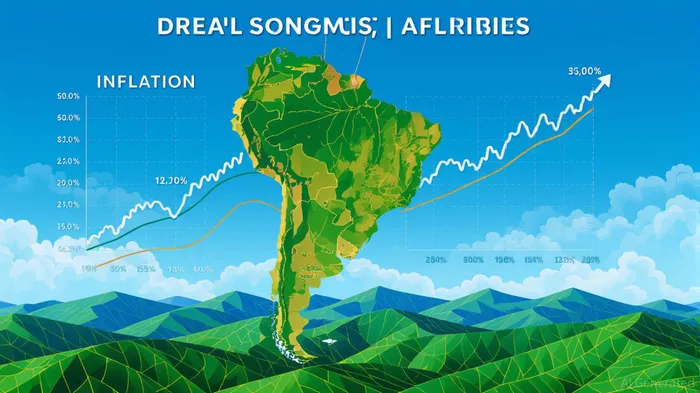
Brazil's inflation-linked bonds have emerged as a cornerstone of its appeal to global investors.
By the end of 2024, , reflecting high inflation and tight monetary policy. However, as inflation expectations moderate, these yields have begun to decline. By late 2025, ,
a one-year low, as improved economic stability reduced risk premiums.
 The BCB's aggressive rate hikes-
peaking at 14.75% in May 2025-have created a favorable yield differential compared to other emerging markets, where central banks have opted for rate cuts to stimulate growth. Brazil's real interest rates, adjusted for inflation, now outperform peers like India and Mexico, making its inflation-linked bonds particularly attractive. Additionally,
, outperforming developed markets as global capital flows shifted toward higher-yielding assets.
: Deflationary Pressures and Strategic Opportunities
Brazil's inflation-linked commodities, including soybeans, iron ore, and oil, have shown mixed trends.
(IPCA) recorded deflation in August 2025, with housing and food prices declining due to reduced electricity tariffs and lower agricultural costs. On the producer side,
(PPI) fell by 0.2% monthly in August, driven by declines in food products and chemicals.
However, Brazil's commodity exports remain a bright spot.
The 2025/26 soybean crop is forecast to reach a record 178 million metric tons, despite logistical bottlenecks. ,
supported by strong global demand and export tightness. Meanwhile, Brazil's crude oil exports, though affected by global oversupply, continue to benefit from its strategic position as a key supplier to China and the U.S.
according to Statista.
Strategic Implications for Investors
Brazil's economic resilience in 2025 underscores its potential as a strategic asset in emerging market portfolios. Its inflation-linked bonds, diversified commodity exports, and structural trade advantages offer a hedge against global volatility. For investors, the key opportunities lie in:
1. Inflation-Linked Bonds: Brazil's high-yield sovereign bonds, particularly those indexed to inflation, provide a buffer against currency depreciation and capital erosion.
2. Commodity Exposure: Agribusiness and energy sectors, including soybeans and oil, offer long-term growth potential amid global supply chain shifts.
3. Equity Allocation: The MSCI Brazil Index's outperformance in 2025 highlights the appeal of domestic equities, particularly in sectors insulated from U.S. tariff impacts.
While risks such as fiscal sustainability and political uncertainty persist, Brazil's macroeconomic adjustments-coupled with its unique position in global trade-make it a compelling case for strategic allocation. As global markets navigate a fragmented economic landscape, Brazil's blend of resilience and yield offers a rare combination for investors seeking both stability and growth.

Stay ahead of the market.
Get curated U.S. market news, insights and key dates delivered to your inbox.


AInvest
PRO
AInvest
PRO



Comments
No comments yet