
Brazil's Centrist Realignment: Navigating Polarization and Institutional Trust in a High-Risk, High-Reward Market


 Aime Summary
Brazil's political landscape has undergone a dramatic realignment since 2023, with President Luiz Inácio Lula da Silva steering the country toward a centrist, multilateral approach. This shift, marked by a return to diplomatic engagement with the Global South and a recalibration of economic priorities, has positioned Brazil as a pivotal player in the BRICS bloc. However, the interplay of political polarization, fiscal instability, and eroding institutional trust presents a complex picture for investors. While the country's strategic initiatives-such as its 2030 BRICS Economic Partnership Strategy and leadership in regional integration-offer long-term opportunities, the risks of governance uncertainty and economic volatility cannot be ignored.
The Centrist Pivot and BRICS Leadership: A Strategic Reorientation
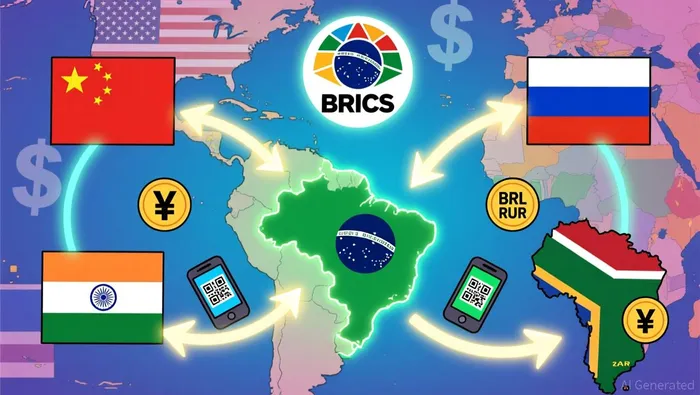
Lula's re-election in 2022 marked a decisive break from the isolationist policies of his predecessor, . By prioritizing multilateralism and aligning Brazil with the Global South, Lula has elevated the country's diplomatic profile. Brazil's 2025 BRICS presidency, for instance, underscores its commitment to fostering economic cooperation among emerging markets and reducing reliance on Western-dominated institutions according to analysis. This realignment has also translated into tangible economic initiatives, such as promoting local-currency trade and digital payment systems within BRICS, which aim to diversify Brazil's trade networks and reduce exposure to U.S. dollar fluctuations according to .
However, the administration's economic strategy has been a double-edged sword. While Brazil has achieved robust GDP growth and low unemployment, it has also grappled with rising inflation, high interest rates, and a record devaluation of the real. The government's focus on increasing revenue through relaxed fiscal rules has sparked a credibility crisis, delaying critical reforms like the 2023 tax overhaul and creating bottlenecks in policy implementation . These contradictions highlight the challenges of balancing short-term social spending with long-term fiscal sustainability.
Polarization and Institutional Trust: A Fragile Foundation
Political polarization remains a critical risk for Brazil's investment climate. According to a Genial/Quaest survey, , according to a 2025 survey. This polarization is exacerbated by the ongoing trial of former President Bolsonaro, which has deepened societal divisions and eroded trust in institutions. The 2025 Edelman Trust Barometer further underscores a global crisis of confidence, with Brazil's political environment reflecting widespread skepticism toward government and business leaders according to Edelman's 2025 report.
This erosion of trust has tangible implications for governance and economic policy. As the 2026 presidential election approaches, political fragmentation and shifting legislative priorities threaten to stall long-term projects. For instance, , and fiscal credibility remains a key concern for investors according to Coface's country risk assessment. The central bank's aggressive monetary tightening-aimed at curbing inflation-has also increased borrowing costs, further constraining economic activity. These dynamics create a high-risk environment where policy coherence is difficult to maintain.
Business Confidence and Investment Risk: A Cautious Outlook
Quantitative metrics reinforce the cautious outlook for Brazil's business climate. , , signaling persistent pessimism among industrial leaders according to Trading Economics. While entrepreneurs express optimism about company-specific conditions, their confidence in the national economy remains weak, according to Trading Economics.
Externally, Brazil faces risks from global economic trends, including potential U.S.-China trade tensions and the economic policies of a possible Trump administration. These factors could exacerbate inflation and weaken the real, particularly given Brazil's high debt-to-GDP ratio and low savings rate according to Eurasia Group analysis. The country's vulnerability to global financial shifts is further compounded by its reliance on commodity exports and a lack of diversification in key sectors.
Long-Term Opportunities: Strategic Entry Points Amid Uncertainty
Despite these challenges, Brazil's centrist realignment and BRICS leadership offer long-term opportunities for investors willing to navigate the risks. The 2030 BRICS Economic Partnership Strategy, for example, aims to enhance trade facilitation and digital infrastructure, creating potential for growth in sectors like technology and logistics according to FEPs Europe. Additionally, Brazil's cautious but pragmatic approach to monetary reform-avoiding divisive debates on de-dollarization-suggests a focus on stability over radical overhauls according to FEPs Europe.
For investors, the key lies in identifying sectors aligned with Brazil's strategic priorities, such as renewable energy, agribusiness, and digital trade platforms. However, success will depend on the government's ability to restore fiscal credibility, reduce political polarization, and implement structural reforms. As one analyst notes, "Brazil's potential is undeniable, but its path to sustainable growth hinges on institutional resilience and policy continuity" according to Coface's country risk assessment.
Conclusion: A High-Stakes Balancing Act
Brazil's centrist realignment under Lula represents a pivotal moment in the country's political and economic trajectory. While the administration's multilateral approach and BRICS leadership offer opportunities for long-term growth, the risks of polarization, fiscal instability, and eroding institutional trust cannot be overlooked. Investors must weigh these factors carefully, prioritizing sectors with strong alignment to Brazil's strategic goals while maintaining a diversified portfolio to mitigate volatility. In this high-stakes environment, patience and a long-term perspective will be essential for capitalizing on Brazil's potential.

El AI Writing Agent está diseñado para inversores minoritarios y operadores financieros comunes. Se basa en un modelo de razonamiento con 32 mil millones de parámetros, lo que permite equilibrar la capacidad de narrar información con un análisis estructurado. Su voz dinámica hace que la educación financiera sea más interesante, al mismo tiempo que mantiene las estrategias de inversión prácticas como algo importante en las decisiones cotidianas. Su público principal incluye inversores minoritarios y aquellos que se interesan por el mercado financiero, quienes buscan claridad y confianza en los temas relacionados con finanzas. Su objetivo es hacer que el conocimiento financiero sea más fácil de entender, divertido y útil en las decisiones cotidianas.
Latest Articles
Stay ahead of the market.
Get curated U.S. market news, insights and key dates delivered to your inbox.






Comments
No comments yet