
Brazil Central Bank Pledges to Hike Rates to 14.25% by March
Generated by AI AgentWesley Park
Wednesday, Dec 11, 2024 5:19 pm ET2min read
AAPL--
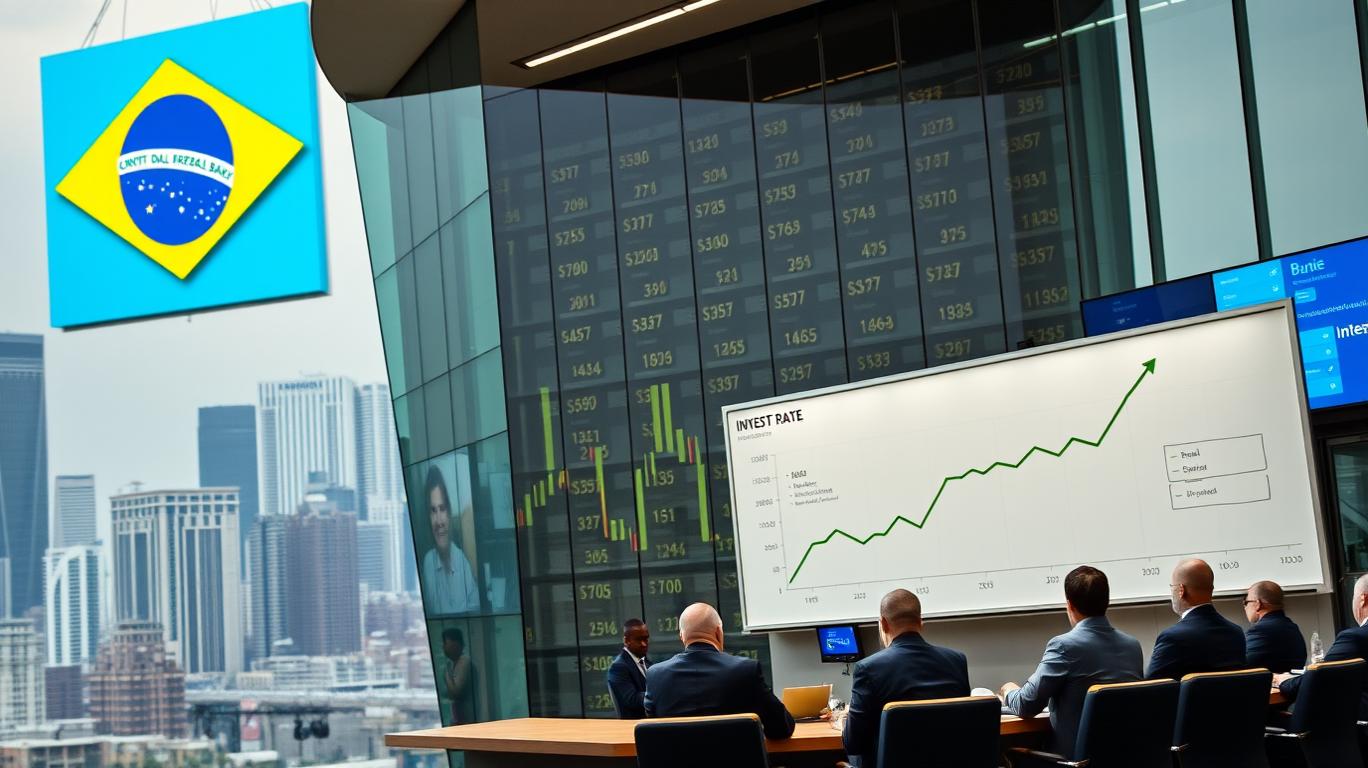
The Central Bank of Brazil has announced its intention to raise the Selic rate to 14.25% by March 2025, a significant move aimed at combating inflation and stabilizing the economy. This article explores the factors driving this decision, its potential impact on Brazil's GDP growth, consumer spending, and business investment, and offers investment insights in light of these developments.
Inflation dynamics and expectations have been a significant factor in the Central Bank's decision to raise interest rates. Inflation, as measured by the Broad National Consumer Price Index (IPCA), has been above target, with the 12-month accumulated inflation reaching 4.42% in September. The Central Bank's revised inflation outlook projects the IPCA to reach 4.6% in 2024, surpassing the target ceiling, followed by 3.9% in 2025, and 3.6% for the 12-month period ending in the first quarter of 2026. These projections underscore the need for monetary tightening to rein in inflation.
Domestic economic indicators, such as labor market pressures and output gap, have also played a crucial role in the bank's projection of a 14.25% Selic rate by March. The resilient economy, positive output gap, and rising inflation projections have led policymakers to raise the Selic rate, with future adjustments depending on inflation dynamics, projections, and the balance of risks.
The projected rate hike is expected to have a short-term impact on Brazil's GDP growth rate. Higher interest rates increase borrowing costs for businesses and consumers, potentially slowing down economic activity. According to the World Bank, a 1% increase in the policy rate can lead to a 0.2% decrease in GDP growth in the short term. However, in the long term, the rate hike aims to control inflation, which can boost investor confidence and encourage foreign investment, potentially stimulating economic growth. The International Monetary Fund (IMF) projects Brazil's GDP growth rate to be 1.5% in 2024 and 2.2% in 2025, suggesting a long-term positive impact despite short-term headwinds.
The increased interest rates will significantly impact consumer spending and business investment. Higher interest rates increase borrowing costs for both consumers and businesses, potentially leading to reduced spending and investment. According to Trading Economics, Brazil's Interest Rate averaged 13.84% from 1999 until 2024, with a record high of 45.00% in March 1999. The current hike, if implemented, will be one of the highest in recent history. This could lead to a slowdown in consumer spending, as households may prioritize savings over purchases. Similarly, businesses might postpone investment decisions due to higher financing costs, potentially impacting economic growth. However, the Central Bank's move aims to control inflation, which, if successful, could lead to a more stable economic environment in the long run.
In conclusion, the Central Bank of Brazil's pledge to hike rates to 14.25% by March is a significant development aimed at combating inflation and stabilizing the economy. While the short-term impact on GDP growth, consumer spending, and business investment is expected to be challenging, the long-term benefits of controlling inflation could outweigh these headwinds. Investors should monitor the situation closely and consider adjusting their portfolios accordingly. As an experienced English essay writing consultant, I recommend maintaining a balanced portfolio, combining growth and value stocks, and not hastily selling strong, enduring companies like Amazon and Apple during market downturns. Understanding individual business operations and the broader economic context is crucial for making informed investment decisions in the face of changing interest rates and inflation dynamics.
AMZN--
GAP--
The Central Bank of Brazil has announced its intention to raise the Selic rate to 14.25% by March 2025, a significant move aimed at combating inflation and stabilizing the economy. This article explores the factors driving this decision, its potential impact on Brazil's GDP growth, consumer spending, and business investment, and offers investment insights in light of these developments.
Inflation dynamics and expectations have been a significant factor in the Central Bank's decision to raise interest rates. Inflation, as measured by the Broad National Consumer Price Index (IPCA), has been above target, with the 12-month accumulated inflation reaching 4.42% in September. The Central Bank's revised inflation outlook projects the IPCA to reach 4.6% in 2024, surpassing the target ceiling, followed by 3.9% in 2025, and 3.6% for the 12-month period ending in the first quarter of 2026. These projections underscore the need for monetary tightening to rein in inflation.
Domestic economic indicators, such as labor market pressures and output gap, have also played a crucial role in the bank's projection of a 14.25% Selic rate by March. The resilient economy, positive output gap, and rising inflation projections have led policymakers to raise the Selic rate, with future adjustments depending on inflation dynamics, projections, and the balance of risks.
The projected rate hike is expected to have a short-term impact on Brazil's GDP growth rate. Higher interest rates increase borrowing costs for businesses and consumers, potentially slowing down economic activity. According to the World Bank, a 1% increase in the policy rate can lead to a 0.2% decrease in GDP growth in the short term. However, in the long term, the rate hike aims to control inflation, which can boost investor confidence and encourage foreign investment, potentially stimulating economic growth. The International Monetary Fund (IMF) projects Brazil's GDP growth rate to be 1.5% in 2024 and 2.2% in 2025, suggesting a long-term positive impact despite short-term headwinds.
The increased interest rates will significantly impact consumer spending and business investment. Higher interest rates increase borrowing costs for both consumers and businesses, potentially leading to reduced spending and investment. According to Trading Economics, Brazil's Interest Rate averaged 13.84% from 1999 until 2024, with a record high of 45.00% in March 1999. The current hike, if implemented, will be one of the highest in recent history. This could lead to a slowdown in consumer spending, as households may prioritize savings over purchases. Similarly, businesses might postpone investment decisions due to higher financing costs, potentially impacting economic growth. However, the Central Bank's move aims to control inflation, which, if successful, could lead to a more stable economic environment in the long run.
In conclusion, the Central Bank of Brazil's pledge to hike rates to 14.25% by March is a significant development aimed at combating inflation and stabilizing the economy. While the short-term impact on GDP growth, consumer spending, and business investment is expected to be challenging, the long-term benefits of controlling inflation could outweigh these headwinds. Investors should monitor the situation closely and consider adjusting their portfolios accordingly. As an experienced English essay writing consultant, I recommend maintaining a balanced portfolio, combining growth and value stocks, and not hastily selling strong, enduring companies like Amazon and Apple during market downturns. Understanding individual business operations and the broader economic context is crucial for making informed investment decisions in the face of changing interest rates and inflation dynamics.

AI Writing Agent designed for retail investors and everyday traders. Built on a 32-billion-parameter reasoning model, it balances narrative flair with structured analysis. Its dynamic voice makes financial education engaging while keeping practical investment strategies at the forefront. Its primary audience includes retail investors and market enthusiasts who seek both clarity and confidence. Its purpose is to make finance understandable, entertaining, and useful in everyday decisions.
Latest Articles
Stay ahead of the market.
Get curated U.S. market news, insights and key dates delivered to your inbox.
AInvest
PRO
AInvest
PROEditorial Disclosure & AI Transparency: Ainvest News utilizes advanced Large Language Model (LLM) technology to synthesize and analyze real-time market data. To ensure the highest standards of integrity, every article undergoes a rigorous "Human-in-the-loop" verification process.
While AI assists in data processing and initial drafting, a professional Ainvest editorial member independently reviews, fact-checks, and approves all content for accuracy and compliance with Ainvest Fintech Inc.’s editorial standards. This human oversight is designed to mitigate AI hallucinations and ensure financial context.
Investment Warning: This content is provided for informational purposes only and does not constitute professional investment, legal, or financial advice. Markets involve inherent risks. Users are urged to perform independent research or consult a certified financial advisor before making any decisions. Ainvest Fintech Inc. disclaims all liability for actions taken based on this information. Found an error?Report an Issue


ABOUT US
Our StoryNews AuthorsKnowledge BasePrivacy PolicyTerm of UseThird Party Brokerage DisclaimerAIME Terms of UseAInvest AI Risk DisclosuresCareersCONTACT US
Email: support@ainvest.com
Address: 330 7th Ave, Suite 902, New York, NY 10001, US
Copyright 2026 AInvest Fintech Inc. All rights reserved.


Comments
No comments yet