
Brazil’s Budget Surplus Emerges Amid Economic Slowdown
 Aime Summary
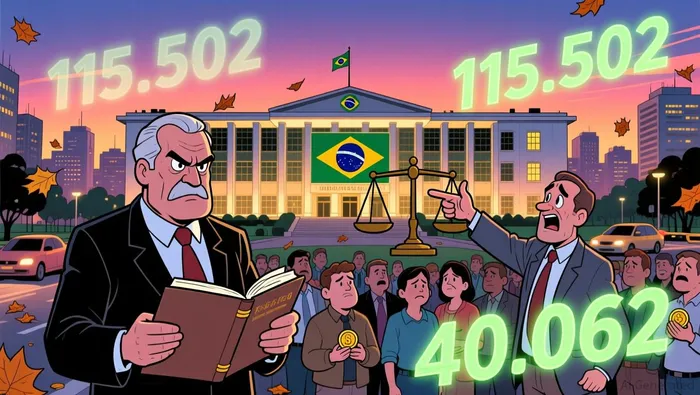
- Brazil's budget balance surged to a surplus of BRL 40.062 billion in February 2026, a dramatic reversal from a deficit of BRL 115.502 billion the previous month.
- The data reflects a broader trend of slower economic activity, which has reduced domestic demand and helped narrow the current account deficit to 2.9% of GDP in January 2026, the lowest since November 2024.
- Fiscal strength may signal improved economic resilience, but risks remain around public debt and inflation if fiscal adjustments are not sustained.
- The Central Bank is monitoring both inflation expectations and fiscal developments, though it has chosen to hold the Selic rate at 15% for now.
The budget balance data published on February 27 at 19:30 ET showed a sharp reversal from the previous month's large deficit. This shift is consistent with broader trends in Brazil's external accounts, where slower economic activity has led to reduced imports and a wider goods trade surplus. The Central Bank's IBC-Br index points to a modest 2.5% economic growth in 2025, down from 3.4% in 2024, suggesting weaker domestic demand has played a significant role in curbing import growth.
The current account deficit has already fallen to 2.9% of GDP in January 2026, a level not seen since November 2024, and is expected to remain below 3% for 2026 overall. Analysts attribute this to a combination of lower import demand and a stronger goods trade surplus. The services deficit also narrowed slightly, reflecting the broader slowdown in economic activity. While this is a positive development for external balance, it also signals a softer domestic economy, which may have mixed implications for growth and employment.
What Does Brazil's Budget Balance Signal About Fiscal Health? Brazil's budget surplus marks a stark departure from the previous month's large deficit and could indicate a more disciplined fiscal approach. However, the sustainability of this surplus remains uncertain. Fiscal slippage and public debt concerns continue to weigh on the economy, with experts warning that without a credible fiscal adjustment, Brazil could face rising long-term interest rates and inflationary pressures.
The budget surplus is also occurring against a backdrop of continued economic moderation and high interest rates. The Selic rate remains at 15% as the Central Bank continues to monitor inflation expectations, which are still above the 4% target for 2026 and 3.8% for 2027. The Central Bank has emphasized the importance of maintaining a credible fiscal policy to support macroeconomic stability, noting that fiscal imbalances can increase long-term interest rates and reduce the ability of the private sector to invest.
Why Are Investors Watching Brazil's Budget Balance Now? Investors are closely monitoring Brazil's budget balance because it is a leading indicator of the country's fiscal health and external vulnerability. A narrowing current account deficit reduces the need for external financing and eases pressure on the real. However, the broader economic slowdown raises concerns about whether Brazil can maintain this fiscal strength without further monetary tightening or deeper fiscal adjustments.
The recent surplus could signal improved fiscal discipline, but it is also partly a result of reduced economic activity. Analysts at XP and Suno Research note that while a narrowing deficit is generally positive, the underlying weakness in domestic demand must be addressed to ensure sustained economic growth. The Central Bank's recent decision to hold interest rates steady suggests it is monitoring how fiscal policy evolves and its potential impact on inflation and economic activity.
What investors should watch going forward includes the evolution of the current account deficit, the pace of fiscal adjustment, and the Central Bank's reaction to inflation expectations. The Focus survey median forecast now predicts a deficit of $67.7 billion for 2026, slightly below the previous year's $68.8 billion. If the trend of reduced imports continues, it may help maintain the external accounts in a more favorable position, though challenges remain around public debt and inflation.
The Central Bank's next policy meeting in March will be critical for understanding the direction of interest rates, particularly as markets expect a 50-point cut. This, combined with the evolving fiscal landscape, will shape the broader macroeconomic environment in Brazil for the remainder of 2026.

Stay ahead of the market.
Get curated U.S. market news, insights and key dates delivered to your inbox.


AInvest
PRO
AInvest
PRO



Comments
No comments yet