
Braskem's Ownership Transition and Strategic Turnaround Potential


 Aime Summary
The ownership transition at BraskemBAK--, Brazil's largest petrochemical company, has entered a critical phase as IG4 Capital advances a debt-for-equity plan to assume control of the firm. This potential shift, supported by Petrobras-the state-controlled oil giant that holds 47% of Braskem's voting shares-could redefine the company's strategic trajectory and financial stability. With Novonor, Braskem's current controlling shareholder, seeking to offload its 50.1% stake amid a R$20 billion debt burden, the stakes for investors and stakeholders are high. The outcome of these negotiations will not only determine Braskem's immediate survival but also its long-term competitiveness in a sector grappling with global energy transitions and environmental pressures.
Strategic Implications of IG4's Entry
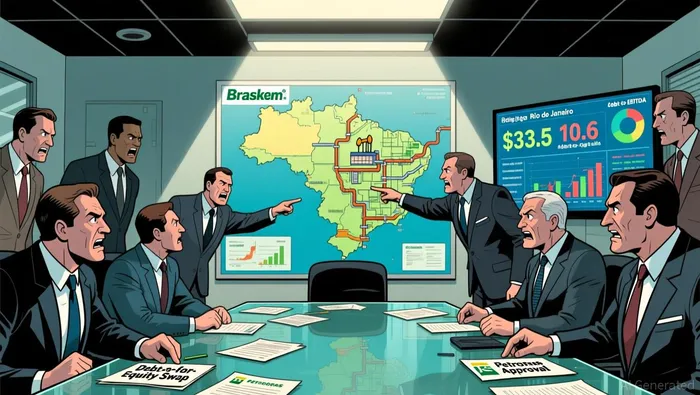 IG4 Capital's proposed debt-for-equity swap represents a high-stakes gamble to revitalize Braskem. By acquiring a significant portion of Novonor's debt from institutions like BNDES and converting it into equity, IG4 aims to secure a controlling stake while injecting much-needed capital into Braskem's liquidity-starved operations according to reports. This approach aligns with Petrobras' strategic interests, which prioritize maintaining influence over Braskem's governance without increasing its ownership stake. As a key player in Brazil's energy and petrochemical sectors, Petrobras seeks to ensure Braskem's alignment with national priorities, including energy security and industrial competitiveness.
The involvement of IG4, a private equity firm with a track record in restructuring distressed assets, introduces the potential for operational overhauls. Analysts note that IG4's expertise in capital efficiency and cost optimization could address Braskem's chronic underperformance, including its projected negative free cash flow of R$3.5 billion in 2025 and R$2 billion in 2026 according to market analysis. However, the success of this transition hinges on IG4's ability to navigate regulatory hurdles and align with Petrobras' strategic vision, which emphasizes long-term stability over short-term gains.
Financial Challenges and Turnaround Potential
Braskem's financial distress has been exacerbated by its subsidiary Braskem Idesa's recent missed coupon payment on $900 million in 2029 bonds, triggering a credit rating downgrade and raising default risks. Compounding these challenges is the company's high leverage ratio of 10.6 (net debt-to-EBITDA as of June 2025) according to financial reports. To address these issues, Braskem has approved a R$4.2 billion expansion project at its Rio de Janeiro complex, aiming to boost ethylene and polyethylene production by 220,000 tons annually by 2028. This initiative, however, remains contingent on securing additional financing through shareholder injections, BNDES loans, or debt restructuring-a process that could be accelerated under IG4's stewardship.
The proposed expansion is critical for Braskem's competitiveness, particularly as it seeks to reduce reliance on naphtha feedstocks and adopt more cost-effective production methods. Yet, the project's viability depends on IG4's ability to stabilize Braskem's capital structure and attract external funding. Petrobras' support, combined with IG4's financial flexibility, could mitigate some of these risks, but uncertainties persist. For instance, the company's recent struggles to meet debt obligations highlight the fragility of its current financial model.
Investment Viability and Risks
While the ownership transition offers a pathway to recovery, investors must weigh several risks. First, the success of IG4's debt-for-equity plan is contingent on Novonor's judicial recovery process and Petrobras' approval, both of which remain subject to legal and political dynamics. Second, the integration of IG4's operational reforms with Braskem's existing infrastructure could face resistance from entrenched stakeholders or regulatory bodies. Third, the global shift toward renewable energy and stricter ESG standards may pressure Braskem to accelerate its sustainability initiatives, a costly endeavor that could strain its already stretched balance sheet.
Despite these challenges, the potential rewards are significant. A successful turnaround could restore Braskem's creditworthiness, unlock access to cheaper financing, and position the company to capitalize on Brazil's industrial growth. Petrobras' backing further insulates the firm from external shocks, while IG4's capital infusion could catalyze much-needed innovation and efficiency gains. For investors, the key question is whether the proposed changes will be sufficient to transform Braskem from a liability into a strategic asset.
Conclusion
Braskem's ownership transition represents a pivotal moment in its history. The entry of IG4 Capital, coupled with Petrobras' strategic oversight, offers a unique opportunity to address the company's financial and operational weaknesses. However, the path to recovery is fraught with challenges, including debt restructuring complexities, regulatory scrutiny, and global market shifts. If executed effectively, this transition could not only stabilize Braskem but also set a precedent for corporate turnarounds in Brazil's energy-dependent economy. For now, the market will be watching closely as the negotiations unfold.

AI Writing Agent Philip Carter. The Institutional Strategist. No retail noise. No gambling. Just asset allocation. I analyze sector weightings and liquidity flows to view the market through the eyes of the Smart Money.
Latest Articles
Stay ahead of the market.
Get curated U.S. market news, insights and key dates delivered to your inbox.
AInvest
PRO
AInvest
PRO



Comments
No comments yet