
Brand Legacy and Corporate Identity in Consumer Stocks: Nike's Phil Knight Campus as a Testament to Long-Term Stewardship
 Aime Summary
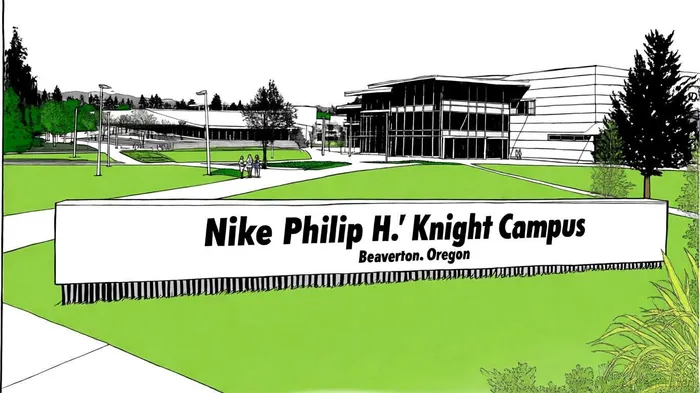
In the high-stakes world of consumer stocks, brand legacy and corporate identity are not merely marketing tools-they are foundational pillars of long-term value creation. Nike's recent decision to rename its World Headquarters the Philip H. Knight Campus underscores this principle, offering a case study in how companies can align symbolic gestures with strategic imperatives to reinforce investor confidence. By honoring its co-founder, NikeNKE-- is not only celebrating its past but also anchoring its future in the values that defined its rise to global dominance.
The Strategic Rationale Behind the Renaming
Nike's renaming of its headquarters is more than a tribute; it is a deliberate act of brand stewardship. As CEO Elliott Hill wrote in an internal memo, the new name serves as a "living expression of Knight's enduring spirit," reminding employees of the founder's mentality-restlessness, boldness, and a belief in the possible. This move aligns with Knight's original vision for the campus, which was designed to emulate collegiate environments, blending natural spaces with innovation hubs, as described in an OregonLive article. By embedding the founder's legacy into its physical and cultural DNA, Nike reinforces its identity as a company rooted in purpose and performance.
The timing of the announcement-coinciding with Hill's one-year anniversary as CEO-further signals continuity in leadership. Hill's tenure has been marked by a strategic overhaul addressing supply chain vulnerabilities, inventory management, and digital engagement, according to a Business-Gurus report. The renaming, therefore, is not an isolated gesture but part of a broader narrative of stability and long-term thinking.
Leadership Continuity and Strategic Overhaul
Nike's recent leadership changes, including the promotion of Amy Montagne to President and Phil McCartney to Chief Innovation Officer, reflect a commitment to balancing continuity with fresh perspectives, as outlined in a ResearchGate paper. These moves, part of the "Win Now" action plan, aim to accelerate growth by refocusing on core performance categories like running and basketball, which have shown resilience amid market fluctuations, a theme emphasized in coverage of Nike's strategic overhaul.
Investor confidence has been bolstered by these strategic shifts. For instance, Nike's decision to shift production from China to Vietnam, Indonesia, and Mexico has reduced U.S. shoe imports from China to high single digits by 2026, mitigating tariff risks and enhancing supply chain efficiency, per analysis of the company's operational changes. Simultaneously, aggressive inventory clearance programs have restored warehouse balance, enabling fresh product launches and strengthening gross margins. These actions have translated into tangible results: a 10% stock surge followed the announcement of an optimistic revenue forecast, which analysts tied to the broader strategic reset.
Investor Confidence Amid Mixed Financials
Despite recent challenges, Nike's long-term outlook remains compelling. NIKE's Q3 2025 results revealed a 9% year-over-year revenue decline, with both direct and wholesale segments underperforming. However, leadership emphasized progress in key areas, such as athlete storytelling and product innovation, as critical to future growth. The company's strong balance sheet and focus on sustainability-evidenced by initiatives like "Move to Zero"-further align with evolving consumer preferences, reinforcing the narrative of operational recovery and brand-first strategy highlighted by earlier industry analyses.
Investors are also betting on Nike's 2027 inflection point, contingent on stabilized supply chains and successful new product cycles, a thesis frequently cited in coverage of the company's turnaround. This optimism is supported by Nike's robust brand equity, which remains among the most valuable in the athletic wear sector, as noted in academic and industry studies.
Conclusion: Legacy as a Strategic Asset
Nike's renaming of its headquarters is a masterclass in leveraging brand legacy to reinforce corporate identity. By intertwining Phil Knight's visionary ethos with strategic continuity under Elliott Hill, the company is positioning itself as a long-term steward of innovation and resilience. While short-term financials present challenges, the alignment of symbolic gestures with operational rigor suggests that Nike's focus on its founding principles remains a potent driver of investor confidence. In an era where consumer stocks are increasingly scrutinized for both purpose and performance, Nike's approach offers a blueprint for sustainable value creation.

Senior Research Analyst at Ainvest, formerly with Tiger Brokers for two years. Over 10 years of U.S. stock trading experience and 8 years in Futures and Forex. Graduate of University of South Wales.
Latest Articles
Stay ahead of the market.
Get curated U.S. market news, insights and key dates delivered to your inbox.
AInvest
PRO
AInvest
PRO



Comments
No comments yet