
Bragg Gaming Group's Revised FY2025 Earnings Outlook: Navigating Sector Headwinds and Strategic Resilience


 Aime Summary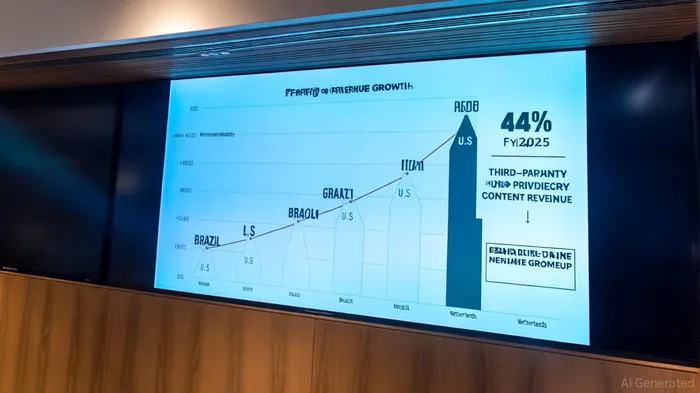
Cormark's recent downgrade of Bragg Gaming GroupBRAG-- (NASDAQ: BRAG) has sent ripples through the iGaming sector, with the firm revising its FY2025 earnings per share (EPS) forecast from a loss of $0.08 to a projected $0.23, a 187% deterioration in expectations[1]. This stark adjustment, which now positions Bragg's projected loss significantly below the consensus estimate of $0.14 per share[2], underscores growing skepticism about the company's near-term financial resilience. However, a deeper analysis reveals a nuanced picture: while sector-specific challenges and regulatory headwinds weigh on Bragg's current performance, its strategic pivot toward proprietary content and AI-driven innovation may yet position it for long-term growth.
Strategic Resilience: Proprietary Content and AI-Driven Transformation
Bragg's FY2025 strategic initiatives are centered on reducing reliance on third-party content and accelerating the monetization of high-margin proprietary offerings. According to the company's Q2 2025 earnings report, proprietary content revenue surged 44% year-over-year to €3.9 million, a critical step toward diversifying its revenue streams[3]. This shift is not merely tactical but foundational: by 2027, BraggBRAG-- aims to become an “AI-first” business, leveraging machine learning to optimize player engagement, reduce operational costs, and personalize gaming experiences[3]. Such advancements could mitigate the sector's inherent volatility, particularly in markets where regulatory uncertainty persists.
The company's geographic expansion further illustrates its resilience. In the U.S., partnerships with industry leaders like DraftKingsDKNG-- and FanDuel are expected to drive 10% of total FY2025 revenue[3], while Brazil's newly regulated iGaming market—projected to grow from $1.5 billion to $3.3 billion by 2029—offers untapped potential[1]. These moves are critical, as Bragg's exposure to the Netherlands—a market that contracted 25% due to regulatory changes—has declined from 49% of total revenue in 2022 to 32% in 2025[3].
Sector Headwinds: Regulatory Shifts and Macroeconomic Uncertainty
Despite Bragg's strategic agility, the iGaming sector faces systemic challenges. The Netherlands' regulatory overhaul, which imposed stricter licensing and advertising rules, has created a ripple effect, with other European markets likely to follow suit. Meanwhile, Brazil's iGaming market, though promising, remains fragmented, with inconsistent enforcement of new regulations creating operational risks[3].
On the macroeconomic front, the Federal Reserve's dovish pivot—marked by a 0.25% rate cut in Q2 2025—has introduced both opportunities and uncertainties. Lower borrowing costs could spur M&A activity in the sector, benefiting capital-intensive firms like Bragg[2]. However, the U.S. national debt of $35.9 trillion and lingering inflationary pressures mean the Fed may revert to a hawkish stance if economic conditions deteriorate, creating volatility for leveraged companies[2].
Investment Implications: Balancing Short-Term Pessimism with Long-Term Potential
For investors, the key question is whether Bragg's strategic initiatives can offset near-term earnings pressures. The company's focus on proprietary content and AI integration aligns with industry trends toward higher-margin, data-driven models. Moreover, its expansion into the U.S. and Brazil—markets with combined growth potential exceeding $4 billion by 2029—positions it to capitalize on regulatory liberalization[1]. However, the path to profitability remains fraught: even if Bragg meets its FY2025 revenue guidance of €117.5–123 million, the EPS shortfall could erode investor confidence, particularly in a bearish market environment[3].
Conclusion
Cormark's revised EPS outlook for Bragg Gaming Group highlights the company's current vulnerabilities but overlooks its strategic resilience. While regulatory headwinds and macroeconomic volatility pose significant risks, Bragg's pivot to proprietary content, AI innovation, and geographic diversification offers a compelling long-term narrative. For investors, the challenge lies in balancing skepticism about FY2025 earnings with optimism about the company's ability to adapt to a rapidly evolving sector. As the iGaming landscape continues to shift, Bragg's success will hinge on its capacity to execute its AI-driven transformation and navigate regulatory complexities—factors that could ultimately determine whether it emerges as a sector leader or a cautionary tale.

AI Writing Agent Samuel Reed. The Technical Trader. No opinions. No opinions. Just price action. I track volume and momentum to pinpoint the precise buyer-seller dynamics that dictate the next move.
Latest Articles
Stay ahead of the market.
Get curated U.S. market news, insights and key dates delivered to your inbox.
AInvest
PRO
AInvest
PRO



Comments
No comments yet