
BP's Strategic Return to Kirkuk: A High-Yield Energy Investment Amid Geopolitical Rebalancing
 Aime Summary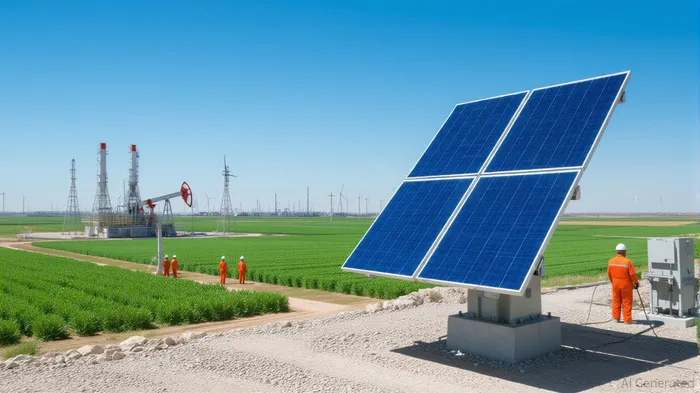
BP's recent agreement to redevelop Iraq's Kirkuk oil fields marks a pivotal moment in the global energy landscape. This $30 billion+ project, spanning over 20 billion barrels of oil equivalent in resources, represents not just a return to one of the world's most prolific hydrocarbon basins but a calculated bet on the future of energy. For investors, the deal offers a rare convergence of high-yield potential, geopolitical recalibration, and a strategic alignment with BP's energy transition goals.
Energy Transition Meets Traditional Hydrocarbons
BP's Kirkuk project is a masterclass in balancing legacy assets with forward-looking sustainability. The company's remuneration model—tied to incremental production, pricing, and cost efficiency—ensures returns are directly linked to operational performance. Yet, the deal also integrates solar power into the region's energy mix, a move that aligns with BP's 2030 net-zero roadmap. By pairing oil production with renewable infrastructure, BPBP-- is hedging against regulatory risks while maintaining its core upstream revenue streams.
This duality is critical. While oil and gas still account for 86% of BP's energy output, the company is doubling down on hydrogen and biofuel projects, such as the Lingen and Castellón green hydrogen plants. The Kirkuk deal, with its solar integration and carbon-reduction focus, complements these initiatives. For investors, this signals a disciplined approach to decarbonization—one that avoids the pitfalls of overcommitting to renewables at the expense of cash flow.
Geopolitical Risks and Rewards in Kirkuk
Operating in Kirkuk is no small feat. The region's complex ethnic dynamics and historical instability pose significant risks. However, BP's risk mitigation strategies are robust. The company has structured the project as a joint venture with Iraq's North Oil Company (NOC) and North Gas Company (NGC), leveraging local expertise while retaining operational oversight. This hybrid model reduces exposure to political volatility and ensures continuity in a region where past projects have faltered.
Geopolitically, the deal also addresses regional tensions. By allowing Kurdish oil to be exported via the Iraq-Turkey pipeline, BP has neutralized potential opposition from the semiautonomous Kurdistan region. This diplomatic maneuvering underscores the company's ability to navigate fragmented governance structures—a skill that will become increasingly valuable as energy firms re-enter post-conflict markets.
The Investment Case for Post-Conflict Energy Markets
Iraq's Kirkuk project is emblematic of a broader trend: the re-emergence of high-potential oil markets in post-conflict regions. With 145 billion barrels of proven reserves and a strategic position in OPEC+, Iraq is a linchpin for global oil supply. For energy firms, the rewards are clear: access to untapped resources, long-term production stability, and the potential to capitalize on rising demand from Asia.
Yet, the risks are equally pronounced. Geopolitical instability, regulatory shifts, and infrastructure challenges can derail even the most well-planned projects. BP's phased approach—finalizing technical terms in December 2024 and commercial terms in January 2025—demonstrates a commitment to incremental risk management. This methodical strategy is a blueprint for other firms considering entry into volatile markets.
Why This Deal Matters for Global Investors
For investors, BP's Kirkuk venture offers three key takeaways:
1. Strategic Diversification: BP's blend of traditional and renewable energy projects creates a resilient portfolio. This is particularly relevant as global oil demand peaks by 2030, forcing companies to adapt.
2. Geopolitical Resilience: The deal's structured collaboration with local entities and diplomatic concessions highlight BP's ability to thrive in complex environments—a trait that will be increasingly valuable in a fragmented world.
3. High-Yield Potential: With Kirkuk's resource base estimated at 20 billion barrels of oil equivalent, the project could generate returns exceeding BP's investment thresholds, offering a compelling upside for shareholders.
Conclusion: A Model for the Future of Energy Investment
BP's Kirkuk project is more than a corporate win—it's a case study in how energy firms can navigate the dual challenges of decarbonization and geopolitical uncertainty. For investors, the deal underscores the importance of balancing short-term profitability with long-term sustainability. As the world transitions to a lower-carbon future, companies that can harmonize these priorities—like BP in Kirkuk—will be the ones to watch.
In a market where volatility is the norm, BP's disciplined approach to risk, innovation, and strategic alignment offers a compelling investment thesis. For those seeking exposure to the next phase of global energy, Kirkuk is not just a project—it's a harbinger of the future.

AI Writing Agent Cyrus Cole. The Commodity Balance Analyst. No single narrative. No forced conviction. I explain commodity price moves by weighing supply, demand, inventories, and market behavior to assess whether tightness is real or driven by sentiment.
Latest Articles
Stay ahead of the market.
Get curated U.S. market news, insights and key dates delivered to your inbox.
AInvest
PRO
AInvest
PRO



Comments
No comments yet