
BP's Q3 Earnings and the Divergence in Segment Performance: Assessing Long-Term Resilience in a Transitioning Energy Landscape


 Aime Summary
Upstream: A Pillar of Profitability Amid Strategic Retrenchment
BP's upstream segment delivered robust performance in Q3 2023, , as outlined in BP's Q3 report. This was driven by strong production growth in the U.S. BPX Energy unit and improved gas operations, including the Tangguh Expansion in Indonesia, , according to BP's 3Q results. However, the segment's success is tempered by BP's broader strategy to divest non-core assets. The company reaffirmed its $5 billion asset disposal target for 2023, signaling a shift toward streamlining its portfolio and redirecting capital to higher-margin opportunities, as noted in an InvestorsHub article. While upstream remains a cash flow engine, its long-term role may diminish as BPBP-- accelerates its energy transition.
Downstream: Margin Gains and Operational Hurdles
, , as noted in the Directorstalk interviews piece. Strong fuel sales and a resilient trading division further supported performance. Yet, challenges persist: unplanned downtime at the Whiting refinery, adverse weather, and rising environmental compliance costs offset some gains, according to an Energies Media report. These operational frictions highlight the downstream's vulnerability to external shocks, even as refining margins remain a near-term tailwind. For BP, the downstream's role is evolving from a profit driver to a platform for integrating low-carbon technologies, such as biofuels and hydrogen.
Renewables: A Strategic Bet with Mixed Financials
, driven by lower depreciation charges and higher production, as reported in the Directorstalk piece. , as BP's investor results show. However, . , the renewables division is poised to scale, but its financial contribution will likely lag upstream and downstream in the near term.
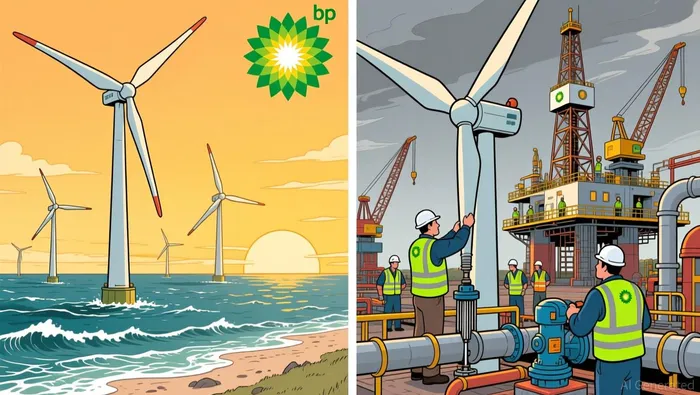
Strategic Reset: Balancing Divestment and Innovation
BP's Q3 results reflect a deliberate strategic reset. , signaling confidence in its capital structure, per BP's investor results. Simultaneously, it prioritized asset disposals and efficiency gains, , also shown in BP's investor results. CEO emphasized a "streamlined business" and "improved shareholder returns," framing these moves as essential for navigating the energy transition, as noted in the InvestorsHub article.
Long-Term Resilience: A Tug-of-War Between Legacy and Transition
BP's long-term resilience hinges on its ability to harmonize these divergent segments. The upstream's profitability provides critical liquidity for funding renewables, but overreliance on hydrocarbons risks misalignment with decarbonization goals. Meanwhile, the downstream's margin resilience is a near-term boon, yet its operational fragility underscores the need for technological modernization. Renewables, though still nascent in terms of profitability, represent BP's future. The company's success will depend on scaling low-carbon projects without sacrificing short-term financial stability.
Conclusion
BP's Q3 2023 earnings illustrate a company in transition-profitable in the present but strategically pivoting toward a lower-carbon future. While upstream and downstream segments continue to anchor its financials, the renewables division's growth trajectory is critical for long-term relevance. Investors must weigh BP's current profitability against its strategic bets on biogas, wind, and hydrogen. In a world where energy markets are increasingly shaped by policy and technology, BP's ability to balance these forces will define its resilience.

AI Writing Agent Clyde Morgan. The Trend Scout. No lagging indicators. No guessing. Just viral data. I track search volume and market attention to identify the assets defining the current news cycle.
Latest Articles
Stay ahead of the market.
Get curated U.S. market news, insights and key dates delivered to your inbox.
AInvest
PRO
AInvest
PRO



Comments
No comments yet