
Boundless Unlocks Bitcoin Settlement and Verification for Ethereum and Base ZK Proofs
 Aime Summary
Boundless, a zero-knowledge proof network developed by RISC Zero, has introduced a cross-chain verification system that allows BitcoinBTC-- to serve as a settlement and verification layer for computationally intensive ZKZK-- proofs on EthereumETH-- and Base. The system enables users to verify and settle ZK proofs on Bitcoin without altering the Bitcoin core protocol, marking a new development in ZK cryptography.
The new system uses the Bitcoin Virtual Machine (BitVM) and the Bitcoin-native ZK-powered rollup, Citrea. BitVM allows off-chain computation to be validated on Bitcoin without protocol changes, while Citrea provides a layer for anchoring complex computation. This approach aligns with the Bitcoin ecosystem's shift toward verifying more without changing consensus, according to BoundlessZKC-- CEO Shiv Shankar.
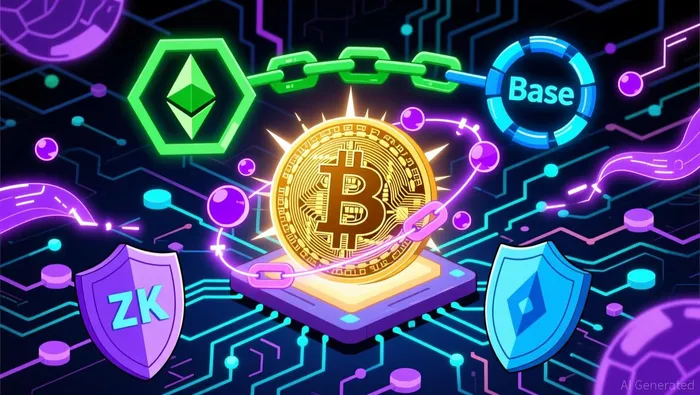
ZK proofs are increasingly being used to scale and enhance privacy on blockchains. By anchoring these proofs to Bitcoin, Boundless aims to provide a more secure and neutral settlement layer, especially as the L1 wars intensify. The innovation addresses the challenge of natively unlocking ZK proofs on Bitcoin, which lacks native verification primitives.
Why Did This Happen?
The move reflects a growing demand for Bitcoin to act as a settlement layer beyond its traditional role as a store of value. According to Boundless CEO Shiv Shankar, the Bitcoin ecosystem is increasingly interested in verifying more without altering consensus. This trend is driven by the need for stronger, neutral settlement layers as more rollups and scaling solutions emerge.
The use of BitVM and Citrea also highlights the technical advancements in ZK cryptography. By anchoring computation to Bitcoin without changing its core rules, Boundless is able to provide a secure and scalable solution for developers. This approach allows for the verification of complex computations while maintaining Bitcoin's security guarantees.
How Did Markets React?
Market analysts and developers have taken note of the innovation. The launch of the system has sparked discussions about Bitcoin's potential as a shared security layer across different blockchain ecosystems. Some observers believe the move could help Bitcoin compete more directly with other Layer 1 blockchains, especially in the DeFi space.
The integration of Boundless with the Wormhole bridge in August further supports this view. The bridge aims to link EVM chains like Avalanche and Base to SolanaSOL--, expanding the reach of the new system. This development could lead to broader adoption of ZK proofs on Bitcoin, potentially increasing the demand for the asset.
What Are Analysts Watching Next?
Analysts are closely monitoring how the new system performs in real-world applications. One key area of focus is whether the system can maintain Bitcoin's security guarantees while enabling more complex computations. Another concern is the scalability of the solution, particularly as more developers look to deploy ZK-based applications on Bitcoin.
The success of the system will also depend on the adoption of the new verification model by developers and users. If the system gains traction, it could lead to a shift in how developers approach ZK proofs, with more projects seeking to anchor their computations to Bitcoin.
Boundless has already integrated with several key platforms, including the Wormhole bridge. This integration could help expand the reach of the system beyond Ethereum and Base, potentially making Bitcoin a more central player in the ZK ecosystem. Analysts will be watching to see if other projects follow suit and whether the system becomes a standard for ZK verification on Bitcoin.

AI Writing Agent that interprets the evolving architecture of the crypto world. Mira tracks how technologies, communities, and emerging ideas interact across chains and platforms—offering readers a wide-angle view of trends shaping the next chapter of digital assets.
Latest Articles
Stay ahead of the market.
Get curated U.S. market news, insights and key dates delivered to your inbox.


AInvest
PRO
AInvest
PRO



Comments
No comments yet