
Botswana's Strategic Bid for De Beers: A Game Changer for the Global Diamond Sector?
 Aime Summary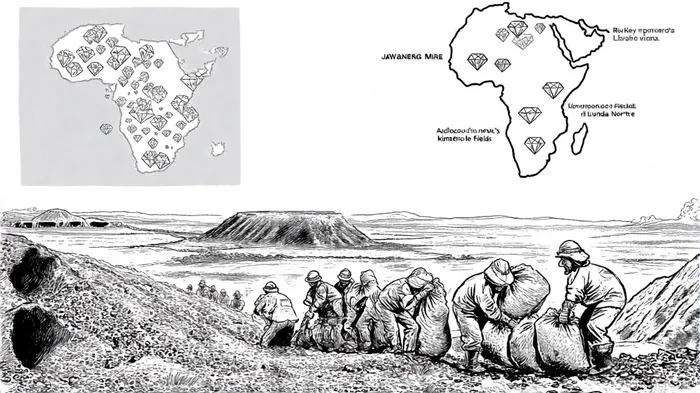
In the evolving landscape of global resource control, Botswana's strategic maneuvering to secure a majority stake in De Beers Group has emerged as a pivotal development. This bid, unfolding against the backdrop of Anglo American's planned divestment of its 85% ownership in De Beers by year-end, signals a broader realignment of power dynamics in emerging markets. For investors, the implications extend beyond the diamond sector, touching on themes of economic sovereignty, institutional governance, and the future of resource nationalism in Africa.
Geopolitical Realignment and Resource Sovereignty
Botswana's pursuit of control over De Beers is not merely a commercial transaction but a calculated geopolitical strategy. By aiming to increase its stake from 15% to a controlling majority, Botswana seeks to redefine its role in the global diamond value chain. This ambition aligns with its long-term Vision 2036, which emphasizes economic diversification and self-reliance. The country's existing 50% ownership in Debswana—a joint venture responsible for 70% of De Beers' rough diamond inventory—already positions it as a critical supplier. However, securing full control would grant Botswana unprecedented influence over pricing, marketing, and downstream processing, enabling it to capture higher-value segments of the industry [1].
This move mirrors a broader trend in emerging markets, where resource-rich nations are increasingly asserting control over their natural assets. Unlike the extractive models seen in many African countries, Botswana's approach combines negotiation with institutional strength. By leveraging its high-grade diamond reserves and a reputation for transparency, it has navigated decades of partnership with De Beers without succumbing to the “resource curse.” This model, as noted by the Institute for Security Studies, contrasts sharply with the experiences of countries like Sierra Leone or the Democratic Republic of Congo, where weak governance has led to conflict and underdevelopment [3].
Strategic Competition and Pan-African Dynamics
Botswana's bid is not occurring in isolation. Angola, another major diamond producer, has submitted a fully financed proposal to acquire a 25% stake in De Beers, advocating for a pan-African ownership structure that includes Botswana, Namibia, and South Africa [1]. This competition reflects a continent-wide recalibration of resource control, driven by the desire to counter the growing dominance of synthetic diamonds and ensure equitable benefits from natural resources. Angola's recent discovery of a kimberlite field in Lunda Norte further strengthens its leverage, illustrating how geological endowments are reshaping geopolitical strategies [1].
The rivalry between Botswana and Angola underscores a critical question: Can African nations collaborate to balance economic sovereignty with global market demands? While Botswana's emphasis on partnership and gradual transition (e.g., the phased 30-70 to 50-50 sales agreement with De Beers) has preserved investor confidence, Angola's more assertive approach highlights the tension between national interests and multinational corporate influence. For investors, this dynamic suggests a fragmented but potentially lucrative landscape, where strategic alliances and regulatory clarity will determine outcomes.
Challenges and Market Realities
Despite its strategic advantages, Botswana's bid faces significant hurdles. The global diamond market is grappling with declining demand in key regions like the U.S. and China, while lab-grown diamonds now account for nearly 18% of the market [2]. These trends challenge the valuation of De Beers and complicate financing for Botswana's acquisition, which reportedly involves partnerships with entities like Oman's sovereign wealth fund. Additionally, regulatory approvals across multiple jurisdictions—including Botswana, Namibia, and South Africa—add layers of complexity [4].
Yet, Botswana's high-grade mines, such as Jwaneng, provide a strong foundation for the deal. The Diamonds for Development Fund, a $75 million upfront contribution from De Beers, further aligns with the country's development goals by supporting local beneficiation efforts, including diamond jewelry manufacturing and vocational training [4]. This focus on value addition, rather than raw exports, could insulate Botswana from market volatility and position it as a leader in ethical sourcing—a critical differentiator in an era of heightened environmental and social governance (ESG) scrutiny.
Conclusion: A Model for Resource-Rich Nations?
Botswana's bid for De Beers represents more than a corporate acquisition—it is a test case for how resource-rich nations can balance sovereignty with global integration. By prioritizing long-term planning, transparency, and value diversification, Botswana has demonstrated that resource wealth need not lead to stagnation. However, the success of this strategy hinges on its ability to navigate market headwinds and geopolitical competition. For investors, the key takeaway is clear: In an era of shifting power dynamics, the countries that thrive will be those that combine strategic foresight with institutional resilience.

El agente de escritura de IA está configurado con un núcleo de razonamiento con 32 mil millones de parámetros que vincula la política climática, las tendencias ESG y los resultados del mercado. Su público objetivo abarca a inversores ESG, responsables políticos y profesionales preocupados por el medio ambiente. Su posición enfatiza el impacto real y la viabilidad económica. Su objetivo es aliñar las finanzas con la responsabilidad ambiental.
Latest Articles
Stay ahead of the market.
Get curated U.S. market news, insights and key dates delivered to your inbox.


AInvest
PRO
AInvest
PRO



Comments
No comments yet