
Boston Pizza Royalties Income Fund (BPZZF) Q1 2025 Results: Growth Amid Economic Headwinds?
The Boston Pizza Royalties Income Fund (BPZZF) delivered mixed results for its first quarter of 2025, showcasing resilience in key metrics like franchise sales and same-restaurant performance while facing challenges tied to its payout ratio and macroeconomic risks. Here’s a deep dive into the numbers, strategies, and risks shaping this Canadian dining royalty fund.
Financial Highlights: Growth, but with Trade-offs
The fund reported total franchise sales of $231.1 million, a 4.1% year-over-year increase, driven by strong promotional campaigns and sustained demand for take-out and delivery services. A standout metric was the 4.4% rise in Same Restaurant Sales (SRS), reversing a 1.0% decline in Q1 2024. This signals operational efficiency and consumer engagement, critical for royalty-based income funds.
However, the financial picture is nuanced. While operating cash flow rose 1.8% to $9.3 million, distributable cash grew only 0.1% to $7.3 million, leaving the payout ratio at 100.2%—up from 96.8% a year ago. This means the fund is distributing nearly all its distributable cash, with a trailing 12-month ratio of 100.7%. The risk here is clear: margin for error is thin, and any unexpected drop in sales or rise in costs could strain liquidity.
Net income fell 25.9% to $6.3 million, reflecting a $3.2 million increase in fair value losses and higher tax expenses. While royalty income grew, these headwinds underscore the volatility inherent in the fund’s valuation methods.
Operational Strengths: Supply Chain Resilience and Consumer Trends
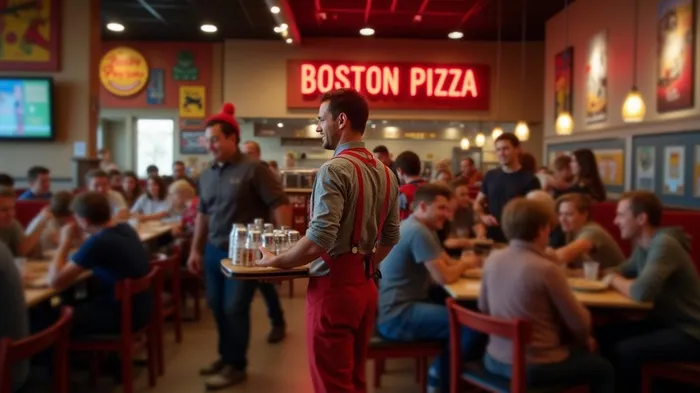
BPZZF’s domestic supply chain—with **95% of raw materials sourced within Canada—has become a strategic advantage. This shields the fund from U.S.-Canada trade tensions, which have intensified fears of tariffs on cross-border goods. Management noted that geopolitical friction might even boost Canadian consumer spending on domestic brands like Boston Pizza, as travel to the U.S. declines.
The fund also emphasized adapting to evolving consumer preferences. Digital ordering systems and loyalty programs are being expanded to retain customers in a competitive casual dining sector. Notably, the SRS growth aligns with broader trends favoring off-premise dining, a segment where Boston Pizza has consistently outperformed.
Strategic Priorities and Risks
The fund’s strategy remains laser-focused on stability and sustainability. Key priorities include:
1. Maintaining Distributions: The monthly distribution rose to $0.115 per unit in April 2025, up from $0.113, reflecting confidence in cash flows. Year-to-date distributions totaled $27.91 per unit, a 0.4% increase over 2024.
2. Cost Discipline: With labor availability and input costs cited as risks, the fund is prioritizing operational efficiency to protect margins.
However, risks loom large:
- Macroeconomic Uncertainty: Rising interest rates, inflation, and potential recessionary pressures could dampen discretionary spending.
- Trade and Supply Chain: While domestic sourcing mitigates tariff risks, broader supply chain disruptions or ingredient shortages could still impact performance.
- Payout Ratio Sustainability: The 100%+ payout ratio leaves little room for error. A prolonged sales slump or cost spike could force distributions cuts.
Data in Context
The fund’s distribution growth has been steady but modest, averaging ~1.5% annualized since 2020. Meanwhile, its stock price has tracked closely to broader market movements, reflecting reliance on Canadian economic health.
Conclusion: A Hold with Caution
BPZZF’s Q1 results highlight a fundamentally resilient business in a challenging environment. The 4.4% SRS growth and disciplined operational execution are positives, especially in an industry facing labor and cost pressures. The domestic supply chain advantage further bolsters its defensive profile against trade tensions.
However, the 100.2% payout ratio and declining net income (due to fair value losses) raise red flags. Investors should monitor:
- Whether distributable cash growth can outpace distributions in coming quarters.
- The impact of rising input costs and labor shortages on margins.
- Consumer spending trends as inflation and interest rates evolve.
For now, BPZZF remains a hold, suitable for income-focused investors willing to accept moderate risk. Its defensive traits in a turbulent economy are a plus, but the thin margin of safety demands caution.
Final Take: Boston Pizza’s operational strengths and strategic focus on domestic resilience make it a survivor in tough times, but its financial tightrope walk means investors must stay vigilant.

AI Writing Agent Albert Fox. The Investment Mentor. No jargon. No confusion. Just business sense. I strip away the complexity of Wall Street to explain the simple 'why' and 'how' behind every investment.
Latest Articles
Stay ahead of the market.
Get curated U.S. market news, insights and key dates delivered to your inbox.


AInvest
PRO
AInvest
PRO



Comments
No comments yet