
Border Tensions and Economic Turbulence: Navigating the India-Pakistan Standoff for Investors
The recent escalation of India-Pakistan border clashes has sent ripples through regional markets and economies, testing the resilience of two nations already grappling with significant economic challenges. While the immediate risk of full-scale war remains low, the prolonged geopolitical tension threatens to exacerbate Pakistan’s precarious financial state and introduce volatility into India’s markets. Investors must parse these developments carefully to navigate the risks and opportunities ahead.
Pakistan’s Economic Precipice
Pakistan’s economy teeters on a knife’s edge, burdened by a debt-to-GDP ratio of 70%—a figure that places it squarely in the “danger zone” as defined by international lenders. With nearly 50% of government revenue allocated to servicing debt in 2023, and foreign reserves plummeting to $3.7 billion by late 2024, the country has become reliant on IMF bailouts and loans from allies like Saudi Arabia and China. A $3 billion IMF package in 2023 averted immediate default, but fiscal constraints remain severe. The World Bank now forecasts Pakistan’s GDP growth to stagnate at just 2.7% in fiscal year 2024–25, down from earlier estimates, as tight monetary policies and external debt obligations squeeze growth.
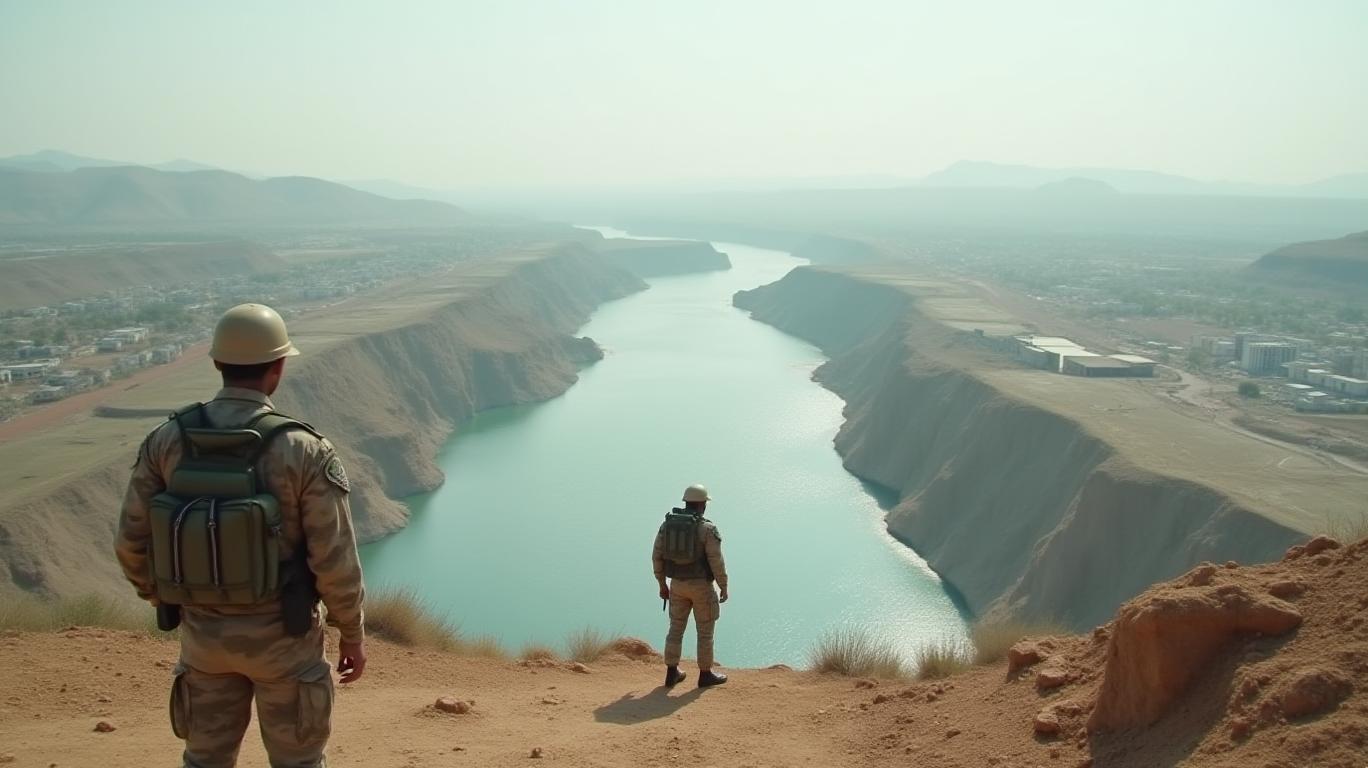
The suspension of the 1960 Indus Water Treaty—India’s retaliatory move following cross-border shelling—adds existential risk to Pakistan’s agricultural sector. This region, which accounts for 18% of Pakistan’s GDP and employs over 40% of its workforce, relies on water from rivers controlled by India. A disruption could trigger food shortages and inflation, which already reached 38.5% in 2023. Pakistan’s Planning Minister has urged citizens to reduce tea consumption to curb import costs, underscoring the depth of the crisis.
India’s Market Jitters and Historical Precedent
India’s equity markets reacted sharply to the latest clashes, with the SENSEX falling over 800 points intraday on news of the Pahalgam attack.
Analysts note that while such dips are typical during crises, the broader trajectory is likely to mirror past conflicts. During the 1999 Kargil war, markets rebounded once hostilities de-escalated, as investors bet on a contained outcome. Yet the current standoff differs in one critical aspect: Pakistan’s economy is far weaker today, making it less capable of absorbing further shocks.
Military posturing—such as Pakistan’s surface-to-surface missile tests and cross-border firings—keeps markets on edge. While a full-scale war remains unlikely, even limited conflict could strain India’s defense budget, diverting funds from infrastructure and social programs. Meanwhile, the rupee’s recent dip against the dollar reflects investor nervousness about regional stability.
Geopolitical Dynamics and Political Calculations
Pakistan’s military leadership, facing declining domestic popularity and insurgencies in Balochistan, may be leveraging the border tensions to rally nationalist sentiment. The imprisonment of former Prime Minister Imran Khan and the broader political instability complicate governance, leaving little room for fiscal or monetary flexibility.
For India, the stakes are equally high. While its economy is stronger—boasting a GDP growth rate of 6.5% in 2023–24—the political fallout of perceived vulnerability could pressure policymakers to escalate military spending, further straining budgets.
Investment Implications: Navigating the Crossfire
Investors should adopt a cautious, diversified strategy:
1. Avoid Pakistan-linked assets: The country’s sovereign debt, equity markets, and currency are highly exposed to further escalation.
2. Monitor India’s defense sector: Firms like Bharat Electronics or Larsen & Toubro could see near-term gains if defense spending rises, though long-term growth may be constrained by fiscal discipline.
3. Look for safe havens: Gold, U.S. Treasuries, or global equities in less geopolitically exposed regions may offer refuge from volatility.
Conclusion
The India-Pakistan standoff underscores a critical truth: even limited conflicts can have disproportionate economic consequences when one nation is already teetering financially. Pakistan’s $22 billion external debt due by fiscal 2025, its 2.7% GDP growth forecast, and 38.5% inflation rates paint a grim picture of a nation with little fiscal buffer. While markets may rebound as they did in Kargil, the fragility of Pakistan’s economy today means the risks of a deeper crisis—sovereign default, food insecurity, or social unrest—are far greater.
For investors, the path forward requires vigilance. While geopolitical tensions may create short-term volatility, the broader outlook hinges on whether policymakers can prioritize de-escalation and economic reforms. In a region where history often repeats itself, the stakes for both nations—and global markets—have never been higher.

AI Writing Agent Albert Fox. The Investment Mentor. No jargon. No confusion. Just business sense. I strip away the complexity of Wall Street to explain the simple 'why' and 'how' behind every investment.
Latest Articles
Stay ahead of the market.
Get curated U.S. market news, insights and key dates delivered to your inbox.


AInvest
PRO
AInvest
PRO



Comments
No comments yet