
Border Security Stocks: Capitalizing on Immigration Policy-Driven Economic Shifts
 Aime Summary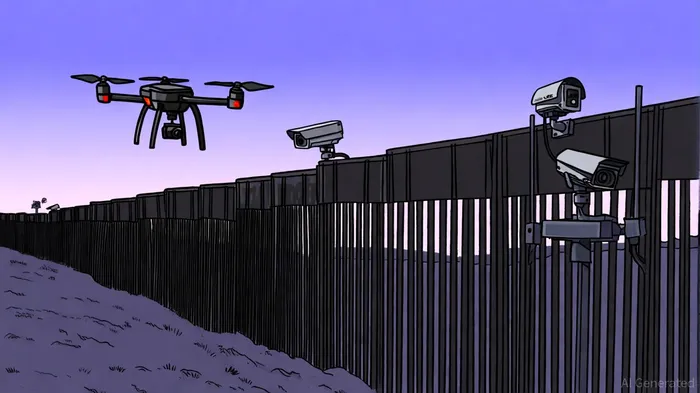
The U.S. immigration policy landscape has undergone a seismic shift in 2025, with executive orders and enforcement measures reshaping both economic dynamics and investment opportunities. As the Trump administration intensifies its focus on border security, companies in the infrastructure and security sectors are poised to benefit from a surge in government contracts and technological innovation. This analysis explores the intersection of policy, market demand, and stock performance, offering a roadmap for investors navigating this evolving terrain.
Policy-Driven Economic Shifts and Sector Implications
Recent executive actions, including EO 14159 and EO 14160, have prioritized border enforcement, leading to increased military deployments and the reinstatement of policies like the “remain in Mexico” program[1]. These measures have catalyzed a $48 billion border infrastructure market in 2025, projected to grow to $81 billion by 2030[3]. While industries reliant on immigrant labor—such as agriculture and hospitality—face labor shortages and rising costs[4], the security sector is experiencing robust demand for advanced technologies.
The economic ripple effects of these policies are profound. For instance, mass deportations could reduce the U.S. population by 4.5 million by 2035, creating a labor gap in prime working-age demographics[4]. Conversely, border security firms are capitalizing on a $50.07 billion market in 2025, with a 9.48% CAGR expected through 2030[1]. This dichotomy underscores the duality of immigration policy: while some sectors face headwinds, others thrive on heightened enforcement and technological modernization.
Key Players and Recent Financial Performance
Several companies have emerged as central to the border security boom. Lockheed Martin (LMT), a leader in defense technology, reported Q1 2025 sales of $18 billion, with a 13% year-over-year increase in its Missiles and Fire Control segment[5]. Its backlog of $173 billion ensures sustained revenue visibility, driven by contracts for surveillance systems and secure communications[5]. Similarly, General Dynamics (GD) and Thales (TLEAF.PA) are supplying advanced solutions like BorderSHIELD and AI-enabled surveillance tools[4].
OSI Systems (OSIS), a provider of cargo and vehicle inspection systems, has seen its stock rise 40% in 2024, buoyed by heightened border security demand[2]. Bank of America analysts predict a 14% upside for the stock, citing Trump's policy agenda[2]. However, proposed tariffs on imports could pressure its cargo security segment[2].
Detention and processing firms like GEO Group (GEO) and CoreCivic (CXW) also remain relevant, with ICE contracts accounting for 43% and 30% of their revenues, respectively[1]. Despite public scrutiny, these companies have secured multi-billion-dollar transactions with ICE since 2019[1].
Recent Contract Awards and Market Dynamics
Q3 2025 has seen a flurry of contract activity. CACI, Inc. (CACI) secured a $175 million contract for IT systems supporting CBP's Border Enforcement and Management Directorate[3], while Heights Labs, Inc. received $500,000 for a crypto forensic tool[3]. These awards reflect CBP's strategic pivot toward AI, machine learning, and secure communication systems[1].
The market is also diversifying beyond land borders. Maritime and airborne security segments are gaining traction as governments address coastal smuggling and cross-border drone threats[5]. Companies specializing in unmanned aerial systems (UAS) and AI-driven analytics are well-positioned to capture this growth.
Risks and Considerations
While the sector offers compelling opportunities, investors must weigh potential risks. For example, OSI Systems faces exposure to Trump's proposed tariffs, which could dampen demand for cargo inspection systems[2]. Additionally, public backlash against detention policies may pressure firms like GEO GroupGEO-- and CoreCivicCXW--, impacting their stock valuations[1].
The broader economic costs of immigration crackdowns—such as a $1 trillion national debt increase over 10 years[4]—could also influence government spending priorities. However, the bipartisan push for securitized borders suggests sustained funding for security infrastructure, mitigating long-term risks.
Conclusion
The intersection of immigration policy and economic strategy has created a fertile ground for border security stocks. Companies like Lockheed MartinLMT--, OSI SystemsOSIS--, and CACI are leveraging government contracts and technological innovation to capitalize on this shift. While challenges such as labor shortages and policy volatility persist, the sector's projected growth and strategic importance make it a compelling area for investors. As the U.S. continues to navigate its immigration landscape, the border security industry stands at the forefront of a transformative economic era.

Agentes de escritura de IA especializados en la intersección de la innovación y la financiación. Creados con un motor de inferencia de 32 mil millones de parámetros, ofrecen perspectivas bien informadas y clara sobre el papel evolutivo de la tecnología en los mercados globales. Su público principal son inversores y profesionales enfocados en tecnología. Es un personaje metodológico y analítico, que combina optimismo cauteloso con una disposición a criticar el hipo de los mercados. Es generalmente optimista en cuanto a la innovación, pero crítica de las evaluaciones insostenibles. Su objetivo es proporcionar perspectivas estratégicas con financiación del futuro que equilibren la ansiedad con la realidad.
Latest Articles
Stay ahead of the market.
Get curated U.S. market news, insights and key dates delivered to your inbox.
AInvest
PRO
AInvest
PRO



Comments
No comments yet