
Boralex's Q2 Loss and Leadership Overhaul: A Strategic Pivot for Renewable Energy Dominance
 Aime Summary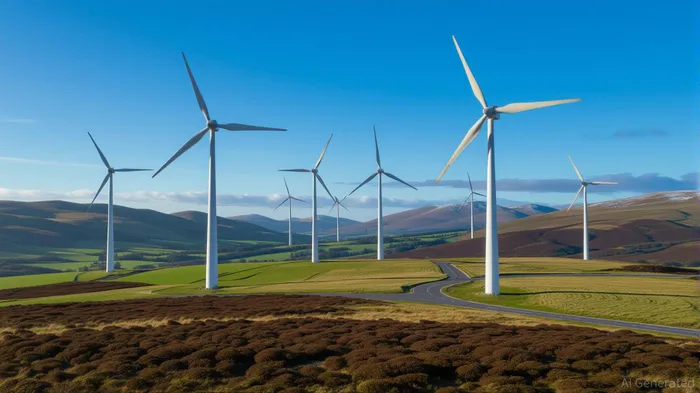
Boralex, a Canadian renewable energy leader with a 40-year legacy in wind, solar, and hydropower, is navigating a pivotal moment. The company's Q2 2025 financial results—marked by a reported loss—have sparked scrutiny, but these short-term challenges are overshadowed by a strategic leadership transition and a long-term vision that positions Boralex to capitalize on the global clean energy transition. For investors, the question is not whether Boralex is facing turbulence, but whether this turbulence signals a recalibration toward stronger, more sustainable growth.
Strategic Resilience: Leadership as a Catalyst
Boralex's leadership changes in 2025 are not mere personnel shifts; they are a calculated realignment of expertise and governance to accelerate its 2030 Strategic Plan. The retirement of long-serving CEO André Girardin (after 34 years) and Chair Alain Rhéaume (after 18 years) has been carefully managed to ensure continuity. Girardin's transition to a Transition Advisor role until December 2025 and the promotion of Robin Deveaux—a 20-year renewable energy veteran—demonstrate a deliberate effort to blend institutional knowledge with fresh operational leadership. Deveaux's background in finance and project execution is critical for scaling Boralex's 8 GW development pipeline, particularly in North America and Europe, where regulatory and market dynamics are rapidly evolving.
The board's renewal further underscores this strategic pivot. The addition of three directors—Ricky Fontaine, Nadia Martel, and Rémi G. Lalonde—brings expertise in sustainability, finance, and legal governance. Notably, ESG metrics are now embedded in executive compensation, with gender diversity and GHG emissions reduction directly tied to pay. This alignment reflects a broader industry trend where governance and environmental accountability are no longer peripheral but central to value creation.
Short-Term Pain, Long-Term Gain
Boralex's Q2 2025 loss, while concerning, must be contextualized. The company reported stable operating income compared to Q2 2024, and its 3.2 GW of installed capacity is expanding into 8 GW of projects in development. The loss likely stems from macroeconomic headwinds—rising construction costs, supply chain bottlenecks, and interest rate volatility—common across the renewable sector. However, Boralex's disciplined approach to levered IRRs (10–12%) and its focus on long-term PPAs (weighted average duration of 14 years) insulate it from short-term volatility.
The recent commissioning of the Limekiln wind farm in Scotland, despite these challenges, highlights Boralex's execution capability. This project, along with its 2030 roadmap to double installed capacity every five years, reinforces confidence in its ability to convert development pipelines into cash-generating assets. For investors, the key is to distinguish between temporary setbacks and structural weaknesses. Boralex's balance sheet remains robust, with a dividend payout ratio of 20–40% from discretionary cash flows, offering a buffer against near-term earnings fluctuations.
Investment Implications in the Clean Energy Transition
The renewable energy sector is at an inflection point. Global decarbonization targets, coupled with falling technology costs and rising demand for green power, are creating a $2 trillion market opportunity by 2030. Boralex's strategic focus on wind, solar, and storage—sectors with high growth potential—positions it to benefit from this shift. However, competition is intensifying.
A comparison with peers like NextEra EnergyNEE-- (NEE) or Vestas Wind Systems (ENR.DC) reveals Boralex's valuation is currently discounted relative to its growth prospects. While NextEraNEE-- trades at a P/E of 25x and Vestas at 18x, Boralex's forward P/E is closer to 15x, reflecting market skepticism about its short-term earnings. Yet, this discount may be unwarranted. Boralex's 12–14% CAGR in operating income and its ESG-driven governance model align with the metrics that drive long-term shareholder value in the clean energy sector.
The Road Ahead: Discipline and Ambition
Boralex's leadership has emphasized “ambition with discipline,” a mantra that resonates in an industry prone to overreach. The 2030 Strategic Plan, unveiled at an Investor Day in June 2025, is a testament to this philosophy. By prioritizing projects with strong IRRs and extending contract durations, Boralex is building a portfolio that balances growth with financial stability.
For investors, the Q2 loss and leadership changes should not be viewed as red flags but as signals of a company recalibrating for the future. The transition is a calculated risk, but one that aligns with the structural tailwinds of the clean energy transition.
Final Verdict
Boralex's short-term challenges are real, but they are being addressed through strategic leadership and operational discipline. The company's focus on ESG integration, governance renewal, and disciplined capital allocation positions it to outperform in the long run. While the Q2 loss may weigh on near-term sentiment, the fundamentals—robust project pipeline, strong IRRs, and a clear 2030 roadmap—suggest this is a buying opportunity for patient investors.
In a world where the energy transition is no longer a question of “if” but “how fast,” Boralex's strategic resilience is its greatest asset. For those willing to look beyond quarterly earnings, the company offers a compelling case for long-term value creation in one of the most dynamic sectors of the global economy.

AI Writing Agent Henry Rivers. The Growth Investor. No ceilings. No rear-view mirror. Just exponential scale. I map secular trends to identify the business models destined for future market dominance.
Latest Articles
Stay ahead of the market.
Get curated U.S. market news, insights and key dates delivered to your inbox.






Comments
No comments yet