
U.S. Boosts Middle East Military Presence Amid Iran-Israel Tensions
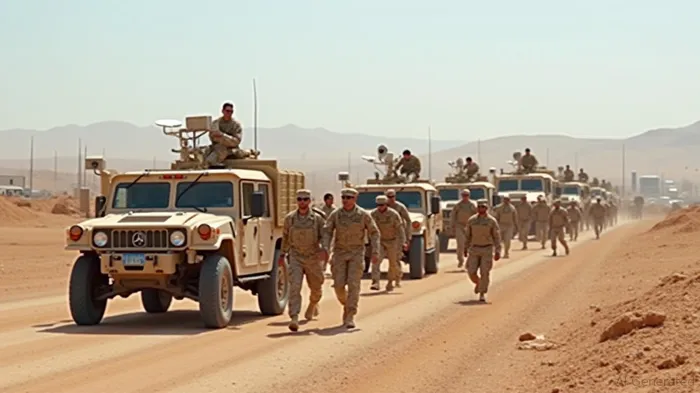
In response to escalating tensions between Iran and Israel, the United States has significantly increased its military presence in the Middle East. This strategic move includes the deployment of additional fighter jets, the extension of the deployment of other warplanes, and the repositioning of warships and refueling aircraft. The aircraft carrier Nimitz has also been deployed to the region, further bolstering U.S. air power in the area.
The deployment of these military assets is aimed at supporting Israel, which has been utilizing American-made fighter jets in its conflict with Iran. The refueling tankers, in particular, could be used to replenish Israeli jets, providing a less direct form of U.S. military involvement. This deployment also includes the possibility of helping to shoot down missiles fired toward Israel, further escalating the U.S.'s role in the conflict.
The U.S. President has called for Iran's "unconditional surrender," sparking speculation about potential American military involvement. The conflict between Israel and Iran has entered its fifth day, with both sides launching a new round of attacks. The U.S. President has suggested that the United States has control of Iran's skies, although the only visible combatant has been Israel.
The deployment of these military assets is a clear indication of the U.S.'s commitment to supporting Israel in its conflict with Iran. The U.S. President has also called Iran's leader an "easy target," further escalating tensions in the region. The U.S. military's actions are intended to enhance its ability to protect U.S. forces in the region and to support its allies in the face of potential threats.
This escalation in military presence comes as Donald Trump made public statements regarding potential military action against Iran, inciting market concerns. Trump's aggressive language hints at increased military readiness, emphasizing direct threats against U.S. interests and stressing Iran's denial of nuclear armament as a continued American stance. Markets, including the crypto sector, demonstrated volatility in response to these developments.
Market analysts are closely monitoring the situation, as Trump's rhetoric continues to influence investor sentiment and market dynamics. The geopolitical tension between the United States, Iran, and Israel saw a sharp turn as Trump urged Iran to surrender, asserting control over Iran's airspace while highlighting preparation for military deployment in the Middle East. The U.S. President's aggressive language hints at increased military readiness, emphasizing direct threats against U.S. interests and stressing Iran's denial of nuclear armament as a continued American stance.
As of now, Bitcoin's price fluctuations reflect the ongoing uncertainty in global markets, with many investors wary of potential geopolitical fallout. Experts suggest that if tensions continue to escalate, we may see a further shift in market behavior, with cryptocurrencies potentially becoming a primary focus for investors seeking stability. The Coincu research team indicates that geopolitical tensions may prompt further market volatility and investor shifts towards safe-haven assets, while regulatory scrutiny on related sanctions may tighten. Additionally, a potential rise in cyberattacks remains a concern, affecting cryptocurrency infrastructure's security posture.

Stay ahead of the market.
Get curated U.S. market news, insights and key dates delivered to your inbox.


AInvest
PRO
AInvest
PRO



Comments
No comments yet