
Boom Supersonic's XB-1 Achieves Supersonic Speeds in Mojave Desert Tests
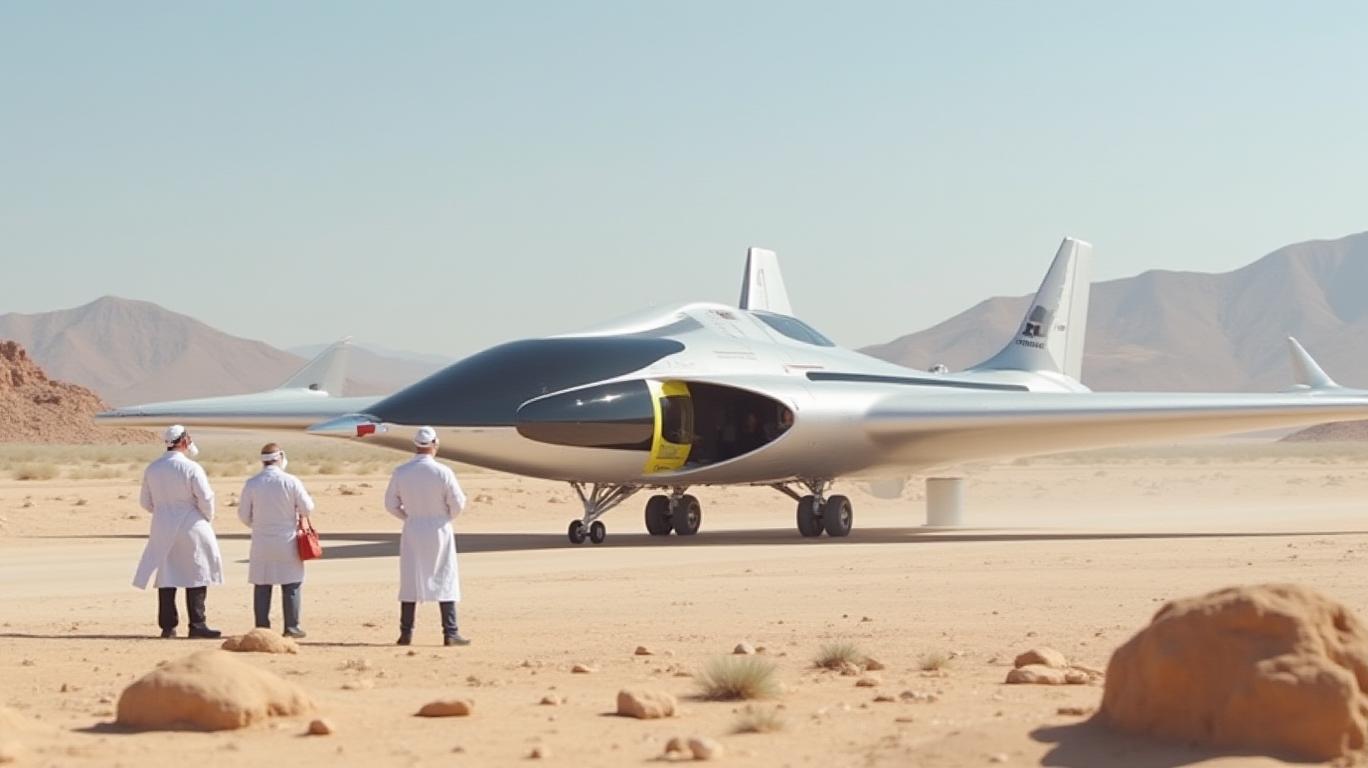
Boom Supersonic, a trailblazing aerospace company, has made a substantial breakthrough in its mission to revive supersonic travel. The company's XB-1 "Baby Boom" test aircraft successfully completed three separate supersonic flights during a test over the Mojave Desert. This achievement marks the first time a US-made civilian aircraft has reached supersonic speeds since the retirement of the Concorde.
The XB-1, designed as a demonstrator for Boom's future commercial supersonic airliner, reached speeds exceeding Mach 1 during its January 28 test flight. The aircraft's performance was meticulously monitored, and the data collected will be instrumental in the development of Boom's larger Overture aircraft, which is planned to carry passengers at speeds up to Mach 1.7.
The successful test flights highlight the advancements in aerospace technology and engineering. The XB-1's design incorporates modern materials and propulsion systems, making it more efficient and environmentally friendly than its predecessors. The aircraft's ability to achieve supersonic speeds while maintaining safety and reliability is a significant step forward in the quest to bring back supersonic travel.
Boom Supersonic's CEO, Blake Scholl, has been a driving force behind the company's mission to revolutionize air travel. Scholl's vision of a world where people can travel between continents in a fraction of the time it currently takes has gained traction in the aviation industry. The successful test flights of the XB-1 bring that vision one step closer to reality.
The resurgence of supersonic travel has the potential to transform the aviation industry. With the ability to travel at speeds exceeding Mach 1, passengers could potentially travel from New York to London in just three hours, a journey that currently takes around seven hours on conventional aircraft. This would not only save time but also open up new possibilities for business and leisure travel.
However, the revival of supersonic travel also presents challenges. One of the main concerns is the environmental impact of supersonic aircraft. The Concorde, for example, was criticized for its high fuel consumption and noise pollution. Boom SupersonicBOOM-- has addressed these issues by designing the Overture to be more fuel-efficient and quieter than its predecessors. The company aims to achieve net-zero carbon emissions by 2030, making supersonic travel more sustainable.
Another challenge is the regulatory environment. Supersonic aircraft are subject to strict regulations due to their potential impact on the environment and public safety. BoomBOOM-- Supersonic is working closely with regulatory bodies to ensure that its aircraft meet all necessary standards and requirements.
The successful test flights of the XB-1 are a significant milestone in the quest to bring back supersonic travel. Boom Supersonic's achievements demonstrate the potential of modern aerospace technology to revolutionize air travel. As the company continues to develop its Overture aircraft, the future of supersonic travel looks increasingly promising. With its commitment to sustainability and innovation, Boom Supersonic is poised to lead the way in the next era of aviation.

Stay ahead of the market.
Get curated U.S. market news, insights and key dates delivered to your inbox.


AInvest
PRO
AInvest
PRO



Comments
No comments yet