
The Bond Yield Surge: Navigating Equity Markets in a Steeper Rate Environment
The global bond market's relentless climb toward higher yields is reshaping equity valuations and forcing investors to confront a stark reality: the era of ultra-low rates is fading. With the U.S. 10-year Treasury hovering near 4.3%, Japan's JGB yield surpassing 1.4%, and European core bonds edging toward 3%, the calculus for equity investors has shifted. This article explores how rising bond yields are driving sector rotations, favoring financials and energy while penalizing growth stocks, and how Danske Bank's research on yield curve steepening offers a roadmap for tactical allocations.
The Global Bond Yield Landscape: A Tripartite Shift
The synchronized rise in long-term bond yields across major economies reflects diverging yet interconnected drivers:
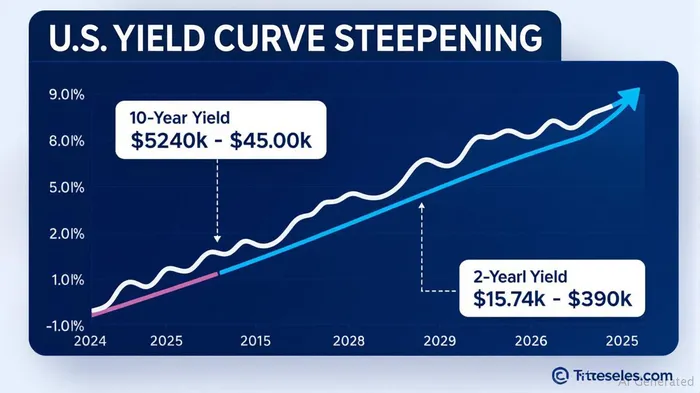
- United States: The U.S. 10-year Treasury yield has climbed to 4.29% as of July 2025, fueled by expectations of persistent fiscal deficits and the Federal Reserve's reluctance to cut rates aggressively. Short-term yields have dipped, steepening the curve—a dynamic Danske Bank highlights as beneficial for financial institutionsFISI--.
Japan: After abandoning its Yield Curve Control policy, the BoJ's JGB yield has risen to 1.43%, a multiyear high. While still low historically, the steepening curve (driven by fiscal deficits and reduced BoJ bond purchases) has reignited interest in Japanese banks and insurers, which benefit from wider interest rate margins.
Europe: The ECB's dovish pivot has kept short-term yields low, but peripheral bond yields (e.g., Italy at 3.7%) remain elevated relative to core issuers like Germany's 2.57% Bund. This divergence creates opportunities in sectors like energy, which thrive in inflationary environments.
Sector Rotation: Winners and Losers in a Higher-Yield World
The bond market's message to equities is clear: discount rates are rising, and growth at all costs is over.
Winners: Financials and Energy
- Financials: Banks and insurers are direct beneficiaries of steeper yield curves. In Japan, institutions like Mitsubishi UFJ Financial Group see their net interest margins expand as long-term rates rise. U.S. banks, such as JPMorgan Chase, similarly gain as loan portfolios reprice upward.
- Energy: Higher rates coincide with inflationary pressures, boosting demand for energy stocks. Companies like Chevron and TotalEnergies thrive in environments where energy prices and real yields rise.
Losers: Tech and Growth Stocks
- Growth stocks, particularly those in the Nasdaq-heavy tech sector, face valuation headwinds. High P/E multiples are increasingly unsustainable when discounted cash flows are penalized by rising discount rates. For instance, Amazon and Meta have underperformed the S&P 500 in 2025 as bond yields climbed.
Danske Bank's Steepening Curve Play: A Tactical Edge
Danske Bank's research underscores the yield curve steepening theme as a global phenomenon. Their recommendations—overweighting peripheral Eurozone bonds (e.g., Spain's 3.1% 10-year yield) and short-dated financials exposure—align with equity market dynamics:
- Financials: The steeper curve improves lending profitability, making banks and insurers a defensive yet growth-oriented equity play.
- Energy: Higher real yields reflect inflation resilience, favoring sectors with tangible assets and pricing power.
Risks and Volatility: The Carry Trade Unwinding
The unwinding of yen carry trades—a decades-old strategy where investors borrowed cheaply in yen to fund higher-yielding assets—poses risks. As the yen strengthens (up 8% since early 2025), capital flows reverse, pressuring equities in rate-sensitive sectors. Tech stocks, which relied on cheap debt financing, are particularly vulnerable.
Investment Recommendations
- Overweight Financials: Allocate to banks and insurers with exposure to yield curve steepening.
- Rotate into Energy: Favor companies with strong balance sheets and exposure to inflation-linked commodities.
- Underweight Tech: Avoid high-beta growth stocks with stretched valuations.
- Hedge with Short-Term Bonds: Use U.S. Treasury bills or German Bund futures to mitigate equity volatility.
Conclusion: Active Management in a New Rate Regime
The bond market's rise is not just a technical adjustment—it's a paradigm shift. Investors must abandon passive equity allocations and embrace a dynamic strategy. By pairing exposure to financials and energy with hedging tools, portfolios can navigate this environment. As Danske Bank's research reminds us, the yield curve's shape is a compass: follow it, or risk being left behind.

Stay ahead of the market.
Get curated U.S. market news, insights and key dates delivered to your inbox.




Comments
No comments yet