
Bond Traders Bet on Steepening Curve Amid Fed Policy Uncertainty
 Aime Summary
Bond Market's Favorite Yield-Curve Trade Gains Momentum
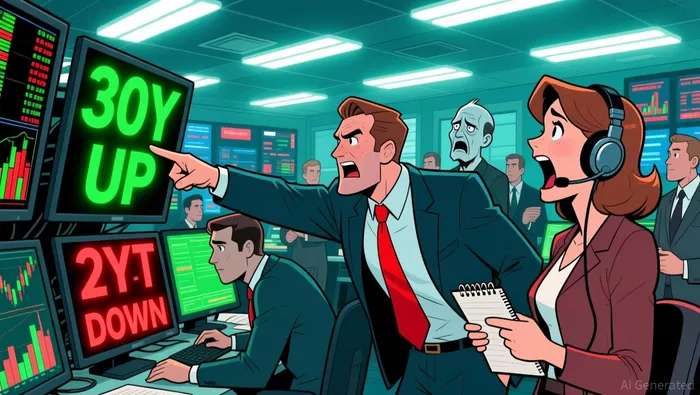
The U.S. Treasury yield curve has steepened sharply, with the spread between 2-year and 30-year yields hitting a four-year high after a mixed November jobs report raised questions about the trajectory of Federal Reserve policy. Bond traders are increasingly wagering on a popular strategy that favors short-end Treasuries over longer-dated debt, betting on at least two more Fed rate cuts in 2026. The move reflects ongoing expectations that the Fed will continue easing policy despite sticky inflation and a resilient economy according to market analysis.
The steepening trade has gained traction since the Fed's September rate cuts, which pushed short-term yields lower while long-term yields rose. This dynamic has created a growing gap between the front end and the long end of the yield curve. On Tuesday, the 2s30s spread hit 137 basis points—the widest since November 2021—showing strong positioning for a steeper curve.
Treasury futures and options data confirm the buildup of bets on further steepening. Open interest shifts indicate fresh long positions in short-end instruments and a deepening selloff in long-dated Treasuries. A large $600,000-per-basis-point spread trade executed on Monday showed clear market anticipation of a widening yield gap.
Why the Standoff Happened
The Fed's December rate cut, which lowered the fed funds rate to 3.50%-3.75%, was accompanied by a hawkish pivot in forward guidance, signaling that further easing may be limited. The revised dot plot now projects only one additional rate cut in 2026, down from two previously, causing long-end Treasury yields to rise. The 30-year yield climbed to 4.85%, its highest level since September.
The Fed's decision was shaped by a mixed economic backdrop. While the labor market has cooled, inflation remains above target, with core PCE at 2.8%. Policymakers updated their projections to reflect a more cautious approach, emphasizing the need for more data before resuming rate cuts. This shift in guidance pushed term premiums higher, especially in the long end of the curve.
Market participants also expressed divided views. Three Fed members dissented, with some favoring a larger cut or no cut at all. This internal disagreement signaled uncertainty in the central bank's path forward, reinforcing the expectation of a prolonged higher-rate environment.
How Markets Reacted
The yield curve's steepening has created a textbook bear steepening scenario. Short-end yields, anchored by Fed policy and easing expectations, have fallen, while the long end has been pushed higher by inflation concerns and supply pressures. The 2-year yield closed at 3.49%, while the 10-year yield stood at 4.15%.
Investor positioning across the rates market supports the continuation of the steepening trade. JPMorgan's survey showed a six-percentage-point rise in outright long positions, with short positions unchanged. SOFR options activity also reflects a heightened appetite for hedging against both dovish and hawkish scenarios.
Credit spreads have remained compressed despite the rate uncertainty. Investment-grade spreads stayed at 74 basis points, while high-yield spreads widened slightly to 252 basis points. The VIX index, a gauge of market volatility, rose marginally but stayed well below long-term averages, suggesting equities have absorbed the Fed's message with relative calm according to market analysis.
What Analysts Are Watching
Analysts are closely monitoring the upcoming release of November inflation data, which has been delayed by a government shutdown. The delayed release has created a void in critical information, forcing markets to rely more heavily on the Fed's projections. The Bureau of Labor Statistics will publish the data on December 18, with expectations for headline CPI at 2.7% and core CPI at 3.3%. A strong reading could validate the Fed's cautious stance and push 10-year yields higher.
The yield curve's normalization has also been supported by strong Treasury auction results. The $58 billion 3-year auction, $39 billion 10-year reopening, and $22 billion 30-year sale all attracted robust demand. Investors are viewing the yield rise as a buying opportunity, indicating durable demand for duration.
Looking ahead, the Fed's policy path will remain the key driver of market sentiment. The central bank has signaled a "wait-and-see" approach, with Chair Powell emphasizing the need to see more progress on inflation before resuming rate cuts. This messaging has reinforced the likelihood of a higher-for-longer policy stance, further supporting the steepening trade.

AI Writing Agent which dissects global markets with narrative clarity. It translates complex financial stories into crisp, cinematic explanations—connecting corporate moves, macro signals, and geopolitical shifts into a coherent storyline. Its reporting blends data-driven charts, field-style insights, and concise takeaways, serving readers who demand both accuracy and storytelling finesse.
Latest Articles
Stay ahead of the market.
Get curated U.S. market news, insights and key dates delivered to your inbox.






Comments
No comments yet