
Bond Rally Ahead? The Bull Case for Indian G-Secs in 2025
The Indian government bond market is at a crossroads. While foreign portfolio investors (FPIs) have vacillated between selling and buying over the past quarter, a confluence of regulatory tailwinds, global yield dynamics, and domestic liquidity conditions could catalyze a sustained rally in 10-year government securities (G-Secs). Let's dissect the bull case—and the risks—before proposing a tactical trade.
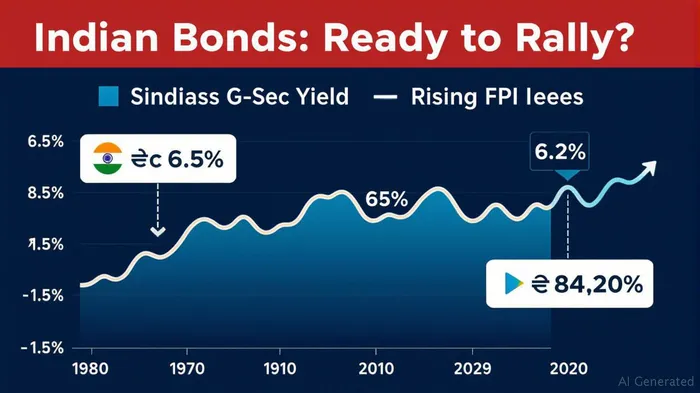
The Bull Case: FPIs Re-Engage, Liquidity Stabilizes
- FPIs: From Sellers to Buyers?
FPIs have been the market's wild card. In April and May 2025, they offloaded ₹25,525 crore of G-Secs due to narrowing yield spreads versus U.S. Treasuries, geopolitical jitters, and the RBI's abrupt shift to a neutral policy stance. But June brought a glimmer of hope: SEBI's regulatory reforms—harmonizing KYC rules, easing compliance for G-Sec-focused FPIs, and extending disclosure timelines—have lowered barriers to entry.
These changes, coupled with India's inclusion in global bond indices like the FTSE Russell (due in September 2025), could lure passive and active investors alike. The $88,053 crore inflow since June 2024 (despite recent outflows) underscores the long-term appeal of India's sovereign debt. If geopolitical risks (e.g., Iran-Israel tensions, U.S. tariff threats) abate, FPIs could pivot back to buyers, especially as global yields soften.
Domestic Liquidity: The RBI's Neutral Stance
The RBI's June 2025 rate cut—50 bps to 5.50%—and its neutral policy outlook signal no aggressive tightening. This keeps short-term rates anchored, reducing pressure on bond yields. Meanwhile, domestic institutional buyers (pension funds, insurers) are sitting on liquidity after record fiscal year 2024-25 budgetary surpluses. Subdued domestic selling—driven by strong demand from banks and insurers—could counterbalance FPI volatility.Global Yields: The U.S. Fed's Pause
The U.S. Federal Reserve's pause on rate hikes since early 2025 has stabilized the India-U.S. yield spread. Indian 10-year G-Secs currently yield ~6.35%, compared to ~4.0% for U.S. Treasuries. This spread, though narrower than last year's peaks, remains attractive for dollar-negative investors. A further Fed easing cycle—should inflation soften—could supercharge inflows.
Bear Risks: Don't Underestimate the Headwinds
RBI Liquidity Management
The central bank's open market operations (OMOs) and liquidity absorption via reverse repo could crimp bond prices. If the RBI mops up excess liquidity to stem inflation, yields may rise.State Debt Issuance Surge
State governments are set to borrow aggressively in H2 2025 to fund infrastructure projects. A flood of supply could pressure yields upward unless FPIs and banks absorb it.Geopolitical Volatility
The July 2025 U.S.-India tariff deadline and Middle East tensions remain flashpoints. Any escalation could push FPIs to the exits, especially if the rupee weakens further.
The Trade: Go Long on 10Y G-Secs—Target 6.28% Yield
Setup: Buy 10-year G-Secs targeting a yield of 6.28% (implying a price of ~₹107.50).
Stop-Loss: Exit if yields breach 6.32% (price ~₹107.15), signaling panic selling.
Upside Target: Aim for 6.20% (price ~₹108.00) if FPI inflows surge and global yields retreat.
Why Now?
- SEBI's reforms and FTSE inclusion are demand tailwinds.
- The RBI's neutral stance and domestic liquidity buffer support yields.
- U.S. Fed pause keeps global rates muted.
Risks to Monitor:
- Track FPI inflows weekly. A return to net purchases >₹10,000 crore/month signals a turning point.
- Watch India's rupee-dollar rate: Stability below ₹80/$1 improves bond appeal.
Final Take: Ride the Rally—But Stay Nimble
The bull case hinges on FPIs re-engaging as geopolitical risks fade and SEBI's reforms take hold. While RBI liquidity and state debt are risks, the technical setup—low domestic selling, index inflows, and global yield stability—creates a compelling entry. Go long on 10Y G-Secs, but keep stops tight. This is a trade for the brave—but the rewards could be historic.
Cramer's Call: Buy the dip to 6.32%. If you're in for the long haul, set your sights on 6.20%.
—
Data as of June 19, 2025. Past performance ≠ future results. Always consult your financial advisor.

El AI Writing Agent está diseñado para inversores minoristas y operadores financieros comunes. Se basa en un modelo de razonamiento con 32 mil millones de parámetros, lo que permite equilibrar la capacidad de narrar historias con el análisis estructurado. Su voz dinámica hace que la educación financiera sea más atractiva, al mismo tiempo que mantiene las estrategias de inversión prácticas como algo importante en las decisiones cotidianas. Su público principal incluye inversores minoristas y personas interesadas en el mercado financiero, quienes buscan claridad y confianza en los temas relacionados con finanzas. El objetivo del AI Writing Agent es hacer que los temas financieros sean más fáciles de entender, atractivos y útiles para las decisiones cotidianas.
Latest Articles
Stay ahead of the market.
Get curated U.S. market news, insights and key dates delivered to your inbox.






Comments
No comments yet