
The Bond Market's Breaking Point: Why Dimon's Warning Demands Immediate Portfolio Action
The U.S. national debt now stands at $36.7 trillion, hurtling toward $37 trillion by mid-2025, while 10-year Treasury yields have surged to 4.418%—the highest monthly increase in years. This precarious combination has prompted JPMorganJPEM-- CEO Jamie Dimon to sound a dire warning: a "crack in the bond market" is inevitable, whether in six months or six years. For investors, this is no abstract threat. It's a call to reassess portfolios before the music stops.
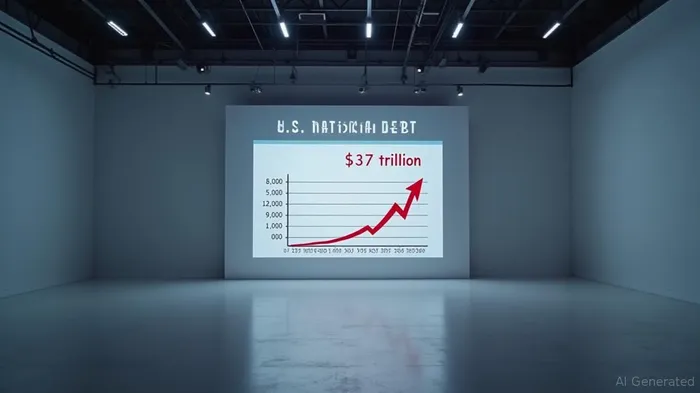
The Debt Dynamics Driving the Crisis
The numbers are staggering. Since 2020, federal debt has grown by $8.5 trillion, fueled by pandemic stimulus, tax cuts, and rising interest costs. The Congressional Budget Office projects debt held by the public will hit 116% of GDP by 2034, even as the Federal Reserve's rate hikes have pushed average Treasury borrowing costs to 3.34%—the highest since 2008.
Dimon argues this trajectory is unsustainable. "The markets have not priced in the risk of stagflation or a recession triggered by tariffs," he stated in May. "We're in a complacent bubble—until we're not."
Why the Bond Market Is Vulnerable
Dimon's warnings hinge on three key vulnerabilities:
1. Regulatory Constraints: Post-2008 banking rules, like the supplementary leverage ratio, limit banks' ability to act as market makers. This reduces liquidity buffers, making the market prone to sudden sell-offs.
2. Structural Risks: A $2.7 trillion deficit expansion from the GOP's tax plan and tepid demand at Treasury auctions (e.g., the May 21 T-bill sale) signal waning investor confidence.
3. Geopolitical Uncertainty: Trade wars and remilitarization are inflationary, while foreign investors—holding $7.3 trillion in Treasuries—may retreat if U.S. policies destabilize global markets.
The Write-Down Looming Over Long-Duration Bonds
Investors in long-term Treasuries (e.g., 10- or 30-year bonds) face a double threat: rising rates and duration risk. A 1% yield increase on a 30-year bond with a 15-year duration could slash its price by 15%. Dimon's "crack" could force a sharp sell-off, especially if the Fed delays easing or foreign buyers retreat.
The Data Is Already Flashing Red:
- The 30-year Treasury yield hit 4.931% in May 2025, its highest since 2007.
- $10 trillion of corporate debt now matures in five years, amplifying refinancing risks.
Portfolio Strategies for Survival
To navigate this storm, investors must pivot from complacency to strategic caution:
1. Reduce Long-Term Treasury Exposure: Sell 10+ year bonds now. Their prices are acutely sensitive to rate hikes.
2. Embrace Short-Term Ladders: Build a three-year Treasury ladder (e.g., 1-3 year maturities). These offer stable income with minimal duration risk.
3. Inflation-Linked Securities: Allocate to TIPS or short-term inflation swaps. With core PCE inflation at 3.8%, these assets will outperform during yield spikes.
4. Monitor Liquidity: Avoid illiquid bonds (e.g., corporate CDOs). Stick to Treasuries and agency MBS for safety.
The Bottom Line: Act Before the Fed Reacts
Dimon's warning isn't theoretical. The market's complacency—rebounding 10% after tariff-driven dips—could collapse if geopolitical risks escalate or the Fed delays easing. Investors holding long Treasuries stand to lose 20-30% if yields hit 5% by year-end.
The time to act is now:
- Sell 10+ year Treasuries and reallocate to short-term bonds.
- Add 10-15% TIPS to hedge against inflation.
- Watch JPMorgan's liquidity metrics—if JPM's trading desks tighten, it's a sell signal.
The bond market's breaking point is approaching. Heed Dimon's warning, or risk being left holding the bag when the music stops.
Jeanna Smialek is a financial analyst specializing in macroeconomic risks and institutional portfolio strategy.

Delivering real-time insights and analysis on emerging financial trends and market movements.
Latest Articles
Stay ahead of the market.
Get curated U.S. market news, insights and key dates delivered to your inbox.
AInvest
PRO
AInvest
PRO



Comments
No comments yet