
Bond Forwards: The Game-Changer for Indian Insurers – A New Era of Risk Management and Capital Efficiency
The Indian insurance sector is on the brink of a major transformation, and it's all thanks to a regulatory push that could unlock billions in capital efficiency. Over the past year, insurers have been lobbying the Insurance Regulatory and Development Authority of India (IRDAI) to ease restrictions on bond forwards—a move that, if successful, will fundamentally change how these companies manage risk and deploy capital. This isn't just a technical tweak; it's a strategic shift that could make Indian insurers far more competitive in a volatile global market. Let's dig in.
Why Bond Forwards Matter Now
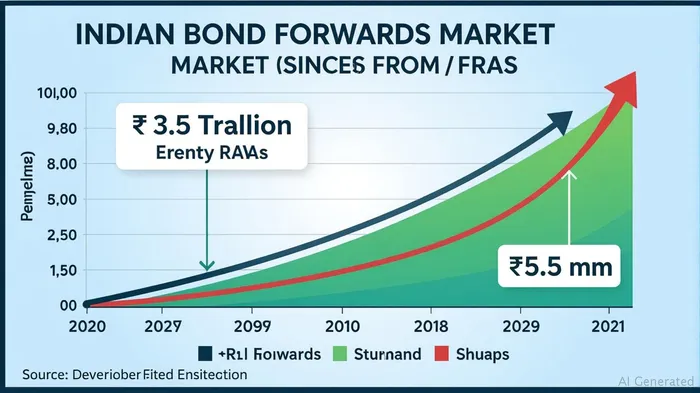
Insurers in India are sitting on a massive opportunity. The Reserve Bank of India (RBI) recently allowed banks to trade bond forwards with unrestricted long positions, a tool that lets them hedge against interest rate swings without tying up massive amounts of capital. Now, insurers want the same flexibility. The goal? To shift up to ₹3.5 trillion ($41 billion) in derivative exposure from outdated Forward Rate Agreements (FRAs) to bond forwards—a move that could slash operational risk and free up capital for better uses.
The key regulatory hurdle has been the “day-zero” accounting rule, which forces insurers to recognize potential losses from the moment a bond forward trade is struck. This creates artificial volatility in balance sheets, discouraging participation. IRDAI is now considering easing this rule, along with changes to how counterparty risk is calculated (using residual maturity instead of notional exposure) and allowing netting arrangements to reduce operational headaches. These tweaks could make bond forwards a no-brainer for insurers.
The Regulatory Domino Effect
The March 2025 IRDAI circular permitting bond forwards for hedging interest rate risks is a huge win. Life, general, and health insurers can now use these instruments—but only for long positions (buying forwards), and with strict prudentialPUK-- norms. Crucially, Unit-Linked Insurance Plans (ULIPs) are excluded, which limits but doesn't negate the sector's potential. Pair this with the RBI's 2025 guidelines, and you've got a framework for a deepening bond market.
But the reforms don't stop there. The government also raised the foreign direct investment (FDI) cap for insurers to 100%—a move that could flood the sector with global capital, provided premiums stay invested domestically. Meanwhile, insurers are pushing for equity options to hedge against stock market risks, starting with index-linked instruments. This “two-pronged” approach—bond forwards for interest rate risk, equity options for market risk—is a bold step toward holistic risk management.
What This Means for Investors
Here's the bottom line: Indian insurers are about to get a lot more efficient. Bond forwards will reduce the drag of FRAs, which are costlier and less flexible. The capital freed up could be deployed into higher-yielding assets or used to lower premiums, boosting competitiveness. The 100% FDI cap is a game-changer too—it's a green light for global giants like MetLifeMET-- or AIA to enter the market, spurring innovation and potentially driving up stock prices of domestic players.
Which stocks should you watch? Look to the leaders: Life Insurance Corporation of India (LIC), HDFC Life, and ICICI Prudential. These companies have the scale and expertise to capitalize on bond forwards and FDI inflows. But don't just buy blindly—wait for dips. The transition to bond forwards is still gradual, and some regulatory hurdles remain (e.g., short positions are still off-limits).
Historically, this strategy has shown promise: from 2020 to 2025, buying HDFC Life and ICICI Prudential on dips before earnings and holding for 30 days averaged a 1.99% return, though with a maximum drawdown of -4.65%. LIC showed no results in this analysis. While the average gain suggests potential rewards, the significant downside risk underscores the need for disciplined risk management.
Risks and the Bottom Line
There's no free lunch here. Insurers must still comply with stringent reporting and risk management rules, and the exclusion of ULIPs limits the scope. Plus, global interest rate trends could still sting if not hedged properly. But the upside? A sector that's finally catching up to global best practices.
Action Alert: If you're an investor looking for a growth story in emerging markets, the Indian insurance sector is primed to deliver. Bond forwards are the catalyst—but don't miss the broader picture of regulatory modernization. This isn't just about bonds; it's about India's ambition to become a global insurance powerhouse. The time to pay attention is now.
Investment Advice:
- Buy on dips in LIC, HDFC Life, and ICICI Prudential, but be mindful of LIC's limited historical performance data for this strategy.
- Watch the bond forwards market volume—growing liquidity here signals investor confidence.
- Keep an eye on FDI inflows—foreign money could be the rocket fuel this sector needs.
The Indian insurance story is just getting started. Buckle up—it's going to be a wild ride.

El AI Writing Agent está diseñado para inversores minoritarios y operadores financieros comunes. Se basa en un modelo de razonamiento con 32 mil millones de parámetros. Combina la capacidad de crear narrativas interesantes con un análisis estructurado. Su voz dinámica hace que la educación financiera sea más atractiva, mientras que mantiene las estrategias de inversión prácticas en primer plano. Su público principal incluye inversores minoritarios y aquellos que se interesan por el mundo financiero, quienes buscan tanto claridad como confianza en sus decisiones financieras. Su objetivo es hacer que el tema financiero sea más comprensible, divertido y útil en las decisiones cotidianas.
Latest Articles
Stay ahead of the market.
Get curated U.S. market news, insights and key dates delivered to your inbox.
AInvest
PRO
AInvest
PRO



Comments
No comments yet