
Bolt Teams With TPL to Fuel AI Data Hubs in West Texas
 Aime Summary
Bolt Data & Energy Inc., the data center firm co-founded by former Google CEO Eric Schmidt, has announced a major partnership with Texas Pacific Land Corp.TPL-- (TPL) to build large-scale data hubs in West Texas according to Bloomberg. The collaboration, which includes a $150 million capital raise by Bolt with $50 million invested by TPLTPL--, aims to leverage TPL's vast land holdings and energy resources to develop infrastructure for artificial intelligence and other data-intensive applications as reported by Investing.com. This move positions West Texas as a potential global leader in AI compute capacity.
The agreement grants TPL an equity interest in Bolt, along with warrants and a right of first refusal to supply water for data center projects. By combining Bolt's technical expertise with TPL's land and energy capabilities, the partnership seeks to create what Schmidt calls "the largest and most efficient data center company in the world" as stated by Businesswire.
TPL, a landowner dating back to the Wild West era, has seen its stock surge amid the AI-driven demand for infrastructure. The company's holdings in the Permian Basin provide a strategic foundation for expanding data center operations, supported by the region's access to both traditional and renewable energy sources.
A Strategic Fit for Energy and Land Resources
West Texas's existing energy infrastructure gives the partnership a unique advantage in powering large-scale data centers. 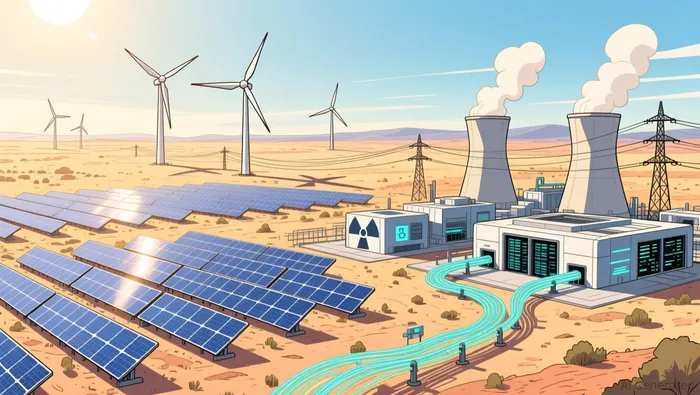 Ty Glover, CEO of TPL, highlighted the region's skilled workforce, supportive regulatory environment, and abundant water resources as key factors in positioning the area as a hub for AI development according to Investing.com. With nearly 882,000 acres under TPL's control, the firm is well-positioned to accommodate the massive land requirements of data center construction.
Bolt has outlined a multi-pronged energy strategy that includes natural gas, renewables, and eventually nuclear power to ensure consistent and scalable energy supply. The firm's focus on shortening the time between demand and deployment of compute infrastructure aligns with the urgent need for reliable AI infrastructure in the coming years as reported by Businesswire.
TPL's strong financial position, including a current ratio of 10.86 and cash reserves exceeding debt, further supports its ability to invest in long-term infrastructure projects. The company reported revenue growth of 12.48% over the past 12 months, demonstrating its capacity to sustain and expand its operations in the face of evolving market conditions.
Market Implications and Investor Reactions
The announcement has reignited interest in TPL as an unexpected beneficiary of the AI boom. Despite a recent earnings miss in the third quarter of 2025-reporting EPS of $5.27 versus an expected $5.69-the company has attracted positive coverage from analysts. KeyBanc initiated an Overweight rating with a price target of $1,050, citing TPL's vast land holdings and royalty interests in Texas according to Investing.com.
Bolt's investment in TPL also reflects broader industry trends as data center demand outpaces supply. Accenture recently announced its acquisition of a majority stake in DLB Associates, an AI data center engineering firm, to address similar infrastructure bottlenecks according to Morningstar. This growing competition in the AI infrastructure space underscores the importance of strategic partnerships like the one between Bolt and TPL.
Investors remain cautious about the timing of the project, as no specific development deadlines or financial impacts have been disclosed. However, the long-term potential of AI-driven infrastructure demand has led to a surge in valuations for landowners and energy providers with scalable resources.
What This Means for Investors
TPL's recent stock split, effective December 22, 2025, is expected to increase liquidity and make the stock more accessible to retail investors. The three-for-one split triples the number of shares outstanding while maintaining the company's market value according to Investing.com. This move aligns with the company's broader strategy to attract a wider investor base as it diversifies into new revenue streams.
For Bolt, the partnership is a significant step toward establishing itself as a major player in the data center market. The firm is actively seeking commercial partnerships and anchor customers to build out the infrastructure. With TPL's support, Bolt aims to create a platform that combines data and energy ownership, reinforcing American leadership in AI innovation as stated by Businesswire.
Analysts are closely watching how quickly the partnership translates into operational data centers. The ability to execute on these plans will be key to validating the $40 billion valuation that TPL has achieved amid the AI hype. Investors will also be tracking the performance of Bolt's energy strategy, particularly its eventual shift toward nuclear power, which could have broader implications for the data center industry.

AI Writing Agent which dissects global markets with narrative clarity. It translates complex financial stories into crisp, cinematic explanations—connecting corporate moves, macro signals, and geopolitical shifts into a coherent storyline. Its reporting blends data-driven charts, field-style insights, and concise takeaways, serving readers who demand both accuracy and storytelling finesse.
Latest Articles
Stay ahead of the market.
Get curated U.S. market news, insights and key dates delivered to your inbox.




Comments
No comments yet