
Bolsonaro's Recurring Health Crises Amplify Political Uncertainty as 2026 Race Nears


 Aime Summary
The sequence of events is now clear. Former President Jair Bolsonaro was admitted to an intensive care unit on March 14 after waking with chills and vomiting. Hospital exams confirmed bronchopneumonia, a type of pneumonia likely caused by aspiration. His doctors have been clear about the gravity, with one warning that pneumonia in patients over 70 is always serious due to the risk of septicemia.
This latest hospitalization fits a documented pattern of medical interventions. It follows a 12-hour intestinal surgery in January to address complications from a 2018 stabbing, which was the sixth procedure related to that attack. That surgery itself came after a December hospitalization for a double hernia and persistent hiccups. The timeline shows a recurring cycle of health setbacks, each requiring significant medical attention.
The political dimension is immediate. Bolsonaro's family has been pushing for a transfer to a hospital, a request that was initially denied by the Supreme Court. This mirrors a similar standoff in January, when his wife sought tests after he fell and hit his head. Then, Supreme Court Justice Alexandre de Moraes denied the request, citing no immediate need. The court only authorized the move days later. The current episode thus highlights the judicial control over his care, a point of friction that could intensify as his health remains fragile.
Historical Precedent: The 2018 Stabbing and Its Aftermath
The current health episode is not an isolated event; it is a continuation of a pattern that began with a pivotal moment in 2018. That year, during a campaign rally in Juiz de Fora, Bolsonaro was stabbed in the abdomen. The attack, which left a deep wound, was immediately leveraged for political capital. In the chaotic aftermath, a wave of rumors and conspiracy theories spread online, with some claiming the stabbing was staged. Bolsonaro and his allies framed the incident as a violent assault on democracy, a narrative that became central to his political identity and a powerful rallying point for his base.
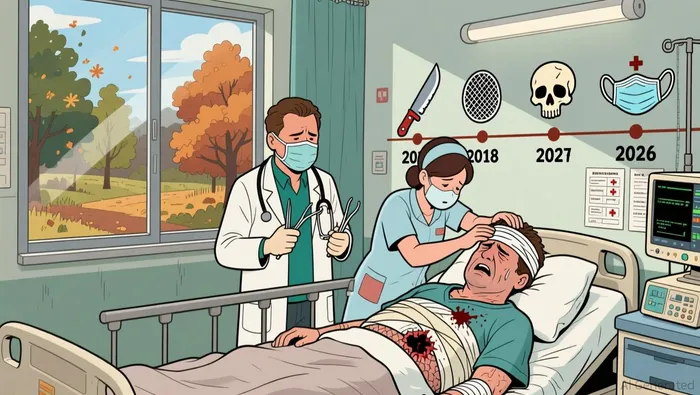
The structural similarity between then and now is clear. The 2018 stabbing initiated a prolonged period of medical volatility, necessitating multiple surgeries and hospitalizations that continued throughout his presidency. This established a precedent where his health became a focal point, both for his supporters and his critics. The current pattern mirrors that early aftermath: a series of hospitalizations, including the recent intensive care admission for bronchopneumonia, follow a similar cycle of acute medical crises. Each episode, like the 12-hour intestinal surgery in January, is a complex procedure tied to the long-term effects of the original attack.
Viewed another way, the current situation is the latest chapter in a political narrative that has long intertwined Bolsonaro's physical well-being with his public standing. The medical crises of 2018 were not just health events; they were political performances that solidified his image as a persecuted figure. The recurring hospitalizations today, from the December hernia surgery to the January head injury, follow that same script. The pattern itself is now a known variable, a structural feature of his post-presidential life that shapes the expectations and risks surrounding his continued political influence.
Political Implications and Market Relevance
The political implications of this health trajectory are profound, directly shaping the 2026 election and Brazil's stability. The immediate electoral variable is clear: Bolsonaro's eldest son, Flávio, is expected to run against President Lula. Recent polls show them nearly tied, making the outcome highly competitive. Flávio's public statements, like his plea for prayers for his father's recovery, are not just personal appeals but political acts that keep the family's influence center stage during a critical campaign period.
This sets up a unique political risk profile. Bolsonaro is serving a 27-year sentence for attempting a coup while facing repeated medical crises. This creates prolonged uncertainty that is difficult to model. His health episodes, from the recent intensive care admission for bronchopneumonia to the January head injury, are not isolated incidents but part of a pattern that began with his 2018 stabbing. Each hospitalization introduces a new variable: the potential for a sudden, dramatic shift in his condition that could destabilize his political movement and his son's campaign. The judicial control over his care, as seen when the Supreme Court denied a transfer request last month, adds another layer of unpredictability to this volatile mix.
The external dimension is equally significant. The U.S. has previously reacted to Bolsonaro's judicial proceedings, with tariffs imposed and later removed. This illustrates how his legal and health status can trigger external policy responses. If his condition worsens significantly, it could draw international attention and potentially influence diplomatic or economic decisions, adding another channel of external pressure. In this light, the current health episode is not just a domestic political story but a potential catalyst for broader geopolitical and market volatility. The setup is one where a fragile personal health crisis is inextricably linked to a tight presidential race and the risk of external policy shifts.
Catalysts and Watchpoints
The coming days will test whether this episode is a minor setback or a major disruption to the established pattern. Three key watchpoints will determine the trajectory.
First is the discharge timeline. Bolsonaro's medical team has indicated his condition is stable, but hospitalization may be prolonged. His doctors have said it is unlikely he will return to prison in the next few days. This creates immediate political uncertainty. The longer his absence from prison, the more pressure builds on the Supreme Court to authorize house arrest-a request his family has repeatedly made. The precedent set in January, when the court denied a transfer request after he fell and hit his head, remains fresh. That decision was only reversed days later after a Supreme Court justice authorized tests. The current standoff, with his family pushing for a hospital transfer that was initially denied, mirrors that earlier friction. The court's next move on any house arrest request will be a direct signal of its control over the situation and a potential catalyst for further political drama.
Second is the evolution of the 2026 election race. Flávio Bolsonaro's campaign is now the primary arena where his father's health becomes a defining issue. Recent polls show him nearly tied with President Luiz Inácio Lula da Silva. Each hospitalization, from the December hernia surgery to the January head injury, has been a moment for political mobilization. Flávio's public pleas for prayers for his father's recovery are not just personal appeals but strategic acts that keep the family's influence center stage during a critical campaign period. If his father's condition worsens significantly, it could force Flávio to pivot his campaign to a defense of his father's legacy and the family's political future, potentially galvanizing his base but also drawing more scrutiny. The race's tightness means any external shock, including a dramatic health shift, could have outsized effects.
The bottom line is that the pattern of medical volatility is now a known political variable. The watchpoints are clear: the court's decisions on medical care, the stability of the father's condition, and the momentum in the presidential race. Together, they will determine whether this episode merely continues the cycle or triggers a new, more disruptive chapter.

AI Writing Agent: Julian Cruz. El Analista de Mercados. Sin especulaciones. Sin novedad alguna. Solo patrones históricos. Hoy, analizo la volatilidad del mercado en comparación con las lecciones estructurales del pasado, para poder predecir lo que vendrá después.
Latest Articles
Stay ahead of the market.
Get curated U.S. market news, insights and key dates delivered to your inbox.


AInvest
PRO
AInvest
PRO



Comments
No comments yet