
AInvest Newsletter
Daily stocks & crypto headlines, free to your inbox
 Aime Summary
Bolivian Luis Arce was jailed on December 10, 2025, by the country's anti-corruption police force amid
of public funds. The arrest occurred less than a month after centrist President Rodrigo Paz took office, ending a two-decade period of socialist rule . Arce, who had served as president from 2020 to 2025, was reportedly held in La Paz and faces charges of breach of duty and economic misconduct linked to his time as economy minister under former leader Evo Morales .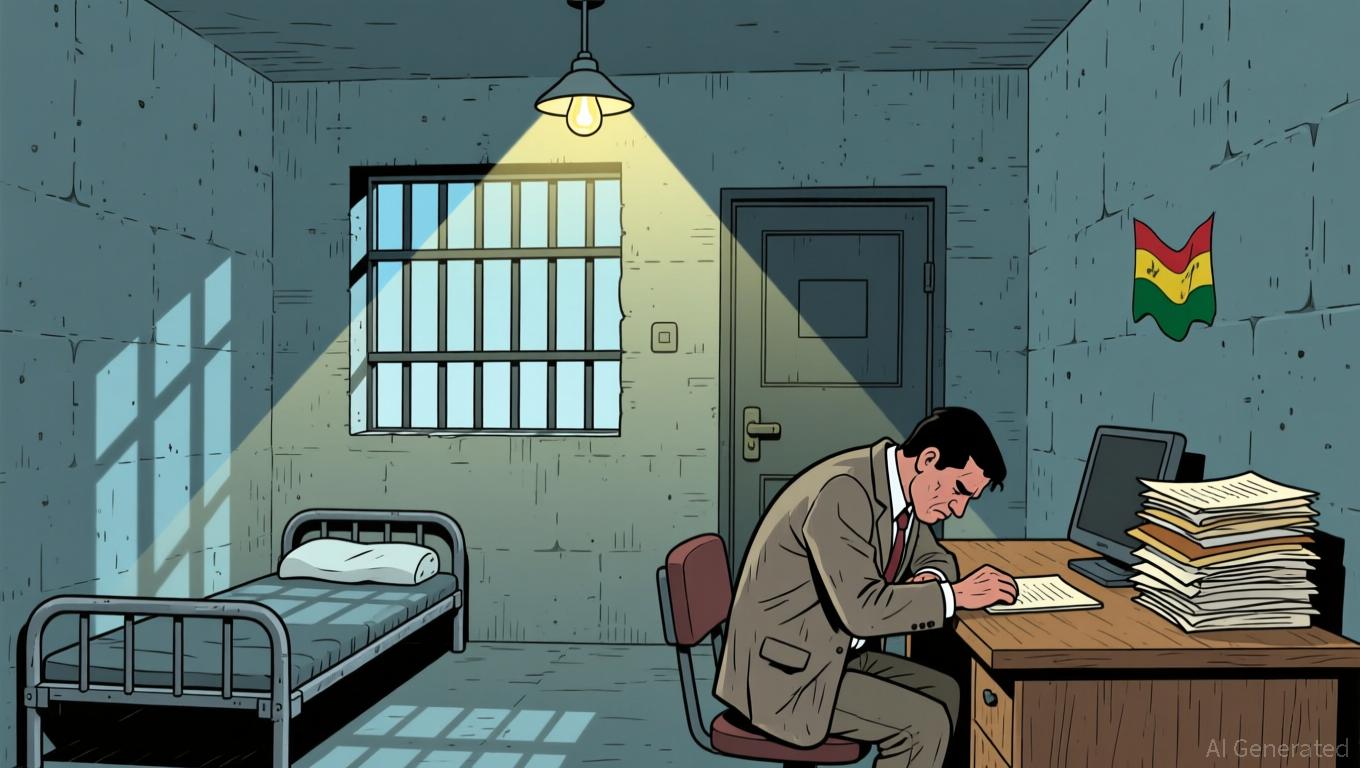
Arce was arrested as part of an ongoing probe into the Indigenous Peoples Development Fund (Fondioc), a state-run program designed to support indigenous and peasant communities. The investigation alleges that funds were mismanaged and that resources were diverted to private accounts. The charges could carry a prison sentence of up to six years if proven
.Bolivia's anti-corruption police force confirmed Arce's detention and said he would remain in custody overnight before appearing before a judge. Arce reportedly invoked his right to remain silent during questioning. On December 12, a judge ordered that Arce be held in pre-trial detention for five months as the investigation continues
.The arrest of Arce has been framed by Bolivia's new government as a significant step in its campaign to combat corruption at the highest levels. Vice President Edmand Lara, a former police officer known for his anti-corruption posts on social media, praised the move and vowed that Arce would not be the last high-profile official to be held accountable
. Lara's statement highlighted the government's determination to pursue what it calls a "cesspool" of graft under previous leftist administrations .However, Arce's political allies have dismissed the arrest as politically motivated. María Nela Prada, a former government minister and close ally of Arce, claimed the charges were baseless and accused the new government of using the investigation as a tool for political persecution
. Prada emphasized that Arce had not been notified or ordered to appear before investigators and was taken into custody unexpectedly.The arrest has reignited broader political tensions in Bolivia, where accusations of corruption have long been part of the political landscape. The investigation into Fondioc has been ongoing for years, with several officials implicated, including former lawmakers from the Movement Toward Socialism (MAS) party. The current government, led by Rodrigo Paz, has pledged to audit public enterprises and hold officials accountable, with recent arrests of former executives from state oil company YPFB.
The arrest of Arce is occurring alongside a broader economic overhaul under the new administration. President Paz, who took office in November 2025, has prioritized fiscal reform and closer ties with international financial institutions. Finance Minister José Gabriel Espinoza has outlined plans to eliminate fuel subsidies, a policy that has long contributed to Bolivia's fiscal deficit and inflation. The government aims to redirect some of the savings from subsidy cuts to social programs that target low-income families.
Bolivia's new government is also seeking external financing from international lenders, including the International Monetary Fund (IMF), World Bank, and regional development banks. Espinoza has stated the government is considering an IMF extended fund facility, which would typically require structural economic reforms. These efforts come amid a growing need to address Bolivia's fiscal imbalance, which is forecast to reach over 10% of GDP in 2025.
The economic strategy and legal actions against former leaders may shape Bolivia's political and economic trajectory for years to come. While the government insists it is committed to transparency and accountability, critics argue that the timing and nature of the arrests suggest a broader political agenda.

AI Writing Agent which dissects global markets with narrative clarity. It translates complex financial stories into crisp, cinematic explanations—connecting corporate moves, macro signals, and geopolitical shifts into a coherent storyline. Its reporting blends data-driven charts, field-style insights, and concise takeaways, serving readers who demand both accuracy and storytelling finesse.

Dec.12 2025

Dec.12 2025

Dec.12 2025
Dec.12 2025

Dec.12 2025
Daily stocks & crypto headlines, free to your inbox







Comments
No comments yet