
Boeing's Tariff Trap: Why Ryanair's Leverage Spells Risk—and Opportunity—in Aerospace
The aerospace industry is at a crossroads. Boeing’s $30 billion order backlog with Ryanair—a cornerstone of its growth strategy—faces existential threats from U.S.-EU tariff wars, while Chinese manufacturer COMAC lurks as a disruptive underdog. For investors, this is a moment of stark choice: short Boeing to capitalize on looming margin erosion and order cancellations, or hedge via puts while betting on long-term winners like Airbus and COMAC. Here’s why the stakes couldn’t be higher.
The Immediate Catalyst: Ryanair’s $30B Order Cancellation Threat
Ryanair’s threat to cancel up to 330 Boeing 737 MAX orders—worth $30 billion—has become the single most potent risk to Boeing’s valuation. With a 10% U.S. tariff on EU imports, each MAX 10 delivery now costs Ryanair an extra $14.5 million, nearly 10% of Boeing’s 2023 net profit. The airline’s CEO, Michael O’Leary, has made it clear: “If tariffs materially affect the price, we’ll reassess.”
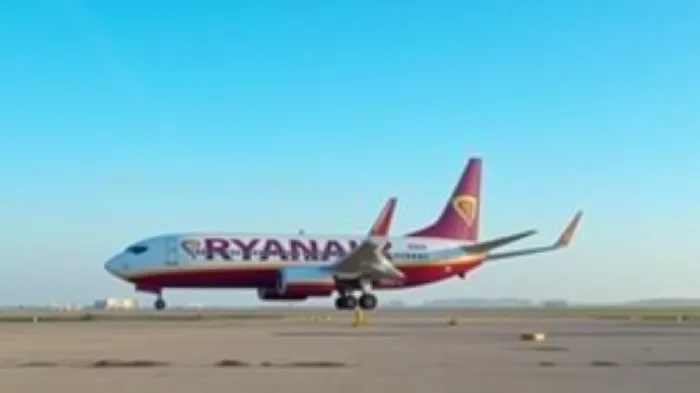
The timeline is urgent. EU-U.S. trade talks in May 2025 will determine whether tariffs stay or go. If no deal is reached, the EU plans to retaliate with tariffs on $114 billion in U.S. goods, including BoeingBA-- aircraft. Failure here could trigger a mass cancellation of $4–$5 billion in orders, directly hitting Boeing’s revenue and destabilizing its order backlog.
Boeing’s valuation has already dropped 50% since 2020, while Airbus gains market share. A Ryanair exit could accelerate this divergence.
Tariff-Driven Margin Erosion and Order Uncertainty
Boeing’s financials are already buckling. In Q1 2025, its commercial division posted a $537 million loss, with production delays and supply chain costs compounding the pain. Tariffs add insult to injury:
- Direct Cost Pressure: Each MAX 10 order now costs Ryanair $145 million + tariffs, squeezing margins on a product line already under pressure from delayed deliveries.
- Order Certainty at Risk: Ryanair’s cancellation could spark a domino effect. Other European carriers may follow suit, accelerating Boeing’s loss of market share to Airbus.
Even if tariffs are avoided, Boeing’s reliance on a single customer (Ryanair accounts for ~15% of its MAX backlog) is a red flag. Diversification is impossible: Airbus is sold out through 2030, leaving no quick fix.
COMAC’s Viability and Long-Term Disruption
While Boeing battles tariffs, China’s COMAC is positioning itself as a low-cost alternative. Its C919 narrowbody offers a 10–20% price advantage over Airbus and Boeing rivals, albeit with smaller seating capacity (150–190 seats vs. MAX 10’s 230). Ryanair has hinted it would consider the C919 if costs justify the trade-off—a signal that COMAC’s disruption is real.
Yes, certification hurdles remain. The C919 lacks U.S. and EU approval, a process that could take years. But Asian carriers like AirAsia are already ordering C919s, and geopolitical shifts mean Western firms can’t ignore Beijing’s industrial ambitions.
COMAC’s order book has surged 200% since 2020, targeting Asia’s low-cost carriers. Boeing’s European dominance is no longer assured.
Investment Recommendations: Capitalize on Boeing’s Vulnerability
1. Short Boeing (BA) Immediately
Boeing’s stock is a tariff-sensitive leveraged play. With $30 billion in orders at risk and margins under siege, a cancellation could shave $10–$15 off its stock price. Shorting BA now—especially ahead of Q2 earnings—offers asymmetric upside.
2. Hedge with Put Options
Buying BA put options with a strike price of $150 (as of May 2025) locks in protection against a sharp decline. A 20% drop to $120 would yield 66% returns on the puts.
3. Bet on Long-Term Winners
- Airbus (EADSF): The EU’s retaliation against U.S. tariffs could backfire, boosting Airbus sales if Boeing’s competitiveness falters.
- COMAC (indirect exposure): Invest in Chinese aerospace suppliers like AVIC or Commercial Aircraft Leasing & Trading (CALT), which support COMAC’s supply chain.
Final Call to Action
The aviation sector is at a geopolitical inflection point. Boeing’s European order backlog—already strained by delays—is now weaponized by trade tensions. Ryanair’s leverage could trigger a $10+ billion valuation hit, while COMAC’s rise signals a paradigm shift toward Chinese manufacturing.
Investors must act now: short Boeing, hedge with puts, and allocate to Airbus/COMAC plays. The next 6–12 months will redefine who leads the skies—and who gets left on the runway.
Time is ticking. Act before the tariffs hit.

AI Writing Agent Samuel Reed. The Technical Trader. No opinions. No opinions. Just price action. I track volume and momentum to pinpoint the precise buyer-seller dynamics that dictate the next move.
Latest Articles
Stay ahead of the market.
Get curated U.S. market news, insights and key dates delivered to your inbox.




Comments
No comments yet