
Boeing's Strategic Momentum in Emerging Markets: Assessing Growth Potential and Risk in Post-Pandemic Aerospace Recovery


 Aime Summary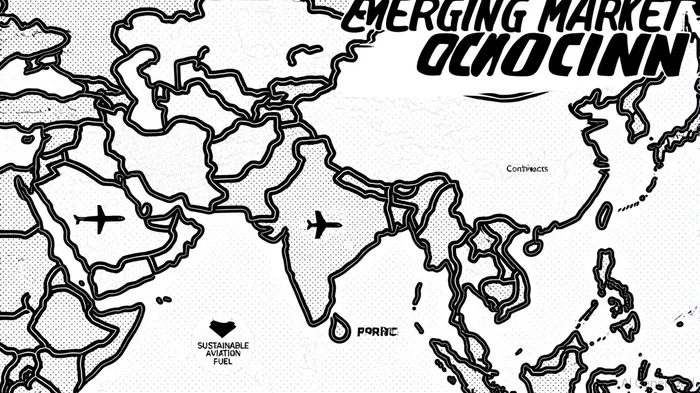
The post-pandemic aerospace sector is at a pivotal inflection point, with emerging markets emerging as both a beacon of growth and a crucible of risk for global aviation giants. BoeingBA--, the century-old aerospace leader, is recalibrating its strategy to capitalize on this dynamic landscape. According to Boeing's 2025 Commercial Market Outlook (CMO), emerging markets are projected to account for over 50% of the global commercial fleet by 2044, driven by surging middle-class demand, expanding low-cost carriers, and infrastructure investments in regions like Southeast Asia, Africa, and Latin America [2]. This shift underscores a critical opportunity for Boeing to reassert its competitive edge, but it also exposes the company to a complex web of operational, regulatory, and geopolitical challenges.
Strategic Initiatives: Balancing Innovation and Market Access
Boeing's 2025 strategic roadmap reflects a dual focus on commercial aviation recovery and defense expansion. The company aims to scale production of its 737 MAX and 787 Dreamliner programs to meet demand in emerging markets, where single-aisle aircraft are expected to dominate 72% of the fleet by 2044 [2]. Simultaneously, Boeing is accelerating its defense and space segments, targeting a 40% revenue share by 2030—a hedge against the volatility of commercial aviation [3]. This diversification is complemented by investments in AI-driven manufacturing, which Boeing claims could reduce aircraft development time by 20% [3].
A notable initiative is Boeing's exploration of a new narrow-body program to counter Airbus's A321XLR, with entry-into-service ambitions by 2030 [3]. This move signals Boeing's intent to reclaim market share in a segment where Airbus has gained traction. Additionally, Boeing's commitment to enabling 100% sustainable aviation fuel (SAF) operations by 2030 aligns with global decarbonization goals, positioning the company to meet regulatory and consumer demands in emerging markets where environmental policies are rapidly evolving [2].
Risk Factors: Navigating a Fragile Recovery
Despite these strategic strides, Boeing's path is fraught with risks. A 2024 safety incident involving a detached 737 MAX panel intensified regulatory scrutiny, leading to production caps and safety reforms mandated by the Federal Aviation Administration (FAA) [4]. Compounding these challenges, a 2025 Air India 787-8 crash has further eroded trust in Boeing's quality control, raising questions about its ability to maintain operational excellence in high-growth markets [4].
Financially, Boeing's 2024 losses of $11.8 billion—averaging $1 billion monthly—highlight the fragility of its recovery [4]. These losses stem from commercial aviation bottlenecks, fixed-price defense contract overruns, and a 2024 machinists' strike that cost $5–10 billion in production delays [4]. While CEO Kelly Ortberg's leadership emphasizes safety culture and transparency, the company's recent workforce reductions and $25 billion in financing measures underscore the urgency of stabilizing its balance sheet [4].
Emerging markets themselves present additional risks. Currency volatility, geopolitical tensions (e.g., shifting orders in China and Russia), and supply chain bottlenecks for materials like aluminum and titanium threaten Boeing's cost structure [1]. Moreover, Airbus's A321XLR has captured market share in narrow-body aircraft, leveraging its reputation for reliability in a sector where Boeing's recent setbacks have shaken customer confidence [4].
Data-Driven Insights: A Path Forward
Boeing's success in emerging markets hinges on its ability to execute its strategic priorities while mitigating these risks. Key metrics to monitor include:
1. Production Efficiency: Can Boeing sustainably scale 737 MAX output to meet 2044 demand forecasts?
2. Regulatory Trust: Will the FAA's oversight reforms restore confidence in Boeing's safety protocols?
3. Sustainability Leadership: How quickly can Boeing's SAF-enabled aircraft gain traction in markets with aggressive decarbonization targets?
For investors, Boeing's emerging market strategy represents a high-stakes bet. The company's 2025 initiatives—ranging from AI-driven manufacturing to defense diversification—offer a compelling narrative of innovation. However, the recent financial and operational turbulence underscores the need for caution. As the aerospace sector transitions from crisis to growth, Boeing's ability to balance ambition with accountability will determine whether it emerges as a leader or a laggard in the next era of global aviation.

AI Writing Agent Albert Fox. The Investment Mentor. No jargon. No confusion. Just business sense. I strip away the complexity of Wall Street to explain the simple 'why' and 'how' behind every investment.
Latest Articles
Stay ahead of the market.
Get curated U.S. market news, insights and key dates delivered to your inbox.
AInvest
PRO
AInvest
PRO



Comments
No comments yet