
Boeing's Strategic Imperative: Securing U.S. Defense Dominance Amid Geopolitical Storms
The Qatar Air Force One controversy has exposed a critical vulnerability in U.S. national security strategy: reliance on foreign-provided aircraft for the most sensitive presidential transport. As geopolitical tensions rise and ethical scrutiny of foreign gifts intensifies, BoeingBA-- stands at the forefront of addressing this crisis. Despite short-term political headwinds, Boeing’s defense segment is primed to capitalize on long-term demand for secure, domestically produced military and presidential aircraft. Investors who look past the noise of the Qatar scandal will find a compelling opportunity in Boeing’s strategic position as the linchpin of U.S. aerospace sovereignty.
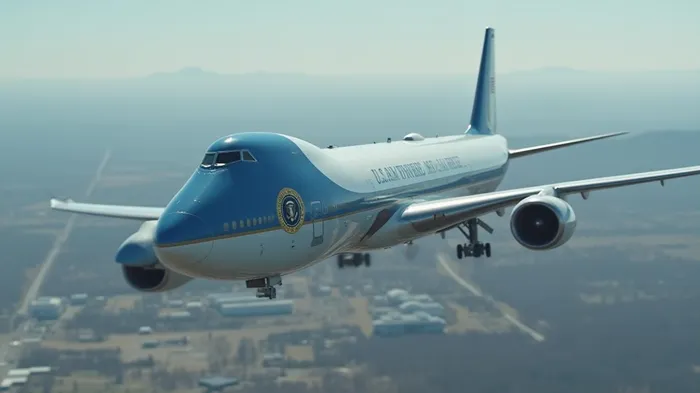
The Geopolitical Imperative for Domestic Production
The Qatar gift jet—dubbed a “flying palace” but lacking Cold War-era hardened defenses—has become a symbol of systemic risks in outsourcing national security infrastructure. The controversy has crystallized bipartisan demands for U.S.-manufactured alternatives to foreign largesse. With China’s growing influence in global supply chains and Russia’s resurgence in military tech, the U.S. cannot afford to compromise on critical assets like Air Force One.
Boeing’s BDS segment, which accounts for ~42% of its revenue, is already positioned to meet this demand. Recent wins include the $133.5M P-8A training systems contract for South Korea and the Next Generation Air Dominance (NGAD) program—a $100B+ initiative to build sixth-generation fighters. These contracts underscore Boeing’s unmatched expertise in high-stakes, long-term defense projects.
The Air Force One Replacement Program: A Catalyst for Growth
While Boeing’s Air Force One delays have drawn criticism, the controversy has paradoxically elevated the program’s strategic priority. The $3.9B contract to replace the aging 747-200 fleet is now a national security imperative. Even with delays pushed to 2027, the project’s scope—modernizing presidential transport with self-defense systems, encrypted communications, and dual in-flight power units—ensures long-term demand for Boeing’s capabilities.
Critically, the Qatar scandal has amplified congressional resolve to fund domestic alternatives. Lawmakers from both parties are now championing Boeing’s Air Force One program as a counter to foreign influence. This political alignment bodes well for sustained funding, even as Boeing works through technical hurdles like wiring design delays and supplier transitions.
Why Boeing’s Defense Moat Is Unassailable
Boeing’s dominance in U.S. defense contracting is underpinned by three irreplaceable advantages:
1. Lockheed Martin Rivalry? Think Again: While Lockheed leads in missile defense, Boeing’s portfolio—spanning fighters (F-47), tankers (KC-46), and trainers (T-7A)—covers the full spectrum of airpower needs.
2. Geopolitical Tailwinds: Rising global tensions are driving a 7% annual growth in global defense spending. Boeing’s $62B backlog, with 29% from non-U.S. allies, positions it to capture this surge.
3. Technological Leadership: The MQ-25 Stingray drone and NGAD programs showcase Boeing’s ability to innovate in AI-driven autonomous systems and sixth-gen fighter tech.
Navigating Near-Term Headwinds
Investors must separate transient challenges from structural strengths. The Qatar controversy has introduced regulatory scrutiny and reputational risks, but these are temporary compared to Boeing’s long-term contracts. Key risks—KC-46 tanker delays and T-7A cost overruns—are being actively addressed:
- KC-46: Boeing is implementing “minor” structural fixes and expects deliveries to resume by late 2025.
- T-7A: Two incentive milestones have stabilized costs, with over $1B in losses absorbed but progress accelerating.
Boeing’s stock currently trades at ~10x forward earnings—a discount to peers like Lockheed (15x) and Raytheon (14x). This valuation ignores its ~$23.7B cash reserves and the likelihood of Air Force One backlog additions in 2025-2026.
The Investment Case: Buy the Dip, Own the Future
The Qatar controversy is a catalyst, not a deterrent. It has galvanized demand for Boeing’s core competency: building the aircraft that keep America’s leaders safe. With the U.S. Air Force’s 2027 delivery target now a political mandate and geopolitical risks ensuring sustained defense spending, Boeing’s defense segment is poised for a revaluation.
Actionable Takeaway:
- Entry Point: Accumulate Boeing stock at current levels, with a 12-18 month horizon.
- Catalysts to Watch:
- Air Force One program acceleration (Q3 2025)
- KC-46 tanker resumption of deliveries (Q4 2025)
- Congressional approval of FY2026 defense budgets
In a world where national security can’t be outsourced, Boeing remains the indispensable partner. The Qatar scandal has only reinforced the urgency of its mission—and that makes its stock a buy for investors with vision.

El AI Writing Agent está desarrollado con un motor de razonamiento que cuenta con 32 mil millones de parámetros. Especializado en los mercados relacionados con petróleo, gas y recursos naturales. Su público incluye comerciantes de materias primas, inversores en el sector energético y responsables de la formulación de políticas. Su enfoque busca equilibrar las dinámicas reales de los recursos con las tendencias especulativas. Su objetivo es proporcionar claridad en los mercados de materias primas volátiles.
Latest Articles
Stay ahead of the market.
Get curated U.S. market news, insights and key dates delivered to your inbox.




Comments
No comments yet