
Boeing Stock Tumbles 2.4% As 737 Max Production Delays Mount
 Aime Summary
- Boeing shares dropped approximately 2.4% to 4.5% as CEO Kelly Ortberg warned that stabilizing 737 Max production at 47 jets per month is taking longer than expected due to wing production constraints.
- The CEO highlighted that while the current stabilization is slower than expected, the company has plans to address the wing production constraints and increase output to 52 jets per month.
- Ortberg also downplayed expectations for immediate large jetliner orders from China during upcoming diplomatic meetings, noting that orders will be announced by airlines at their own pace.
- Bank of America maintains a Buy rating, characterizing the market selloff as an overreaction to typical growing pains in a highly regulated industry.
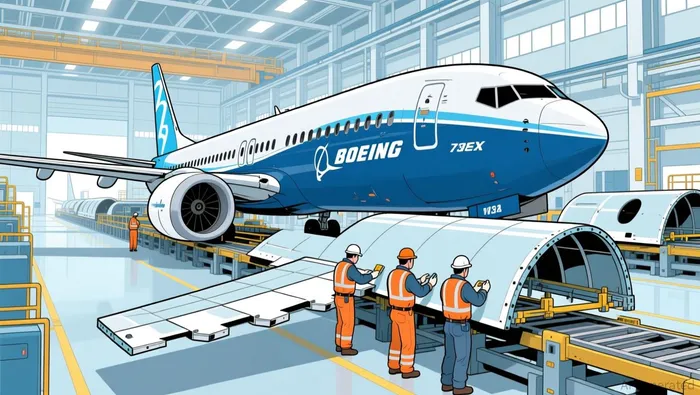
- Boeing Co (NYSE:BA) faced renewed scrutiny this week as its stock tumbled following CEO Kelly Ortberg's candid admission that the company is struggling to stabilize the production of its flagship 737 Max aircraft. The primary bottleneck identified by management is wing production at Renton, Washington factory, which has slowed the company's ability to meet its target output rate of 47 jets per month.
- The delay in stabilizing production has immediate financial implications, putting Boeing's free cash flow guidance at risk. Following the announcement, the stock dropped approximately 4% to 5% in early trading, reflecting investor concerns about the company's ability to execute its turnaround plan amid complex operational challenges.
Why Is BoeingBA-- Struggling To Ramp Production?
The 737 Max remains central to Boeing's recovery strategy following years of operational challenges and safety crises. Ortberg noted that while the current stabilization is slower than expected, the company has specific plans to address the wing production constraints at the Renton facility. - After stabilizing at the current rate, Boeing intends to increase production to 52 jets per month. However, the current hiccup in scaling has highlighted the complexities of ramping up production for a large, complex aircraft in a highly regulated environment. - Bank of America analysts argue that the market reaction is an overreaction, citing that production scaling pains are typical for the industry. The bank maintains that the broader supply chain remains solid and that Boeing has mitigation plans in place to resolve the wing production bottlenecks.
What About The 777X And MAX 10 Certification?
Beyond the 737 Max, Boeing faces delays in other key programs. The 777X certification testing has slipped into 2027 due to pending approvals for a more durable seal on the GE9X engine supplied by GE Aerospace.
Despite the delay, Boeing maintains that first deliveries of the 777X remain on track for next year, consistent with Bank of America's estimate of zero 777X deliveries in 2026 and 10 in 2027.
In contrast, the 737 MAX 10 certification is expected "very soon," marking a significant milestone for the company. This variant comprises 30% of the 737 backlog and is viewed as a key free cash flow driver.
Boeing has completed all flight testing for the 737 MAX 10, clearing the path for imminent FAA certification. This milestone unlocks fleet-wide safety retrofits for the roughly 1,000 MAX jets already in service, including a redesigned engine anti-ice system and an enhanced Angle of Attack (eAoA) system.
Can Boeing Avoid A Strike By Engineers?
A critical near-term risk for Boeing is a potential strike by the Society of Professional Engineering Employees in Aerospace (SPEEA), with the current contract expiring on October 6.
Fortunately, Boeing and the SPEEA union have reached a tentative four-year contract agreement following the rejection of an initial offer that failed to address inflation concerns. The new deal includes a 10% immediate wage increase and higher annual wage pools.
This agreement aims to stabilize workforce relations, which are critical for certifying the 737 MAX 10 and 777-9 jets, both of which are already behind schedule. The previous offer had proposed only 3% general wage increases, which members argued would result in real-term salary declines given the 4.5% inflation rate in the Seattle area.
If approved, the tentative deal will go to a vote by the general membership, with the date to be announced later. The resolution of this labor dispute removes a significant overhang on the company's operational outlook.
Bank of America maintains its 2026 737 delivery forecast of 519 units and a $2.4 billion free cash flow estimate, though Ortberg's comments add slight risk to the latter. The primary near-term risk identified remains the potential for a strike, although the tentative agreement suggests a resolution is likely before the October 6 deadline.
The market's negative reaction to Ortberg's comments underscores the high stakes surrounding Boeing's execution. While the company faces significant headwinds, the completion of the MAX 10 flight testing and the resolution of the GE9X engine seal issue provide a clearer path to future deliveries.
Ortberg also addressed the geopolitical landscape, downplaying expectations for immediate large jetliner orders from China during the upcoming meeting between President Xi Jinping and President Donald Trump. He emphasized that any such orders would be announced by airlines at their own pace, rather than being tied directly to diplomatic events.
Investors are closely watching the next few months to see if Boeing can successfully navigate these production and labor challenges while maintaining its long-term growth trajectory. The company's ability to stabilize the 737 Max production rate and certify the MAX 10 will be key indicators of its operational health.

Blending traditional trading wisdom with cutting-edge cryptocurrency insights.
Latest Articles
Stay ahead of the market.
Get curated U.S. market news, insights and key dates delivered to your inbox.


AInvest
PRO
AInvest
PRO




Comments
No comments yet