
Boeing Stock Recovery Gains Momentum as Production Ramps and Orders Surge
 Aime Summary
Boeing is ramping up 737 Max production to 47 units per month in 2026, a key step in its long-term recovery according to company reports. - February 2026 saw an 83% year-on-year increase in commercial aircraft orders, reflecting renewed demand for long-haul travel. - Despite near-term margin pressures from the Spirit AeroSystems acquisition, Boeing expects to stabilize cash flows and normalize production in 2026. - The company's free cash flow is projected to turn positive this year and improve further in 2027 according to financial analysis. - With nearly 7,000 737 Max orders remaining, the aircraft continues to dominate short-haul aviation and is central to Boeing's future as reports indicate.
Boeing has long been a bellwether of the aerospace industry, and 2026 marks a pivotal year for the company's long-awaited recovery. After years of production slowdowns, quality-control issues, and a challenging regulatory environment, the aerospace giant has taken meaningful steps to stabilize its operations and resume growth. From ramping up 737 Max production to clearing its inventory of grounded aircraft, BoeingBA-- is showing signs that it is regaining control of its core business.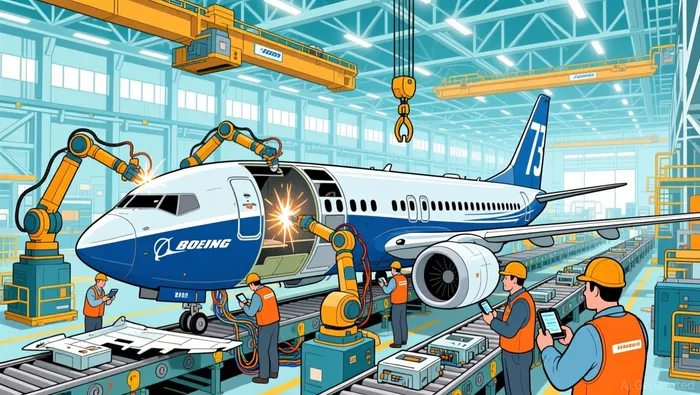
Still, the path ahead is not without hurdles. Recent guidance from management indicates that commercial margins will remain negative in 2026 due to the acquisition of Spirit AeroSystems, which had previously operated under quality concerns as an independent supplier. Yet, CFO Jay Malave has emphasized that these short-term headwinds won't derail the company's long-term cash flow goals. And with deliveries of the 737 Max back on track and rework rates declining, Boeing is showing it can scale output without repeating past mistakes.
Is BABA-- Stock a Buy in 2026?
For investors weighing whether now is the time to buy Boeing stock, the signs are cautiously encouraging. The company's recent Q4 2025 results showed 160 commercial aircraft deliveries— more than double the 57 recorded in Q4 2024. At the same time, production normalization is under way, with rework times decreasing and the fourth 737 Max assembly line set to open in Everett, Washington.
This production boost is crucial given Boeing's record backlog of 16,412 aircraft orders as of February 2026 according to industry data. Airlines like Southwest and Ryanair, which rely heavily on the 737 Max for their short-haul operations, are still waiting on deliveries. And with nearly 7,000 MAX orders remaining, Boeing is still in a position to benefit from sustained demand for its best-selling jet as analysis shows.
Still, the near-term margin challenges can't be ignored. The Spirit acquisition has added complexity to Boeing's financial picture, and the company's commercial segment is expected to report negative margins in 2026. However, analysts and company leadership remain optimistic that these are transitional issues rather than structural problems. The Defense segment, meanwhile, is recovering from prior write-downs and is supported by a $84 billion backlog.
What's Driving Boeing's Share Price in 2026?
Boeing's stock has seen modest gains in early 2026 as the company moves past key milestones, including the resumption of 737 Max deliveries and the approval of its production ramp-up plans according to company updates. But whether the stock can sustain a rally depends on a few key factors. One is the successful certification of the MAX 7 and MAX 10 variants, which are still pending certification. Another is the company's ability to maintain production efficiency without a return to past quality issues.
The Global Services segment, which offers maintenance, repair, and overhaul services to airlines, has been a bright spot for Boeing. It continues to deliver stable margins and has a growing backlog of contracts. This segment is less cyclical than the manufacturing side of the business and could serve as a buffer in the event of another production hiccup.
Finally, investors should keep a close eye on cash flow. While Boeing is still in a net cash-negative position, free cash flow is expected to turn positive in 2026 and continue improving into 2027. This shift is important not only for the company's financial flexibility but also for its ability to fund future projects and return value to shareholders through dividends or buybacks.
What to Watch for Boeing Investors in 2026
With all the recent positives, it's easy to overlook the fact that Boeing is still in the early innings of its recovery. Several key developments will determine whether this momentum can be sustained into the next year. One is the successful certification of the MAX 10. Delays in this process could slow down production and raise investor concerns.
Another is the company's ability to maintain production quality. With the new assembly line in Everett coming online, Boeing will need to ensure that it doesn't repeat past mistakes. The FAA has maintained a strong oversight presence on the assembly line, which is a positive sign.
Finally, the global aviation industry remains fragile. While demand is rebounding, supply chain issues and fuel costs still pose risks. If these challenges persist, Boeing could face pressure to cut costs, which could impact its cash flow and profitability.
In short, Boeing is showing signs of recovery but remains a work in progress. For long-term investors, this could be a compelling opportunity. But for those with a shorter time horizon, the stock still carries risks that need to be carefully managed.

Stay ahead of the market.
Get curated U.S. market news, insights and key dates delivered to your inbox.
AInvest
PRO
AInvest
PRO



Comments
No comments yet