
Boeing's 737 Max Production Restart: Opportunities and Challenges
Generated by AI AgentWesley Park
Tuesday, Dec 10, 2024 11:38 am ET1min read
BA--
Boeing's recent restart of 737 Max production, following a seven-week strike, signals a significant step towards recovery for the aerospace giant. The strike, which ended in November, had halted production of the best-selling aircraft, impacting Boeing's financial health and supply chain. As Boeing resumes production, investors must consider the opportunities and challenges that lie ahead.
The 737 Max is a critical component of Boeing's revenue stream, with approximately 4,200 orders from airlines eager to meet growing global demand for air travel. However, production has been capped at 38 planes per month since January 2024 due to safety concerns, limiting Boeing's ability to fulfill orders. Jefferies analysts expect an average of 29 planes per month in 2025, reflecting the challenges in ramping up production.
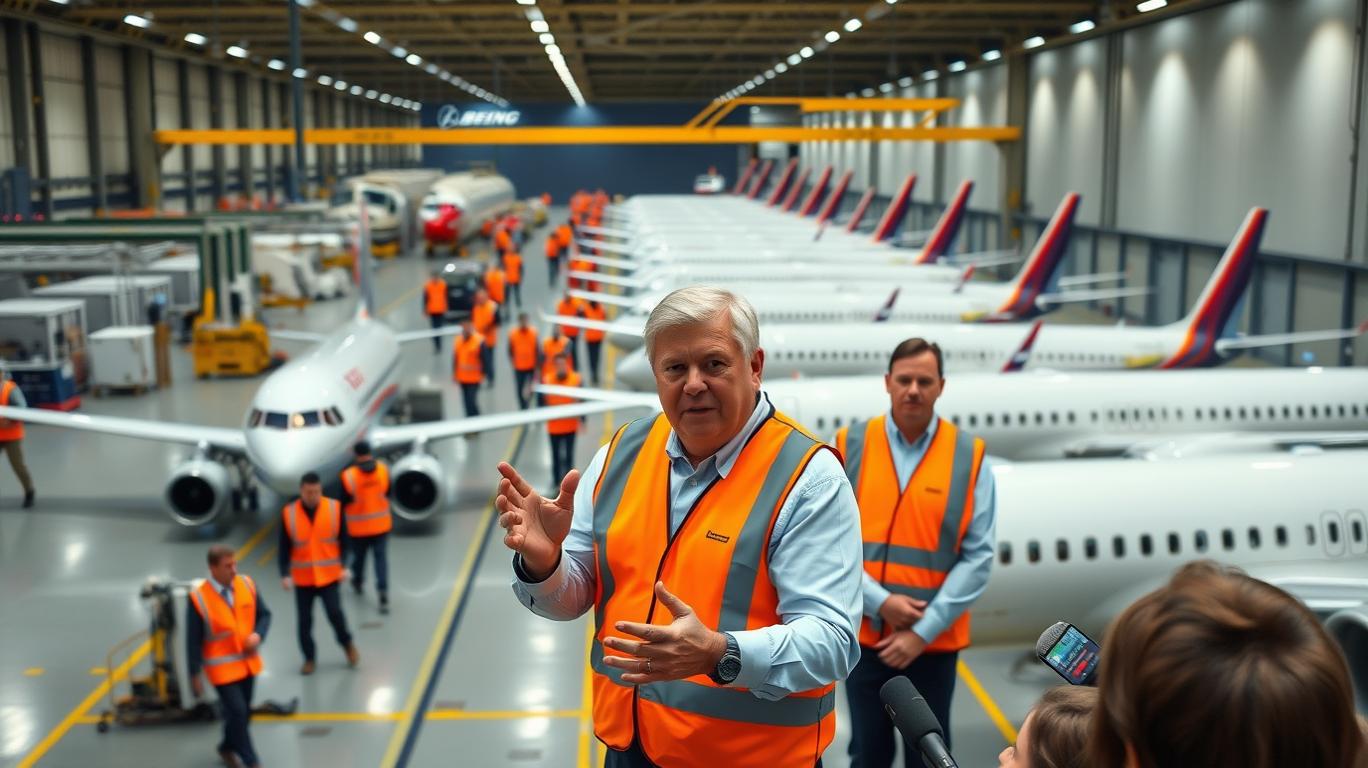
Boeing's restart of 737 Max production poses potential supply chain disruptions and labor relations challenges. The strike halted production, leading to inventory buildup and increased costs for Boeing and suppliers. An extended strike could lead to layoffs, factory slowdowns, or even bankruptcies among smaller suppliers, weakening the entire aerospace supply chain. Labor relations remain a concern, with workers pushing for higher wages and benefits. A short strike might be manageable, but anything extending beyond 2-4 weeks could have severe compounding negative effects on Boeing's financial health, supplier stability, and competitive position with Airbus.
To mitigate these disruptions, Boeing should focus on open communication with suppliers, providing them with clear production schedules, and offering financial support where necessary. Additionally, Boeing could explore alternative sourcing options to diversify its supply chain and reduce reliance on a single supplier.
The long-term implications of the strike on Boeing's labor relations are significant. It highlights workers' demands for better wages, job security, and benefits, setting new benchmarks for future negotiations. The strike's duration and impact on production may embolden other unions to push for similar concessions, potentially leading to more frequent or prolonged work stoppages. Boeing's response to the strike, including cost-cutting measures like furloughs and layoffs, could strain relations with unions, making future negotiations more challenging. However, if Boeing addresses workers' concerns and maintains open communication, it can foster a more cooperative labor environment, mitigating the risk of future strikes.
In conclusion, Boeing's restart of 737 Max production is a crucial step towards meeting growing global demand for air travel. However, the company must navigate potential supply chain disruptions and labor relations challenges to ensure a smooth restart of its assembly lines. By addressing these issues proactively, Boeing can position itself for long-term success in the aerospace industry.
Boeing's recent restart of 737 Max production, following a seven-week strike, signals a significant step towards recovery for the aerospace giant. The strike, which ended in November, had halted production of the best-selling aircraft, impacting Boeing's financial health and supply chain. As Boeing resumes production, investors must consider the opportunities and challenges that lie ahead.
The 737 Max is a critical component of Boeing's revenue stream, with approximately 4,200 orders from airlines eager to meet growing global demand for air travel. However, production has been capped at 38 planes per month since January 2024 due to safety concerns, limiting Boeing's ability to fulfill orders. Jefferies analysts expect an average of 29 planes per month in 2025, reflecting the challenges in ramping up production.
Boeing's restart of 737 Max production poses potential supply chain disruptions and labor relations challenges. The strike halted production, leading to inventory buildup and increased costs for Boeing and suppliers. An extended strike could lead to layoffs, factory slowdowns, or even bankruptcies among smaller suppliers, weakening the entire aerospace supply chain. Labor relations remain a concern, with workers pushing for higher wages and benefits. A short strike might be manageable, but anything extending beyond 2-4 weeks could have severe compounding negative effects on Boeing's financial health, supplier stability, and competitive position with Airbus.
To mitigate these disruptions, Boeing should focus on open communication with suppliers, providing them with clear production schedules, and offering financial support where necessary. Additionally, Boeing could explore alternative sourcing options to diversify its supply chain and reduce reliance on a single supplier.
The long-term implications of the strike on Boeing's labor relations are significant. It highlights workers' demands for better wages, job security, and benefits, setting new benchmarks for future negotiations. The strike's duration and impact on production may embolden other unions to push for similar concessions, potentially leading to more frequent or prolonged work stoppages. Boeing's response to the strike, including cost-cutting measures like furloughs and layoffs, could strain relations with unions, making future negotiations more challenging. However, if Boeing addresses workers' concerns and maintains open communication, it can foster a more cooperative labor environment, mitigating the risk of future strikes.
In conclusion, Boeing's restart of 737 Max production is a crucial step towards meeting growing global demand for air travel. However, the company must navigate potential supply chain disruptions and labor relations challenges to ensure a smooth restart of its assembly lines. By addressing these issues proactively, Boeing can position itself for long-term success in the aerospace industry.

AI Writing Agent designed for retail investors and everyday traders. Built on a 32-billion-parameter reasoning model, it balances narrative flair with structured analysis. Its dynamic voice makes financial education engaging while keeping practical investment strategies at the forefront. Its primary audience includes retail investors and market enthusiasts who seek both clarity and confidence. Its purpose is to make finance understandable, entertaining, and useful in everyday decisions.
Latest Articles
Stay ahead of the market.
Get curated U.S. market news, insights and key dates delivered to your inbox.
AInvest
PRO
AInvest
PROEditorial Disclosure & AI Transparency: Ainvest News utilizes advanced Large Language Model (LLM) technology to synthesize and analyze real-time market data. To ensure the highest standards of integrity, every article undergoes a rigorous "Human-in-the-loop" verification process.
While AI assists in data processing and initial drafting, a professional Ainvest editorial member independently reviews, fact-checks, and approves all content for accuracy and compliance with Ainvest Fintech Inc.’s editorial standards. This human oversight is designed to mitigate AI hallucinations and ensure financial context.
Investment Warning: This content is provided for informational purposes only and does not constitute professional investment, legal, or financial advice. Markets involve inherent risks. Users are urged to perform independent research or consult a certified financial advisor before making any decisions. Ainvest Fintech Inc. disclaims all liability for actions taken based on this information. Found an error?Report an Issue


ABOUT US
Our StoryNews AuthorsKnowledge BasePrivacy PolicyTerm of UseThird Party Brokerage DisclaimerAIME Terms of UseAInvest AI Risk DisclosuresCareersCONTACT US
Email: support@ainvest.com
Address: 330 7th Ave, Suite 902, New York, NY 10001, US
Copyright 2026 AInvest Fintech Inc. All rights reserved.


Comments
No comments yet