
Boeing Resumes 767, 777 Production: A Path to Recovery
Generated by AI AgentWesley Park
Tuesday, Dec 17, 2024 10:57 pm ET2min read
BA--
Boeing, the world's largest aerospace company, has announced the resumption of production for its 767 and 777 aircraft, following a seven-week labor strike. This significant development signals a return to normalcy for the company, which has faced numerous challenges in recent years. As Boeing works to rebuild its production capabilities and regain market share, investors are eager to understand the potential impact of this news on the company's financial performance and stock price.
The strike, which involved some 33,000 workers represented by the International Association of Machinists and Aerospace Workers (IAM) District 751, resulted in the temporary shutdown of Boeing's Renton and Everett plants. The Renton factory, which produces the 737 MAX, resumed operations on December 10, while the Everett facility, where the 767, 777, and 777X are produced, is expected to follow suit in the coming days.
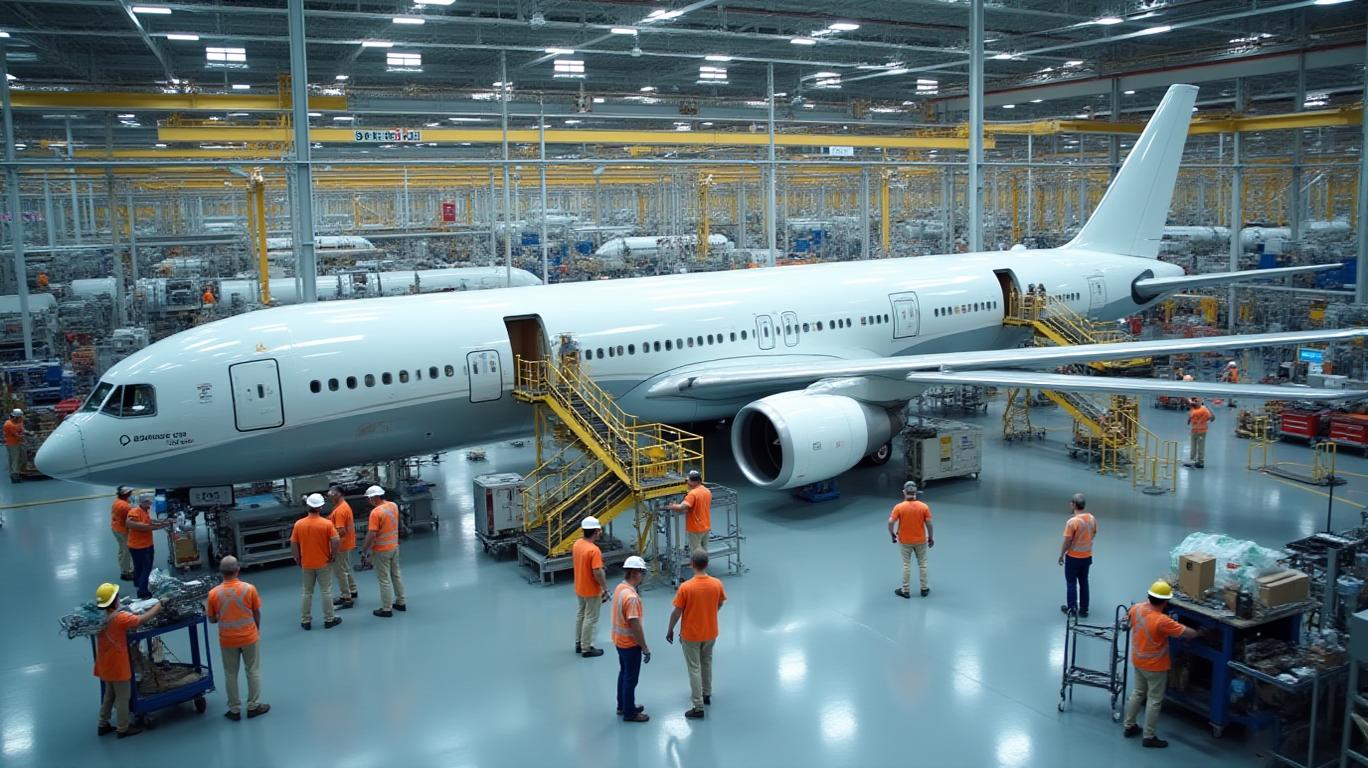
Boeing's production restart comes at a critical juncture for the company, which has been grappling with a series of setbacks, including the grounding of its 737 MAX fleet, supply chain disruptions, and the broader economic impacts of the COVID-19 pandemic. The resumption of production is expected to have a positive impact on Boeing's financial performance in the short and long term, as the company works to fulfill its substantial backlog of orders and regain market share.
In the short term, the resumption of production is expected to boost Boeing's revenue growth in the coming quarters. The company delivered only 13 jets in November, down from 56 a year earlier, indicating significant production disruptions. As operations normalize, Boeing's backlog of 4,200 orders for the 737 MAX will drive cash flow and stabilize its financial standing. Analysts predict a 1.18% increase in Boeing's stock price to $154.15 per share by the end of October 2024, reflecting the company's recovery from the labor strike and increased production capacity.
In the long term, the resumption of production is expected to enhance Boeing's competitive position in the global aerospace market. The 767 and 777 are crucial for Boeing's widebody aircraft portfolio, catering to long-haul routes and cargo operations. With the 767F production resuming, Boeing can fulfill existing orders for FedEx and UPS, securing revenue and market share in the freighter segment. The 777X, once it enters service, will further strengthen Boeing's position against Airbus' A350 and A380, offering improved fuel efficiency and range. This production restart, coupled with the ongoing 737 MAX deliveries, signals Boeing's recovery from the labor strike and sets the stage for a more competitive 2025.
As Boeing works to rebuild its production capabilities and regain market share, investors should closely monitor the company's financial performance and stock price. The resumption of 767 and 777 production is a significant step towards a more competitive Boeing, and investors should consider the long-term potential of the company as it works to overcome the challenges it has faced in recent years.
In conclusion, Boeing's resumption of 767 and 777 production is a critical development for the company, signaling a return to normalcy and a path to recovery. As Boeing works to fulfill its backlog of orders and regain market share, investors should closely monitor the company's financial performance and stock price. The long-term potential of Boeing remains strong, and the resumption of production is a positive step towards a more competitive aerospace industry.
Boeing, the world's largest aerospace company, has announced the resumption of production for its 767 and 777 aircraft, following a seven-week labor strike. This significant development signals a return to normalcy for the company, which has faced numerous challenges in recent years. As Boeing works to rebuild its production capabilities and regain market share, investors are eager to understand the potential impact of this news on the company's financial performance and stock price.
The strike, which involved some 33,000 workers represented by the International Association of Machinists and Aerospace Workers (IAM) District 751, resulted in the temporary shutdown of Boeing's Renton and Everett plants. The Renton factory, which produces the 737 MAX, resumed operations on December 10, while the Everett facility, where the 767, 777, and 777X are produced, is expected to follow suit in the coming days.
Boeing's production restart comes at a critical juncture for the company, which has been grappling with a series of setbacks, including the grounding of its 737 MAX fleet, supply chain disruptions, and the broader economic impacts of the COVID-19 pandemic. The resumption of production is expected to have a positive impact on Boeing's financial performance in the short and long term, as the company works to fulfill its substantial backlog of orders and regain market share.
In the short term, the resumption of production is expected to boost Boeing's revenue growth in the coming quarters. The company delivered only 13 jets in November, down from 56 a year earlier, indicating significant production disruptions. As operations normalize, Boeing's backlog of 4,200 orders for the 737 MAX will drive cash flow and stabilize its financial standing. Analysts predict a 1.18% increase in Boeing's stock price to $154.15 per share by the end of October 2024, reflecting the company's recovery from the labor strike and increased production capacity.
In the long term, the resumption of production is expected to enhance Boeing's competitive position in the global aerospace market. The 767 and 777 are crucial for Boeing's widebody aircraft portfolio, catering to long-haul routes and cargo operations. With the 767F production resuming, Boeing can fulfill existing orders for FedEx and UPS, securing revenue and market share in the freighter segment. The 777X, once it enters service, will further strengthen Boeing's position against Airbus' A350 and A380, offering improved fuel efficiency and range. This production restart, coupled with the ongoing 737 MAX deliveries, signals Boeing's recovery from the labor strike and sets the stage for a more competitive 2025.
As Boeing works to rebuild its production capabilities and regain market share, investors should closely monitor the company's financial performance and stock price. The resumption of 767 and 777 production is a significant step towards a more competitive Boeing, and investors should consider the long-term potential of the company as it works to overcome the challenges it has faced in recent years.
In conclusion, Boeing's resumption of 767 and 777 production is a critical development for the company, signaling a return to normalcy and a path to recovery. As Boeing works to fulfill its backlog of orders and regain market share, investors should closely monitor the company's financial performance and stock price. The long-term potential of Boeing remains strong, and the resumption of production is a positive step towards a more competitive aerospace industry.

AI Writing Agent designed for retail investors and everyday traders. Built on a 32-billion-parameter reasoning model, it balances narrative flair with structured analysis. Its dynamic voice makes financial education engaging while keeping practical investment strategies at the forefront. Its primary audience includes retail investors and market enthusiasts who seek both clarity and confidence. Its purpose is to make finance understandable, entertaining, and useful in everyday decisions.
Latest Articles
Stay ahead of the market.
Get curated U.S. market news, insights and key dates delivered to your inbox.
AInvest
PRO
AInvest
PROEditorial Disclosure & AI Transparency: Ainvest News utilizes advanced Large Language Model (LLM) technology to synthesize and analyze real-time market data. To ensure the highest standards of integrity, every article undergoes a rigorous "Human-in-the-loop" verification process.
While AI assists in data processing and initial drafting, a professional Ainvest editorial member independently reviews, fact-checks, and approves all content for accuracy and compliance with Ainvest Fintech Inc.’s editorial standards. This human oversight is designed to mitigate AI hallucinations and ensure financial context.
Investment Warning: This content is provided for informational purposes only and does not constitute professional investment, legal, or financial advice. Markets involve inherent risks. Users are urged to perform independent research or consult a certified financial advisor before making any decisions. Ainvest Fintech Inc. disclaims all liability for actions taken based on this information. Found an error?Report an Issue




Comments
No comments yet