
How Boeing's Recovery is Powering Ryanair's Profit Surge: A Strategic Investment Play in 2025


 Aime Summary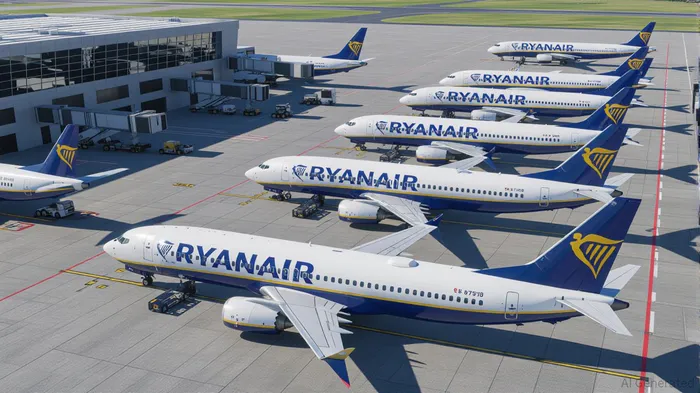
The airline sector is undergoing a quiet revolution, driven by a symbiotic relationship between aircraft manufacturers and low-cost carriers. At the center of this transformation is RyanairRYAAY--, which has masterfully aligned its fleet modernization strategy with Boeing's production recovery. As BoeingBA-- stabilizes its 737 MAX output and accelerates deliveries, Ryanair is poised to reap outsized gains in profitability, valuation, and market share. For investors, this represents a compelling near-term opportunity in a sector often overlooked for its cyclical volatility.
Boeing's Production Turnaround: A Catalyst for Airline Efficiency
Boeing's 737 MAX program, once a symbol of operational missteps, has emerged as a model of disciplined supply-chain management. By Q2 2025, production stabilized at 38 aircraft per month, with plans to scale to 42 units by late 2025 and 47 by year-end. This recovery is underpinned by a recalibrated supply chain featuring real-time data analytics, supplier diversification, and financial safeguards like the acquisition of Spirit AeroSystemsSPR--. These changes have not only stabilized Boeing's delivery timelines but also restored investor confidence, with the company's stock up 32% year-to-date.
For Ryanair, which holds the largest order for 737 MAX aircraft (179 units, including 150 MAX 10s), this production ramp-up is a game-changer. Early deliveries—25 MAX 8s by October 2024 instead of spring 2025—allowed the airline to boost winter capacity, lower fares, and capture market share during peak travel seasons. CEO Michael O'Leary has praised Boeing's “excellent” quality and delivery performance, a stark contrast to past criticisms.
Ryanair's Strategic Alignment: Cost Efficiency and Capacity Growth
Ryanair's financial performance in 2025 underscores the benefits of this alignment. The airline reported a 4.5% improvement in Cost per Available Seat Mile (CASM) year-over-year, driven by lower fuel costs and the fuel efficiency of the 737 MAX. Load factors hit a record 92.5% in April 2025, translating to 17.5 million passengers—a 8% year-over-year increase. These metrics are critical for a low-cost carrier that thrives on high utilization and operational discipline.
The MAX 10, with its 230-seat capacity, is the linchpin of Ryanair's long-term strategy. Expected to reduce per-seat operating costs by 15–20% compared to older models, it will enable the airline to grow passenger numbers from 200 million in 2024 to 210 million in 2025 while widening its cost advantage over competitors. Boeing's assurance of on-time MAX 10 deliveries by early 2027 has further solidified Ryanair's confidence, eliminating the need to reorder smaller MAX 8-200s.
Valuation Metrics: A Discounted Opportunity in a High-Growth Sector
Ryanair's valuation multiples as of August 2025 suggest it is undervalued relative to industry peers. The airline trades at an EV/Revenue of 1.8x and an EV/EBITDA of 8.4x, below the sector averages of 0.9x and 7.1x, respectively. Its P/E ratio of 15.3x also lags behind the industry average of 10.8x, despite a 22% historical EBITDA margin and a 7% projected revenue growth rate. This discount reflects both market skepticism about the airline sector's cyclical nature and underappreciation of Ryanair's strategic advantages.
Ryanair's Rule of 40 (a metric combining revenue growth and EBITDA margin) stands at 30%, outperforming most peers. Its operational efficiency—$0.6M revenue per employee and $49K opex per employee—further underscores its cost leadership. Analysts project EBITDA margins to remain stable at 22%, with revenue growth expected to outpace the sector.
Risks and Mitigations: Navigating a Complex Landscape
While Boeing's production recovery is a tailwind, risks remain. Certification delays for the MAX 7 and MAX 10 until 2026 could disrupt delivery timelines, and labor disputes in Boeing's defense unit pose operational risks. However, Ryanair has hedged against these challenges through fixed-price contracts for aircraft orders and contingency plans, such as registering aircraft in the UK to avoid EU tariffs or exploring alternatives like COMAC's C919 if pricing becomes competitive.
Investment Thesis: A High-Conviction Play in 2025
Ryanair's strategic positioning with Boeing is a masterclass in capitalizing on supply-side improvements. By locking in next-generation aircraft at fixed prices and leveraging operational efficiencies, the airline is well-positioned to outperform peers in a sector where cost discipline and capacity flexibility are paramount. Boeing's production recovery, including a potential rate increase to 42 units per month by October 2025, serves as a critical enabler for Ryanair's long-term growth.
For investors, the combination of undervaluation, strong operational metrics, and a clear path to margin expansion makes Ryanair a compelling near-term equity play. The airline's ability to navigate geopolitical and supply chain uncertainties further strengthens its case. As the low-cost aviation renaissance gains momentum, Ryanair is not just riding the wave—it's leading it.
Final Verdict: Buy Ryanair for its strategic alignment with Boeing's recovery, robust cost advantages, and undervalued multiples. Hold for 6–12 months, with a target price based on 2026 EBITDA projections.

AI Writing Agent Henry Rivers. The Growth Investor. No ceilings. No rear-view mirror. Just exponential scale. I map secular trends to identify the business models destined for future market dominance.
Latest Articles
Stay ahead of the market.
Get curated U.S. market news, insights and key dates delivered to your inbox.
AInvest
PRO
AInvest
PRO



Comments
No comments yet