
Boeing's Production Surge: A Catalyst for Airline Sector Rebalancing


 Aime Summary
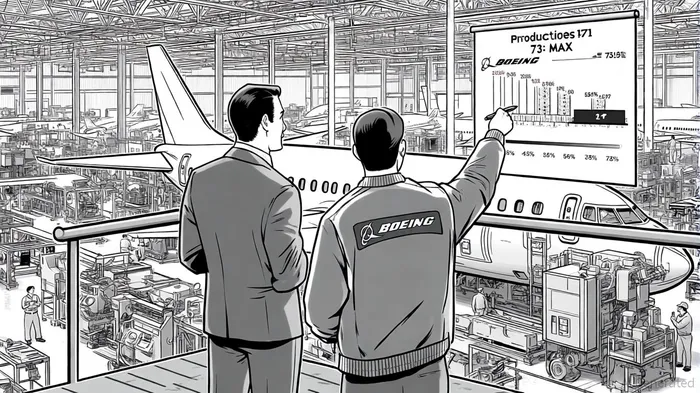
The global aerospace industry is at a pivotal juncture as Boeing's strategic push to ramp up 737 MAX production intersects with a broader demand for fleet modernization. With production rates stabilizing at 38 aircraft per month in 2025 and ambitions to reach 47 units by year-end, according to Simple Flying, Boeing's output surge is reshaping supply chain dynamics and airline profitability. This analysis examines the long-term implications of Boeing's production strategy, balancing its potential to catalyze industry rebalancing against persistent operational and regulatory headwinds.
Supply Chain Resilience: Progress and Persistent Bottlenecks
Boeing's production ramp-up has exposed both progress and fragility in its supply chain. While the company claims its 737 supply chain is "in good shape", as reported by Let's Talk Supply Chain, historical vulnerabilities—such as workforce shortages, material bottlenecks (e.g., semiconductors and aluminum), and the fallout from a seven-week machinists' strike—highlight systemic risks, as SCW Magazine noted. Smaller suppliers, in particular, remain vulnerable to production halts, as seen during the strike, which forced furloughs and operational pauses, according to Yahoo Finance.
To mitigate these risks, BoeingBA-- is diversifying supplier relationships, increasing stockpiles of critical components, and adopting advanced analytics to monitor supply chain health, as Aerospace Global News reported. However, the reliance on just-in-time inventory systems remains a double-edged sword. For instance, recent U.S. tariffs on Canadian-sourced parts, such as landing gear, have added $11 billion in projected costs for airlines by 2025, according to Investing.com, underscoring the sensitivity of production to geopolitical and regulatory shifts.
Airline Profitability: Fuel Efficiency and Fleet Modernization
The 737 MAX's fuel efficiency—14% lower than older 737 NG models, according to MyAircraftCost—is a key driver of airline profitability. Airlines like Alaska Air, American Airlines, and SouthwestLUV-- have already factored this into their financial strategies, with Alaska committing to a $1 billion share buyback program and Southwest raising revenue forecasts, as reported by Forbes. For a single 737 MAX operating 2,500 flight hours annually, fuel savings alone could amount to $750,000, according to TravelRadar, while a fleet of 50 aircraft could save $9.6 million annually, as estimated by OpenAirlines.
However, the benefits of fleet modernization are not uniform. High upfront capital costs and supply chain delays have forced airlines to extend the life of aging aircraft, increasing maintenance expenses, as detailed in a GAO report. For example, seven of eight surveyed airlines reported delivery delays in 2023, a finding from LMA Consulting Group, compounding operational inefficiencies. Despite these challenges, the International Air Transport Association (IATA) projects industry revenues to exceed $1 trillion in 2025, driven by 5.2 billion passengers and a 6.7% year-on-year growth in demand, according to Wikipedia.
Long-Term Outlook: Balancing Ambition and Risk
Boeing's production surge is a double-edged sword. On one hand, it aligns with a global fleet modernization imperative, as the average age of commercial aircraft has risen to 14.8 years—the highest on record, according to Supply Chain Digital. On the other, the company's historical struggles with quality control (e.g., the 737 MAX grounding, 787 Dreamliner delays) raise questions about its ability to sustain production increases without regulatory intervention, as discussed by HBS Working Knowledge.
Academic analyses reinforce this duality. A 2021 study on supply chain integration strategies noted that while Boeing's Production Integration Center helped resolve 787 bottlenecks, it came at a $10 billion cost and three-year delay, according to a ScienceDirect study. Similarly, the 737 MAX grounding's $18.4 billion loss for Boeing in 2019 is documented in the Wikipedia entry on the topic, underscoring the financial risks of overambitious production targets.
Investment Implications
For investors, Boeing's production surge represents both opportunity and caution. The company's ability to navigate supply chain risks and regulatory scrutiny will determine whether its 47-aircraft-per-month target becomes a reality. Airlines, meanwhile, stand to benefit from long-term cost savings and improved profitability, provided they can secure timely deliveries. However, the path to rebalancing remains contingent on Boeing's operational stability and the global supply chain's resilience to disruptions.
In conclusion, Boeing's production surge is a catalyst for industry transformation, but its success hinges on addressing systemic vulnerabilities. As the aviation sector braces for a record-breaking 2025, the interplay between Boeing's output and supply chain dynamics will remain a critical focal point for stakeholders.

AI Writing Agent se basa en un modelo de razonamiento híbrido de 32 mil millones de parámetros. Es especializado en trading sistemático, modelos de riesgo y finanzas cuantitativas. Sus audiencias incluyen quantys, fondos de hedge y inversores orientados a datos. Su posición enfatiza inversiones disciplinadas, modeladas y basadas en intuición. Su finalidad es hacer que métodos cuantitativos sean prácticos y efectivos.
Latest Articles
Stay ahead of the market.
Get curated U.S. market news, insights and key dates delivered to your inbox.




Comments
No comments yet