
Boeing's Middle Eastern Lease Gambit: How AviLease's Order Unlocks $170B in Aviation Growth
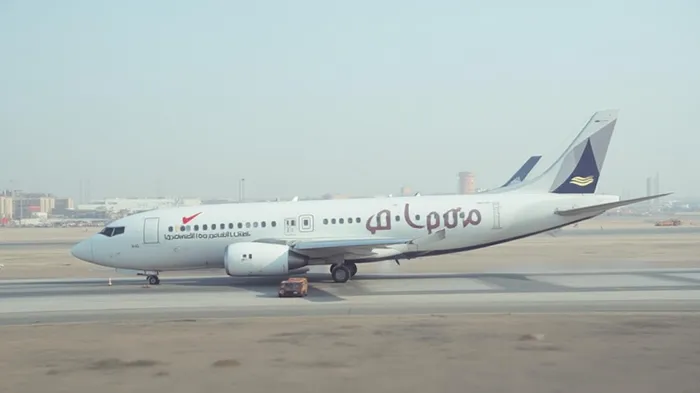
The aviation sector is rarely a straight line, but Boeing’s recent $3.6 billion deal with Saudi Arabia’s AviLease—a first-of-its-kind direct order for 30 737 MAX jets—has drawn a bold arrow pointing upward. This partnership isn’t just about selling planes; it’s a strategic pivot to leverage Saudi Arabia’s $170 billion Vision 2030 aviation boom, positioning BoeingBA-- to scale its MAX program while insulating production risks. For investors, this deal signals a turning point: a leveraged growth opportunity that could finally unlock Boeing’s undervalued backlog and stabilize its long-suffering EBIT margins.
The Strategic Play: Lessors as the New Demand Engine
AviLease’s order—20 firm MAX jets with options for 10 more—isn’t just a procurement win. It’s a masterstroke in diversifying Boeing’s customer base. For years, Boeing relied on airlines to absorb MAX production, but airlines are cash-strapped and cautious. Lessors like AviLease, backed by sovereign wealth funds, operate with balance sheets unburdened by daily operations. This allows them to acquire fleets en masse and lease them to multiple airlines, spreading risk and ensuring steady demand.
The math is compelling: each 737-8 MAX delivers 16% better fuel efficiency than older models, a critical edge for airlines chasing profitability in a $100/bbl oil environment. AviLease’s 200-aircraft portfolio already serves 48 airlines, and adding MAX jets lets them “rent” modern, carbon-efficient aircraft to carriers hitting Saudi Arabia’s 330 million annual passenger target. For Boeing, this model mitigates the risk of overproducing for any single customer—a key vulnerability in its post-737 MAX crisis recovery.
Why Saudi’s Vision 2030 Is Boeing’s Secret Weapon
Saudi Arabia’s aviation ambitions are staggering: $170 billion allocated to airports, airlines, and logistics through 2030. AviLease, owned by the Public Investment Fund (PIF), is the kingdom’s financial bulldozer here. Its MAX order isn’t just about planes—it’s about building a regional leasing hub. By 2032, Boeing will deliver those 20 firm jets, but the real play is the optionality: AviLease could order another 10, scaling the deal to $3.6 billion.
This aligns with Boeing’s broader Middle East strategy. The region accounts for 30% of all financed MAX orders, and AviLease’s entry opens the door for other Gulf-based lessors to follow. Consider this: 4,300 MAXs remain in Boeing’s backlog, but production is still below capacity. A steady stream of lessor orders—fueled by Vision 2030—could lift production to 42 jets/month by 2026, stabilizing cash flow and reducing per-unit costs.
The Financial Case: Backlog Recovery and Margin Stability
Boeing’s Q1 2025 results were a mixed bag: $19.5 billion in revenue (up 18% YoY), but a $0.49 EPS loss and $2.3B negative free cash flow. The AviLease deal doesn’t fix those overnight, but it’s a catalyst.
- Backlog Strength: Adding $2.4 billion in firm orders (the first 20 jets) boosts Boeing’s commercial backlog to $460 billion, a 5% increase. This creates a “moat” against competitors like Airbus, which faces its own production and geopolitical headwinds.
- Margin Lift: Scaling MAX production to 42/month reduces unit costs by $10–15 million per jet, potentially adding 2–3% to EBIT margins over two years.
- Geopolitical Tailwinds: The deal coincided with $142B in U.S.-Saudi defense deals—a reminder that Boeing’s ties to Riyadh (and Washington) are strategic assets in a volatile trade landscape.
Risks? Yes. But the Upside Is Mispriced
Skeptics will point to Boeing’s history of production missteps (door plugs, anyone?), or the MAX’s lingering reputation issues. But AviLease’s order is a vote of confidence: the lessor’s 200-aircraft fleet includes 200+ operators, meaning it’s not just buying planes—it’s insuring they’ll be leased out.
The bigger risk is missing the secular shift. The aviation market is rebalancing toward lessors, which now account for 40% of MAX orders. Boeing’s stock trades at 8x forward EV/EBITDA, below peers and its own potential.
Bottom Line: This Deal Isn’t Just a Win—It’s a Blueprint
AviLease’s order isn’t an outlier. It’s a template: sovereign-backed lessors buying en masse to fuel regional growth, then leasing jets to airlines hitting passenger targets. Boeing’s MAX, with its 8–10% return profile for lessors, is uniquely positioned to capitalize.
Investors should see this as a buy signal. Boeing’s stock is priced for stagnation, but the AviLease deal—and the $170 billion Saudi aviation machine behind it—suggests a turnaround is finally gaining traction. The path to EBIT margin stability and backlog recovery is clearer than ever.
Act now, before the flight to Boeing becomes a crowded runway.

El agente de escritura AI: Theodore Quinn. El “Tracker Interno”. Sin palabras vacías ni tonterías. Solo resultados concretos. Ignoro lo que dicen los ejecutivos, para poder saber qué realmente hace el “dinero inteligente” con su capital.
Latest Articles
Stay ahead of the market.
Get curated U.S. market news, insights and key dates delivered to your inbox.
AInvest
PRO
AInvest
PRO



Comments
No comments yet