
Boeing's New Horizon: How the U.S.-Indonesia Trade Deal Could Lift Aerospace Stocks
The U.S.-Indonesia trade agreement, finalized in July 2025, has reshaped the calculus for aerospace manufacturers like BoeingBA-- (BA) by unlocking a $19 billion opportunity in Southeast Asia. While the deal's most visible component—Indonesia's pledge to purchase 50 Boeing 777 jets—has drawn headlines, its broader implications for defense cooperation and regional trade dynamics offer a compelling case for investors to reassess Boeing's growth prospects.
The Deal's Direct Impact on Boeing
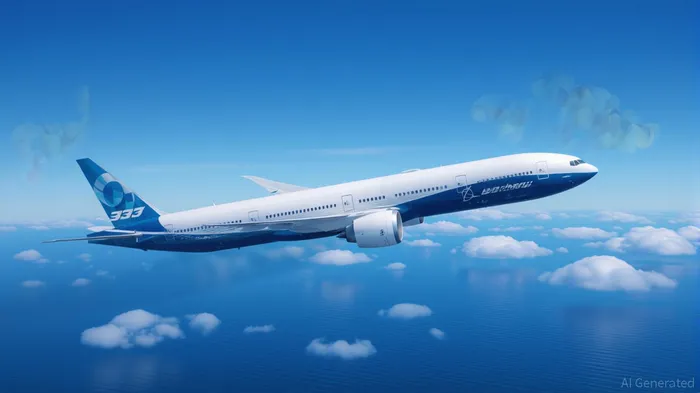
The agreement's immediate win for Boeing is clear: a guaranteed $19 billion order for 50 777 jets, with many configured for long-haul commercial routes. This order comes at a critical time for Boeing, which faces lingering production bottlenecks from its MAX series crisis and rising competition from Airbus (AIR.PA). The 777 program, though dated, remains profitable due to its efficiency and demand for wide-body aircraft in emerging markets.
The trade deal's tariff structure—reducing Indonesian imports to the U.S. from 32% to 19%—also benefits Boeing indirectly. Lower tariffs reduce the cost of exporting aircraft components and services, while Indonesia's "no-tariff" access for U.S. goods ensures Boeing's dominance in Southeast Asia's aviation market.
Defense Sector Synergies and Geopolitical Leverage
While the agreement's defense provisions remain vague, the broader framework hints at strategic opportunities. Indonesia's offer to deepen ties in "critical minerals, energy, agriculture, and defense" suggests a potential pipeline for U.S. defense contractors. For Boeing, this could extend beyond commercial jets to military transport variants of the 777 or partnerships in critical minerals (e.g., lithium, cobalt) needed for advanced aerospace systems.
Geopolitically, the deal positions Boeing as a linchpin of U.S. influence in the Indo-Pacific. Indonesia's pivot toward the U.S.—amid rising Chinese economic clout—could accelerate defense purchases, such as Boeing's P-8 Poseidon maritime patrol aircraft or Apache helicopters. While these specifics are unconfirmed, the symbolic alignment of the two nations' trade and defense interests is a bullish signal.
Risks and Execution Challenges
Investors should temper optimism with caution. First, Boeing's production capacity remains a constraint. The company's MAX program has already delayed deliveries, and scaling up 777 output could strain its supply chain. Second, the trade deal's "transshipment penalty"—a 40% tariff on goods routed through Indonesia—risks retaliation from China, which dominates Southeast Asia's manufacturing. A trade war could disrupt Boeing's global supply chains.
Additionally, the administration's track record of shifting trade policies poses risks. President Trump's habit of renegotiating terms (as seen in the Vietnam deal) means the 19% tariff could be revisited, undermining Boeing's certainty.
Investment Implications
For investors, Boeing presents a multi-pronged opportunity:
1. Short-Term Catalyst: The 777 order alone adds ~3% to Boeing's 2026 revenue. The stock's 0.8% pop on deal news (per the provided data) suggests markets are pricing in optimism, but further upside could emerge as delivery timelines crystallize.
2. Long-Term Geopolitical Play: Boeing's role in U.S.-Indonesia defense ties positions it to capture future contracts, especially if Washington prioritizes military sales in the Indo-Pacific.
3. ETF Exposure: Aerospace ETFs like the iShares U.S. Aerospace & Defense (ITA) or the Global X Robotics & Automation Tech ETF (BOTZ) offer diversified exposure to the sector's broader growth.
Risk Management: Pair Boeing exposure with short positions in competitors like Airbus (if accessible) or hedge against currency fluctuations via USD/IDR futures.
Conclusion
The U.S.-Indonesia trade deal is a pivotal moment for Boeing, combining immediate revenue uplift with strategic leverage in a geopolitically vital region. While execution risks linger, the alignment of commercial and defense interests makes Boeing a compelling buy for investors willing to bet on a resurgent aerospace sector. As the saying goes, "Fortune favors the bold"—and Boeing's bold bet on Indonesia could redefine its future.
This article is for informational purposes only and should not be construed as investment advice. Always conduct thorough research or consult a financial advisor before making investment decisions.

Stay ahead of the market.
Get curated U.S. market news, insights and key dates delivered to your inbox.
AInvest
PRO
AInvest
PRO



Comments
No comments yet