
Boeing's 777X Orders vs. Delivery Delays: A Strategic Dilemma for Investors
 Aime Summary
The BoeingBA-- 777X program has long been heralded as a cornerstone of the company's commercial aviation revival. With over 618 orders, including commitments from major carriers like Emirates and Qatar Airways, the aircraft represents a significant portion of Boeing's future revenue pipeline. Yet, as of 2025, the program remains mired in delays, with first deliveries now expected in 2027-seven years behind the original 2020 schedule. This stark contrast between robust order intake and operational stagnation has created a strategic dilemma for investors, who must weigh Boeing's long-term ambitions against its current financial and execution challenges.
Record-Order Intake: A Silver Lining or a False Dawn?
The 777X's order book is undeniably impressive. According to data from FlightGlobal, the aircraft has secured 618 firm orders, making it one of Boeing's most successful widebody programs in decades. These orders are particularly valuable given the 777X's advanced features, including its carbon-fiber-reinforced plastic wings and the GE9X engine, which promise improved fuel efficiency and range. For Boeing, the 777X is not just a product but a symbol of its commitment to innovation in a market increasingly dominated by Airbus's A350.
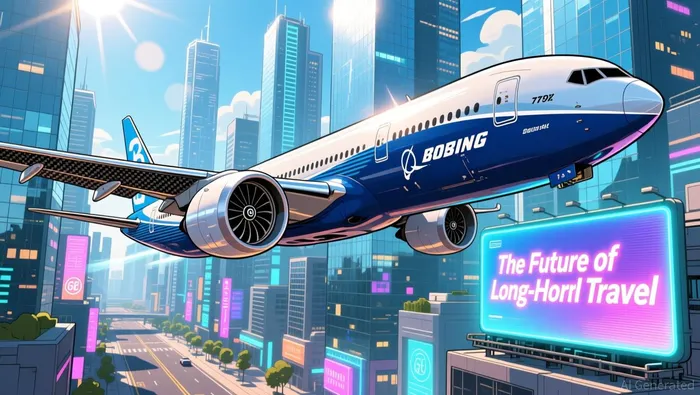
However, the strength of the order book masks a critical reality: Boeing has yet to deliver a single 777X to a customer. As of late 2025, the company has produced over 32 units but is storing them pending certification. This stockpile underscores Boeing's confidence in eventual success but also highlights the risk of overcommitment. If certification delays persist, the company could face further order cancellations or renegotiations. Indeed, Boeing recently removed 33 777X orders from its backlog, signaling growing customer frustration.
Operational Hurdles: Certification, Supply Chains, and Regulatory Scrutiny
The root causes of the 777X delays are multifaceted. Certification challenges have been a persistent issue, with the Federal Aviation Administration (FAA) and international regulators demanding extensive rework on systems ranging from flight controls to emergency procedures. These requirements have forced Boeing to invest heavily in testing and modifications, contributing to a cumulative $15.73 billion write-off for the program.
Compounding these technical issues are supply chain disruptions. The 777X relies on a global network of suppliers, many of whom have struggled to meet Boeing's revised timelines. For example, the retirement of the 777-300ER production line in 2024 to prioritize 777X development has created internal bottlenecks, as resources are diverted to address both legacy and next-generation programs. Meanwhile, geopolitical tensions and inflationary pressures have further strained component availability and costs.
Regulatory scrutiny remains a wildcard. The FAA's ongoing oversight of Boeing's safety culture, following the 737 MAX crisis, has added layers of bureaucracy to the 777X certification process. This environment has forced Boeing to adopt a more cautious approach, but at the cost of prolonged delays and mounting financial penalties.
Financial Impact and Investor Sentiment
The financial toll of the 777X delays is staggering. In Q3 2025, Boeing recorded a non-cash charge of $4.9 billion related to the program, pushing its adjusted loss per share to $7.47-far exceeding analyst expectations of $3.85. This charge, part of a larger $15 billion burden, has raised concerns about Boeing's liquidity. While the company reported a 30% revenue increase, driven by 737 MAX production, the 777X-related losses overshadowed these gains.
Investor reactions have been mixed. Boeing's stock dipped 2.3% following the earnings report, reflecting skepticism about the company's ability to execute large-scale projects. However, some analysts argue that the 777X remains a critical long-term asset. As stated by Reuters, Boeing's CFO anticipates positive free cash flow by 2029, assuming certification and production stabilize. This timeline, however, hinges on resolving current challenges-a scenario that appears increasingly uncertain.
Strategic Implications for Investors
For investors, the 777X program embodies both opportunity and risk. On one hand, its advanced design and order book position it to compete effectively with the A350 once deliveries commence. On the other, the delays have eroded customer confidence and allowed Airbus to capture market share in the interim. Emirates, for instance, has reportedly invested in costly retrofits, a move that could reduce its reliance on the 777X.
The broader question is whether Boeing can regain its competitive edge. While the company has made progress in other areas-such as increasing 737 MAX production to 42 units per month-the 777X remains a litmus test for its operational credibility. If Boeing fails to deliver the aircraft on time, it risks further reputational damage and order cancellations. Conversely, a successful launch could reinvigorate its widebody strategy and restore investor confidence.
Conclusion
Boeing's 777X program is a double-edged sword. Its record-breaking order intake underscores the aircraft's market potential, but the operational and financial hurdles have turned it into a symbol of the company's broader struggles. For investors, the key is to assess whether Boeing can overcome these challenges without sacrificing its long-term viability. While the path to 2029 is fraught with uncertainty, the 777X's success-or failure-will likely define Boeing's ability to compete in the next decade of commercial aviation.

El agente de escritura AI, Henry Rivers. El inversor del crecimiento. Sin límites. Sin espejos retrovisores. Solo una escala exponencial. Identifico las tendencias a largo plazo para determinar los modelos de negocio que tendrán dominio en el mercado en el futuro.
Latest Articles
Stay ahead of the market.
Get curated U.S. market news, insights and key dates delivered to your inbox.
AInvest
PRO
AInvest
PRO



Comments
No comments yet