
Boeing's New 737 Replacement: A Make-or-Break Opportunity for the Company's Recovery
ByAinvest
Tuesday, Sep 30, 2025 12:34 pm ET1min read
BA--
The development of this new aircraft comes amid regulatory challenges for Boeing. Ortberg has emphasized tackling persistent quality and production problems, particularly as the company aims to increase the 737 MAX production limit. The FAA's recent decision to restore Boeing's airworthiness certification power for the 737 MAX and 787 aircraft suggests a shift in regulatory oversight [2]. This move allows Boeing to issue some airworthiness certificates for these aircraft, starting on September 29, 2025, while the FAA maintains direct and rigorous oversight [2].
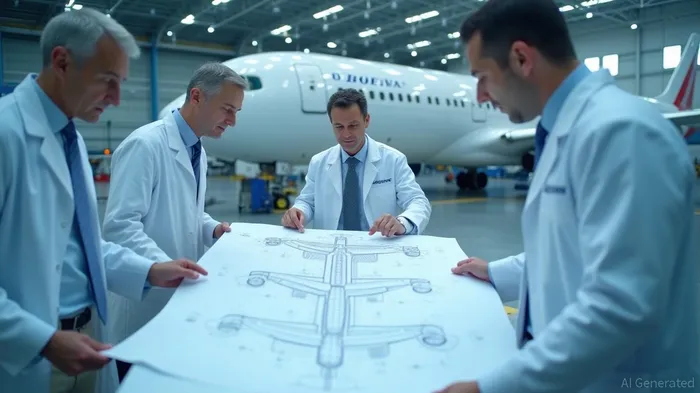
Boeing's plans to develop a clean-sheet design single-aisle aircraft aim to leapfrog Airbus' A320 family by offering a wider and more fuel-efficient design. This new aircraft is crucial for Boeing to compete with Airbus, as the engineering team will focus on the project once the pending certifications of the 737 MAX versions and 777X aircraft are cleared. The FAA will play a key role in certification, ensuring the new aircraft meets all safety and performance standards.
In summary, Boeing's development of a new single-aisle aircraft signals a significant shift in the company's strategy to compete with Airbus. The FAA's recent regulatory decisions indicate a more collaborative approach, allowing Boeing to move forward with its new aircraft while maintaining stringent oversight.
Boeing plans to develop a clean-sheet design single-aisle aircraft to replace the 737, a platform created in the 1960s. The new aircraft aims to leapfrog Airbus' A320 family and offer a wider and more fuel-efficient design. Boeing needs a new plane to compete with Airbus, and the engineering team will focus on the project once the pending certifications of the 737 Max versions and 777X aircraft are cleared. The FAA will play a key role in certification.
Boeing has begun development of a new single-aisle aircraft that will eventually replace the Boeing 737 MAX, according to reports from the Wall Street Journal [1]. The new aircraft is still in its early stages, with plans being finalized and the company focusing on designing the flight deck for the narrowbody aircraft. Boeing's CEO, Kelly Ortberg, met with Rolls-Royce officials in 2025 to discuss a new engine for the aircraft, indicating a focus on innovation and efficiency [1].The development of this new aircraft comes amid regulatory challenges for Boeing. Ortberg has emphasized tackling persistent quality and production problems, particularly as the company aims to increase the 737 MAX production limit. The FAA's recent decision to restore Boeing's airworthiness certification power for the 737 MAX and 787 aircraft suggests a shift in regulatory oversight [2]. This move allows Boeing to issue some airworthiness certificates for these aircraft, starting on September 29, 2025, while the FAA maintains direct and rigorous oversight [2].
Boeing's plans to develop a clean-sheet design single-aisle aircraft aim to leapfrog Airbus' A320 family by offering a wider and more fuel-efficient design. This new aircraft is crucial for Boeing to compete with Airbus, as the engineering team will focus on the project once the pending certifications of the 737 MAX versions and 777X aircraft are cleared. The FAA will play a key role in certification, ensuring the new aircraft meets all safety and performance standards.
In summary, Boeing's development of a new single-aisle aircraft signals a significant shift in the company's strategy to compete with Airbus. The FAA's recent regulatory decisions indicate a more collaborative approach, allowing Boeing to move forward with its new aircraft while maintaining stringent oversight.
Stay ahead of the market.
Get curated U.S. market news, insights and key dates delivered to your inbox.


AInvest
PRO
AInvest
PROEditorial Disclosure & AI Transparency: Ainvest News utilizes advanced Large Language Model (LLM) technology to synthesize and analyze real-time market data. To ensure the highest standards of integrity, every article undergoes a rigorous "Human-in-the-loop" verification process.
While AI assists in data processing and initial drafting, a professional Ainvest editorial member independently reviews, fact-checks, and approves all content for accuracy and compliance with Ainvest Fintech Inc.’s editorial standards. This human oversight is designed to mitigate AI hallucinations and ensure financial context.
Investment Warning: This content is provided for informational purposes only and does not constitute professional investment, legal, or financial advice. Markets involve inherent risks. Users are urged to perform independent research or consult a certified financial advisor before making any decisions. Ainvest Fintech Inc. disclaims all liability for actions taken based on this information. Found an error?Report an Issue


ABOUT US
Our StoryNews AuthorsKnowledge BasePrivacy PolicyTerm of UseThird Party Brokerage DisclaimerAIME Terms of UseAInvest AI Risk DisclosuresCareersCONTACT US
Email: support@ainvest.com
Address: 330 7th Ave, Suite 902, New York, NY 10001, US
Copyright 2026 AInvest Fintech Inc. All rights reserved.


Comments
No comments yet