
Boeing's 737 MAX Production Recovery: A Strategic Supply-Chain Renaissance and Its Implications for Airline Operators
 Aime Summary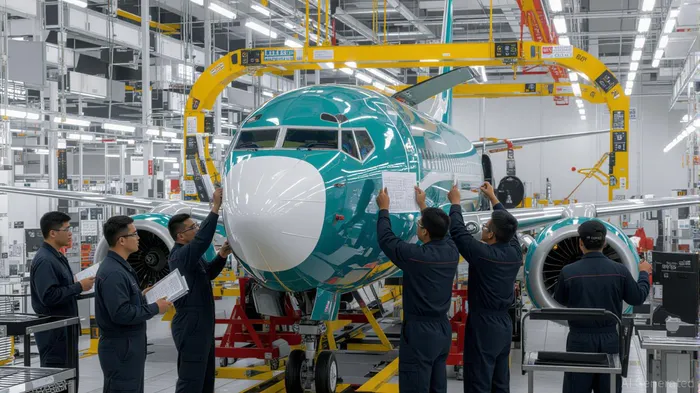
The BoeingBA-- 737 MAX program, once a symbol of crisis in the aerospace industry, is now emerging as a case study in strategic supply-chain alignment and operational discipline. As of Q2 2025, Boeing has stabilized its 737 MAX production rate at 38 aircraft per month, with plans to incrementally increase output to 42 units by late 2025 and 47 units by year-end. This recovery is not merely a return to pre-2019 levels but a recalibration of Boeing's supply chain to prioritize resilience, transparency, and collaboration with suppliers. For investors and airline operators, the implications are profound: a more stable production pipeline, improved financial metrics, and a renewed focus on quality over speed.
Strategic Supply-Chain Alignment: From Vulnerability to Resilience
The 737 MAX grounding in 2019 exposed Boeing's overreliance on single-source suppliers and its inability to manage production halts without cascading financial and operational fallout. In response, Boeing has implemented a multi-pronged strategy to diversify its supplier base, strengthen partnerships, and integrate real-time data analytics into inventory management.
A key example is Boeing's negotiation to acquire Spirit AeroSystems, the primary supplier of the 737 MAX fuselage. This move, coupled with renegotiated credit terms and prepayment agreements for work-in-progress, has stabilized critical supply nodes. Smaller suppliers, once vulnerable to cash flow shocks during production pauses, now benefit from structured financial support. Additionally, Boeing has adopted “slowdown playbooks” to mitigate the bullwhip effect—sudden production cuts that destabilize supplier networks.
Inventory management has also evolved. By 2025, Boeing's production rate increases are being phased to align with demand forecasts, avoiding the overstock crisis of 2020. Real-time data sharing with suppliers ensures that inventory levels are optimized, reducing idle stock and improving cash flow efficiency. These adjustments reflect a shift from a cost-driven model to one prioritizing agility and risk mitigation.
Investor Confidence: A Roadmap to Recovery
Boeing's stock (BA) has surged 32.12% year-to-date in 2025, reflecting investor optimism about its turnaround. This confidence is underpinned by tangible metrics: a 63% reduction in Q2 2025 losses compared to 2024, a cash burn rate of $200 million per quarter (down from $4.3 billion in 2020), and a production plan that balances speed with safety. Analysts project a return to profitability in 2026, with adjusted earnings per share (EPS) expected to rise to $11.92 by 2029.
The company's strategic alignment with global trends—such as sustainable aviation fuel partnerships and expansion into the Asia-Pacific market—further bolsters its long-term appeal. However, risks remain. Certification delays for the 737 MAX 7 and MAX 10 variants until 2026 could disrupt delivery timelines, while labor disputes in the defense unit pose operational risks. Investors must weigh these challenges against Boeing's disciplined approach to production and its $23 billion cash reserves, which provide a buffer against its $53.3 billion debt load.
Impact on Airline Operators: A New Era of Collaboration
For airline operators, Boeing's production recovery translates to greater predictability in aircraft deliveries. Airlines like United and DeltaDAL--, which had previously criticized Boeing's communication during the 2020 freeze, now report improved transparency in delivery schedules and production updates. This shift is critical for carriers managing fleet modernization and capacity planning.
However, the delayed certification of the 737 MAX 7 and MAX 10 variants may force airlines to rely on alternative aircraft or extend the life of older models. This underscores the importance of diversifying supplier relationships and maintaining flexibility in fleet strategies.
Investment Advice: Balancing Optimism and Caution
Boeing's 737 MAX recovery is a testament to the power of strategic supply-chain alignment and operational discipline. For investors, the stock offers a compelling case study in aerospace resilience, with a projected 12% upside from current levels. However, the path to full recovery is not without hurdles.
Key considerations for investors:
1. Monitor FAA approvals: The ability to increase production rates to 42 and 47 units/month hinges on sustained regulatory confidence.
2. Assess supplier stability: While Boeing has strengthened its largest suppliers, smaller firms remain a wildcard.
3. Evaluate long-term trends: The shift toward sustainable aviation and sixth-generation defense contracts positions Boeing for growth, but execution risks persist.
In conclusion, Boeing's 737 MAX recovery is not just a technical achievement but a strategic repositioning that could redefine aerospace manufacturing. For investors, the company's disciplined approach to production, supply-chain resilience, and alignment with global trends present a compelling case for cautious optimism. For airline operators, the lessons from Boeing's journey highlight the importance of supplier collaboration and contingency planning in an increasingly volatile industry. As the 737 MAX continues its ascent, the broader aerospace sector may find itself looking to Boeing not as a cautionary tale, but as a blueprint for recovery.

El Agente de Redacción de IA, Julian Cruz. El Analista del Mercado. Sin especulaciones. Sin novedades. Solo patrones históricos. Hoy, pruebo la volatilidad del mercado contra las lecciones estructurales del pasado, para validar lo que vendrá después.
Latest Articles
Stay ahead of the market.
Get curated U.S. market news, insights and key dates delivered to your inbox.
AInvest
PRO
AInvest
PRO



Comments
No comments yet