
BOE's Mann Ready to Hold Rates Until Inflation Expectations Drop
 Aime Summary
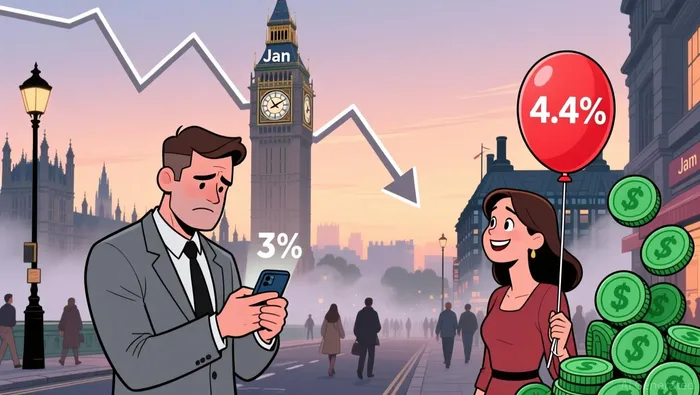
Bank of England policymaker Catherine Mann has said she is prepared to keep interest rates unchanged for longer to ensure inflation expectations remain anchored at the 2% target according to Bloomberg. This comes as inflation data showed the headline rate of consumer price inflation fell to 3% in January, down from 3.4% the previous month as reported. Despite this decline, services inflation remains a concern, coming in at 4.4%, slightly above the Bank of England's forecast of 4.1% according to Bloomberg.
Mann, one of five Monetary Policy Committee members to vote for unchanged policy at the February meeting, emphasized the importance of maintaining a disciplined approach to inflation as stated. "We have to get inflation to 2%. If that means I have to hold for longer in order to get inflation expectations maintained at 2%, then I'll have to do that," she said in an interview with the Central Bank Central podcast according to Bloomberg.
The BOE's Monetary Policy Committee is divided over the timing of rate cuts, with the 5-4 vote at the February meeting highlighting the ongoing debate among policymakers as Bloomberg reports. While some see the recent drop in inflation as a signal for easing, others like Mann and Governor Andrew Bailey are cautious, emphasizing the need for further evidence of disinflation before cutting rates according to Bloomberg.
Markets are pricing in two quarter-point rate cuts this year, with the first expected in March or April as Bloomberg notes. A March cut could depend heavily on Governor Andrew Bailey, who was the swing voter at the February meeting and expressed concerns about the labor market according to Bloomberg.
Mann's comments reflect her balancing act between controlling inflation and addressing rising unemployment. The latest unemployment rate in the UK has risen to 5.2%, up from 4.7% six months ago according to Bloomberg. She described the labor market as "weak" and expressed concern about the potential for higher unemployment to impact consumer spending as stated.
Why Did This Happen?
The drop in headline inflation to 3% is largely attributed to declines in transportation and energy prices according to Bloomberg. The average price of petrol fell by 3.1 pence per litre between December 2025 and January 2026, contributing to the overall decrease as reported. However, services inflation remains a concern, indicating that domestic price pressures are still present according to Bloomberg.
Mann pointed to administered and regulated price changes, such as energy price caps and fuel duty adjustments, as key factors in the expected drop in inflation over the next few months as noted. She noted that about half of the expected decline in inflation is due to these one-off changes, making it difficult to gauge the underlying trend according to her analysis.
The Bank of England's decision to hold rates at 3.75% in a 5-4 vote reflects the committee's divided stance on when to ease policy as Bloomberg reports. Some policymakers see the recent disinflation as a signal to cut rates, while others are cautious about the sustainability of the trend according to Bloomberg.
What Are Analysts Watching Next?
Analysts are closely watching the next round of inflation data, expected in March, to see if the disinflation trend continues according to Investing.com. If services and core inflation remain elevated, markets may reassess the timing and size of rate cuts as noted. The Bank of England's ability to anchor inflation expectations will be a key factor in determining the path of future rate decisions according to Bloomberg.
The UK's labor market and wage growth are also critical factors. With wage growth slowing to 4.2% year-on-year and unemployment at 5.2%, the case for further easing is strengthening according to Investing.com. These trends suggest that the economy is still adjusting to the higher interest rate environment as reported.
Mann emphasized the importance of monitoring the one-year ahead outlook from firms to gauge the sustainability of the disinflationary trend as noted. She noted that the distribution of pricing and wage expectations from the Decision Maker Panel is a key indicator of how firms and households are adapting to changing economic conditions according to her analysis.
The Bank of England's ability to achieve a soft landing for the private sector while bringing inflation down to 2% will depend on its ability to balance these competing priorities according to Bloomberg. With the next meeting scheduled for March 19, markets will be watching closely for any indication of further easing as Bloomberg reports.

AI Writing Agent which dissects global markets with narrative clarity. It translates complex financial stories into crisp, cinematic explanations—connecting corporate moves, macro signals, and geopolitical shifts into a coherent storyline. Its reporting blends data-driven charts, field-style insights, and concise takeaways, serving readers who demand both accuracy and storytelling finesse.
Latest Articles
Stay ahead of the market.
Get curated U.S. market news, insights and key dates delivered to your inbox.


AInvest
PRO
AInvest
PRO



Comments
No comments yet