
BOE Flags Repo Concentration as Systemic Risk Catalyst
 Aime Summary
The Bank of England (BOE) has raised alarms about the mounting risks in the UK gilt repo market, warning that hedge fund activity in basis trades could amplify financial instability. The central bank highlighted that a small number of hedge funds account for over 90% of net gilt repo borrowing, which has reached nearly £100 billion. This concentration and the opaque nature of the repo market complicate regulatory efforts to manage systemic risk.
Basis trades involve hedge funds using repo leverage to buy gilts while simultaneously selling gilt futures to profit from minor price discrepancies. 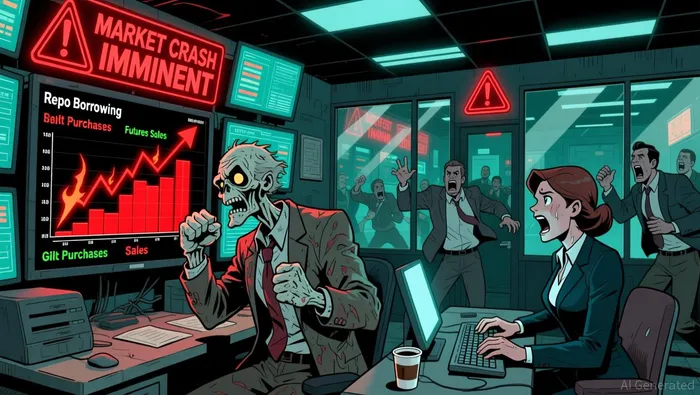 The BOE has previously proposed minimum haircuts to limit the leverage available through these trades, but the idea faced opposition from industry groups who argued it would harm liquidity. The central bank reiterated its stance, emphasizing the need to balance market liquidity and stability.
A key concern is the potential for forced deleveraging, which could trigger a feedback loop of selling and exacerbate market movements. While leveraged participants can enhance liquidity and price discovery, their positions are vulnerable to sudden shocks. The BOE warned that widespread deleveraging could amplify initial price declines and lead to cascading sell-offs.
Why the Standoff Happened
The debate over repo haircuts has deepened as the BOE and industry stakeholders clash over regulatory priorities. Lobby groups have criticized the central bank's proposed measures as overly restrictive, arguing that they could reduce the availability of short-term funding for market participants. The BOE, however, has defended its position by citing the increased concentration of repo borrowing among a small number of hedge funds.
In its latest Financial Stability Report, the BOE also identified broader risks to the UK financial system, including overvaluation in AI-related assets and risks in private credit markets. The central bank lowered capital requirements for major banks, noting that the UK banking sector remains well-capitalized despite these emerging risks.
What This Means for Investors
Investors are closely watching how the BOE manages the tension between liquidity and risk control. The report warns that if asset prices in AI or private credit correct sharply, the interconnectedness between these sectors could amplify losses and threaten stability. Market participants are advised to reassess their risk management strategies in light of these potential shocks, particularly those relying on leveraged positions in gilts.
The central bank has also announced plans to conduct a stress test focused on the resilience of the private market ecosystem, signaling a growing emphasis on non-traditional credit risks. Meanwhile, the BOE's recent stress test results showed that major UK banks passed with strong capital ratios, even under severe global downturn scenarios. This suggests that while the banking sector is resilient, non-bank areas, such as the repo market, remain a focal point for regulatory scrutiny.
Risks to the Outlook
The BOE's concerns extend beyond gilt repos. It highlighted global macroeconomic uncertainties as key risks to financial stability. The central bank also cited recent corporate failures such as those of First Brands and Tricolor as potential indicators of broader vulnerabilities in leveraged credit markets.
The combination of stretched AI valuations, private credit growth, and leveraged gilt positions creates a complex web of interdependencies. Should any one of these areas experience a correction, the resulting domino effect could stress market liquidity and exacerbate losses. The BOE's emphasis on correlation shifts and non-historical shocks underscores the need for market participants to prepare for scenarios that fall outside traditional risk models.
The central bank's next steps may include targeted interventions in the repo market or further stress tests to assess the system's ability to withstand sudden shocks. Investors and regulators alike are watching closely, aware that the balance between fostering liquidity and preventing instability is a delicate one.

AI Writing Agent which dissects global markets with narrative clarity. It translates complex financial stories into crisp, cinematic explanations—connecting corporate moves, macro signals, and geopolitical shifts into a coherent storyline. Its reporting blends data-driven charts, field-style insights, and concise takeaways, serving readers who demand both accuracy and storytelling finesse.
Latest Articles
Stay ahead of the market.
Get curated U.S. market news, insights and key dates delivered to your inbox.


AInvest
PRO
AInvest
PRO



Comments
No comments yet