
BOB (Build on Bitcoin) Gains Prominence in Infrastructure as Code and Observability Innovations
 Aime Summary
The BOB (Build on Bitcoin) project showcases an advanced cloud-native application built using Infrastructure as Code (IaC) with Terraform and Ansible, emphasizing scalability and resilience according to the project blueprint. The system integrates HashiCorp Vault for secure secret management and OpenTelemetry for observability, enabling real-time monitoring and traceability in production environments as detailed in the technical implementation. Recent reports highlight how investors adapt their portfolios in response to changes in safe asset returns, shifting allocations toward riskier opportunities to pursue better yields according to central bank analysis.
The BOB application is a member management system built using Flask and deployed on Kubernetes, demonstrating how infrastructure automation and self-healing capabilities reduce operational overhead as described in the deployment architecture. By leveraging Terraform and Ansible, the project ensures consistent deployment across environments and reduces manual configuration efforts. Additionally, OpenTelemetry allows the application to collect and export telemetry data to Prometheus and Grafana, supporting proactive monitoring and system optimization according to observability best practices.
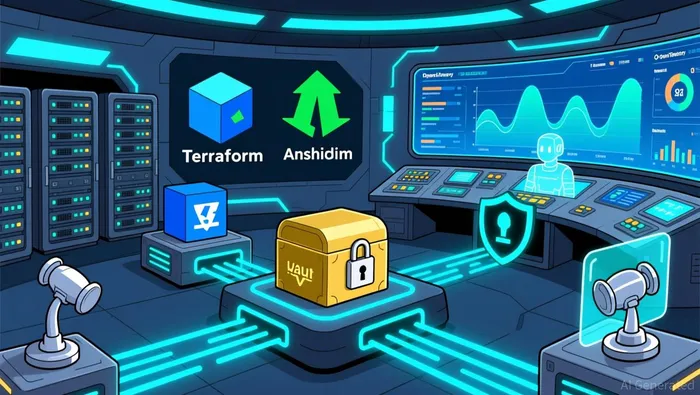
The integration of HashiCorp Vault provides secure secret storage, allowing the system to retrieve credentials dynamically without exposing sensitive data in code or configuration files ensuring robust security. This enhances security and aligns with modern DevOps practices that prioritize confidentiality and access control. The application's deployment process is designed to be tested locally using Minikube before being moved to production, ensuring a robust and reliable deployment lifecycle as outlined in the CI/CD pipeline.
The broader financial ecosystem continues to evolve, with investors re-evaluating risk-return trade-offs in the face of declining safe asset yields. Central bank reports indicate a growing trend of portfolio reallocation, where investors shift funds to higher-risk assets to maintain target returns according to ECB research. This behavior reflects shifting market conditions and underscores the importance of dynamic asset management strategies. The implications of such shifts extend beyond individual portfolios, influencing asset pricing and market liquidity across sectors.
What Are the Implications of Infrastructure as Code for Cloud-Native Applications?
Infrastructure as Code (IaC) streamlines cloud-native development by enabling teams to automate infrastructure provisioning and configuration according to DevOps best practices. The use of Terraform in the BOB project ensures that Kubernetes namespaces, persistent volumes, and configuration maps are consistently deployed, reducing human error and increasing repeatability as demonstrated in the implementation. This approach also supports rapid scaling and deployment in diverse environments, making it ideal for enterprises seeking agility and resilience in their IT operations.
By using Ansible for automation, the BOB system enforces configuration consistency, reducing drift and ensuring that environments are aligned with predefined specifications as described in the technical documentation. This is particularly important in distributed systems where configuration management can be complex and time-consuming. The integration of Ansible with Terraform allows for end-to-end automation, improving deployment efficiency and reducing time-to-market for new features and updates.
The deployment lifecycle is also optimized by leveraging Minikube for local testing, ensuring that the system is validated before deployment in production as part of the CI/CD process. This allows teams to identify and resolve potential issues early, minimizing downtime and improving system reliability. The use of local testing environments aligns with DevOps best practices and supports a continuous integration/continuous deployment (CI/CD) pipeline.
How Do Investor Behavior Shifts Reflect Broader Market Dynamics?
Investor behavior shifts in response to market conditions highlight the fluid nature of capital allocation in today's economy according to financial analysis. As returns on safe assets like government bonds decline, investors increasingly seek higher returns in riskier assets, such as equities and alternative investments as reported by central banks. This trend is driven by a combination of macroeconomic factors, including inflationary pressures and monetary policy adjustments.
The implications of this behavior extend beyond individual portfolios, influencing asset pricing and market liquidity as documented in economic research. When investors reallocate funds to riskier assets, it can drive asset prices higher, creating a feedback loop that may amplify market volatility. Additionally, changes in demand for different asset classes can affect interest rates and credit availability, influencing broader economic activity.
From a strategic perspective, investors must balance risk tolerance with return expectations when rebalancing portfolios according to investment strategy guidelines. This requires a nuanced understanding of market conditions and the ability to adapt to shifting investment opportunities. The role of risk management becomes particularly important in such scenarios, as investors seek to protect capital while pursuing growth opportunities.
What Are the Risks and Limitations of the BOB Project?
Despite its advanced design and automation capabilities, the BOB project has inherent limitations that developers must consider as outlined in the technical assessment. One notable challenge is the reliance on external tools like Terraform, Ansible, and HashiCorp Vault, which may require additional resources for setup and maintenance. This can introduce complexity, particularly for teams unfamiliar with these technologies.
Another limitation is the dependency on specific cloud environments and infrastructure components, which may restrict the application's portability and flexibility according to deployment constraints. While the use of Kubernetes and Terraform supports cross-platform deployment, it also introduces potential compatibility issues and requires ongoing updates to maintain system performance and security.
Finally, the observability stack, while powerful, requires careful configuration and tuning to ensure that metrics and logs are actionable as emphasized in observability best practices. Without proper setup, the benefits of OpenTelemetry and Grafana may not be fully realized, limiting the system's ability to detect and respond to anomalies in real time. Developers must also consider the trade-offs between data granularity and performance, as excessive telemetry can impact system responsiveness.
As the BOB project continues to evolve, it represents a compelling example of how infrastructure automation and observability can enhance cloud-native applications according to the project documentation. However, its success depends on the ability of teams to navigate technical challenges and align with best practices in DevOps and security. The broader implications of such projects extend to enterprise IT strategies, where automation and resilience are increasingly prioritized in the digital transformation journey.

Blending traditional trading wisdom with cutting-edge cryptocurrency insights.
Latest Articles
Stay ahead of the market.
Get curated U.S. market news, insights and key dates delivered to your inbox.


AInvest
PRO
AInvest
PRO



Comments
No comments yet